Circadian and gut-brain program improved recovery after rectal cancer surgery
A perioperative behavioral program combining mindfulness, biofeedback, CBT-I, and timed melatonin was associated with lower inflammation, better sleep, and an exploratory survival signal in 184 rectal cancer patients. Two trials from the same Chinese research group now point toward circadian rhythm as a modifiable target in surgical recovery.
Rectal cancer surgery saves lives. It also severs gut-brain connections, scrambles the body’s internal clock, and unleashes an inflammatory response that can slow recovery for months. A surgical team in Suzhou, China, tested whether a behavioral program targeting all three disruptions at once could change how patients recover.
Their answer, published in Behaviour Research and Therapy, is a guarded yes.
Shengjie Pan and Gang Wang, both at the First Affiliated Hospital of Soochow University, randomized 184 patients with stage I to III low rectal cancer. Every patient was scheduled for the same operation: an ultra-low anterior resection. All of them got standard ERAS care (early feeding, opioid-sparing pain control, rapid mobilization). Half also received an integrative program that began before surgery and continued through the postoperative weeks.
What the intervention involved
The program was not a single pill or a single protocol. It bundled several things. On the emotion-regulation side: mindfulness-based stress reduction, heart-rate-variability biofeedback, and neurofeedback. On the sleep and circadian side: cognitive behavioral therapy for insomnia (CBT-I), controlled-release melatonin, and circadian scheduling of meals, light, and activity.
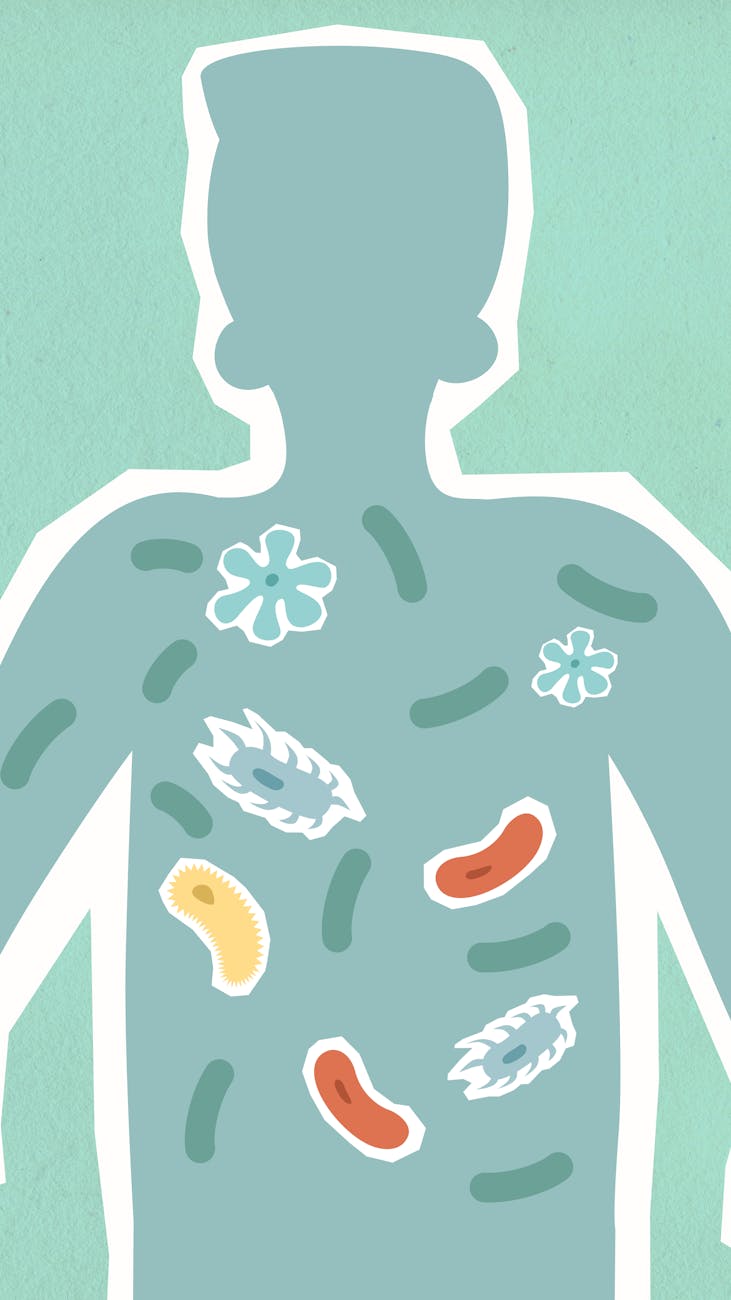
The rationale is straightforward anatomy. The gut and brain normally talk to each other through the vagus nerve, immune signals, and metabolites produced by gut microbes. Abdominal surgery cuts those lines. Anesthesia scrambles circadian clocks across the brain and peripheral tissues. Fluorescent hospital lighting and interrupted sleep compound the damage. At the same time, inflammatory cytokines (interleukin-6, C-reactive protein, tumor necrosis factor-alpha) spike. The Soochow group reasoned that restoring communication at all three levels (behavioral, circadian, and neuroimmune) might suppress the inflammatory surge and improve outcomes beyond what ERAS achieves on its own.
What the study found
The trial had two co-primary endpoints assessed at 6 months: depressive symptoms on the Beck Depression Inventory-II, and sleep quality on the Pittsburgh Sleep Quality Index. Secondary endpoints included interleukin-6, C-reactive protein, tumor necrosis factor-alpha, gastrointestinal recovery, and skeletal muscle index (a CT-derived measure of lean mass that predicts cancer outcomes). Disease-free and overall survival were tracked as exploratory endpoints.
Both primaries favored the intervention at 6 months (p less than 0.01 for both depression and sleep quality).
The inflammatory data were sharper. On postoperative day 7, interleukin-6 measured 39.7 pg/mL in the intervention group against 52.3 pg/mL in controls (p less than 0.001). C-reactive protein and tumor necrosis factor-alpha ran in the same direction, lower in the treated group across the first postoperative week. The intervention group also regained gut function sooner. Time to first flatus was shorter. Tolerance of oral intake returned faster.
Then the exploratory survival numbers appeared, and they changed the story.
The survival signal
At 12 months, patients in the intervention arm who preserved more skeletal muscle had better disease-free survival. The hazard ratio was 0.51 (95 percent CI 0.29 to 0.92, p equals 0.027).
At 2 years, disease-free survival was 89.7 percent in the intervention group and 74.0 percent in controls. The absolute difference was 15.7 percentage points. The hazard ratio was 0.46 (95 percent CI 0.23 to 0.93).
Pan and Wang do not claim these numbers prove the intervention extends survival. The trial was not powered for survival endpoints. The confidence intervals nearly touch 1.0. With 184 patients at one hospital, a survival result this large could reflect a real treatment effect. It could also reflect chance in a small sample with few events. The paper labels the survival findings “preliminary exploratory signals” and states plainly that larger randomized trials are needed.
What else we know
This was not the group’s only trial. In March 2026, Pan and Wang published a second study in Surgical Endoscopy. That trial enrolled 240 rectal cancer patients and tested a circadian reinforcement protocol: timed feeding, controlled light exposure, and low-dose melatonin. Importantly, the Surgical Endoscopy study measured something the Behaviour Research and Therapy paper did not: a quantitative Circadian Rhythm Index.
The index dropped sharply after surgery, from 83.5 before the operation to 59.2 afterward, a 29 percent decline. Patients who started with worse circadian function had larger IL-6 spikes and more postoperative complications. The reinforcement protocol cut the 7-day inflammatory burden significantly. IL-6 area under the curve fell from 518 to 362 picogram-days per milliliter (p less than 0.001). Hospital stay shortened by a median of 2 days (9 versus 11 days, p equals 0.002).
At 3 years, disease-free survival favored the circadian intervention (HR 0.56, 95 percent CI 0.35 to 0.89, p equals 0.014). A statistical mediation analysis found that circadian improvement explained roughly 28 percent of the reduction in IL-6 and 22 percent of the nutritional-inflammatory benefit.
Across both trials, the pattern is the same. Circadian disruption after major cancer surgery looks like more than an inconvenience of hospitalization. It correlates with worse inflammation, more muscle loss, and possibly worse long-term cancer control. The correlation appears to be at least partly reversible.
Caveats
The limits matter. Both trials come from one hospital and one research group. Nobody else has replicated them yet. The Behaviour Research and Therapy study labels itself “exploratory” in its title. The survival analyses in both papers rest on small numbers of events. One or two events tipping the other direction would erase the hazard ratio. The intervention bundles are multicomponent. Nobody can say whether melatonin, mindfulness, biofeedback, circadian scheduling, or the combination of all four matters most. Every patient had low rectal cancer and the same surgical procedure. The results may not extend to colon cancer, gastric cancer, or operations outside the GI tract. Neither trial was blinded at the patient or clinician level. Patients knew which arm they were in. Outcome assessors could be masked, but the people delivering the intervention and the people receiving it were not.
What it means
Perioperative medicine has spent two decades refining ERAS. Pain control, early feeding, early walking. Those interventions cut complications and shortened stays. The Soochow group is asking whether the brain and the body clock need the same level of perioperative attention as the bowel.
The biology supports asking. Clock genes directly regulate cytokine gene expression. Sleep deprivation is a known pro-inflammatory state in human experimental models. The gut-brain axis is neuroanatomy, not metaphor.
Whether behavioral chronobiology can improve disease-free survival (not just patient-reported outcomes) is an open empirical question. After 424 patients across two trials, the answer from Suzhou is that the signals are consistent and strong enough to warrant a multicenter phase III. Inflammation drops. Survival curves separate in the same direction in both studies. Mood and sleep improve by clinically meaningful margins.
But exploratory trials generate hypotheses. They do not rewrite clinical guidelines. A definitive trial with survival as the primary endpoint must come first. Until one does, the Pan and Wang papers stand as the most detailed evidence to date that the clock in the surgical recovery bay might matter as much as the knife.
References
- Pan S, Wang G. Circadian and gut-brain axis modulation is associated with neuroimmune and symptom recovery after rectal cancer surgery: an exploratory randomized controlled trial. Behaviour Research and Therapy 196:104943. 2025. https://doi.org/10.1016/j.brat.2025.104943
- Pan S, Wang G. Restoring circadian homeostasis is associated with immune-metabolic recovery and medium-term oncologic outcomes after rectal cancer surgery: a prospective randomized trial. Surgical Endoscopy. 2026. https://doi.org/10.1007/s00464-026-12730-8
Dr. Kiran Patel
Clinical researcher covering the gut-brain axis, probiotics, and metabolic health. Reports from Boston.