The Meteoric Rise and Problematic Future of Wearable Sleep Tech
Nearly half of American adults have used a sleep tracker, and the market is projected to reach $6.86 billion by 2034. But validation research reveals a sharp divide: devices reliably detect sleep versus wakefulness, yet struggle to classify sleep stages — and a growing number of users are developing orthosomnia, an anxiety disorder driven by the pursuit of perfect sleep scores.
The Meteoric Rise and Problematic Future of Wearable Sleep Tech
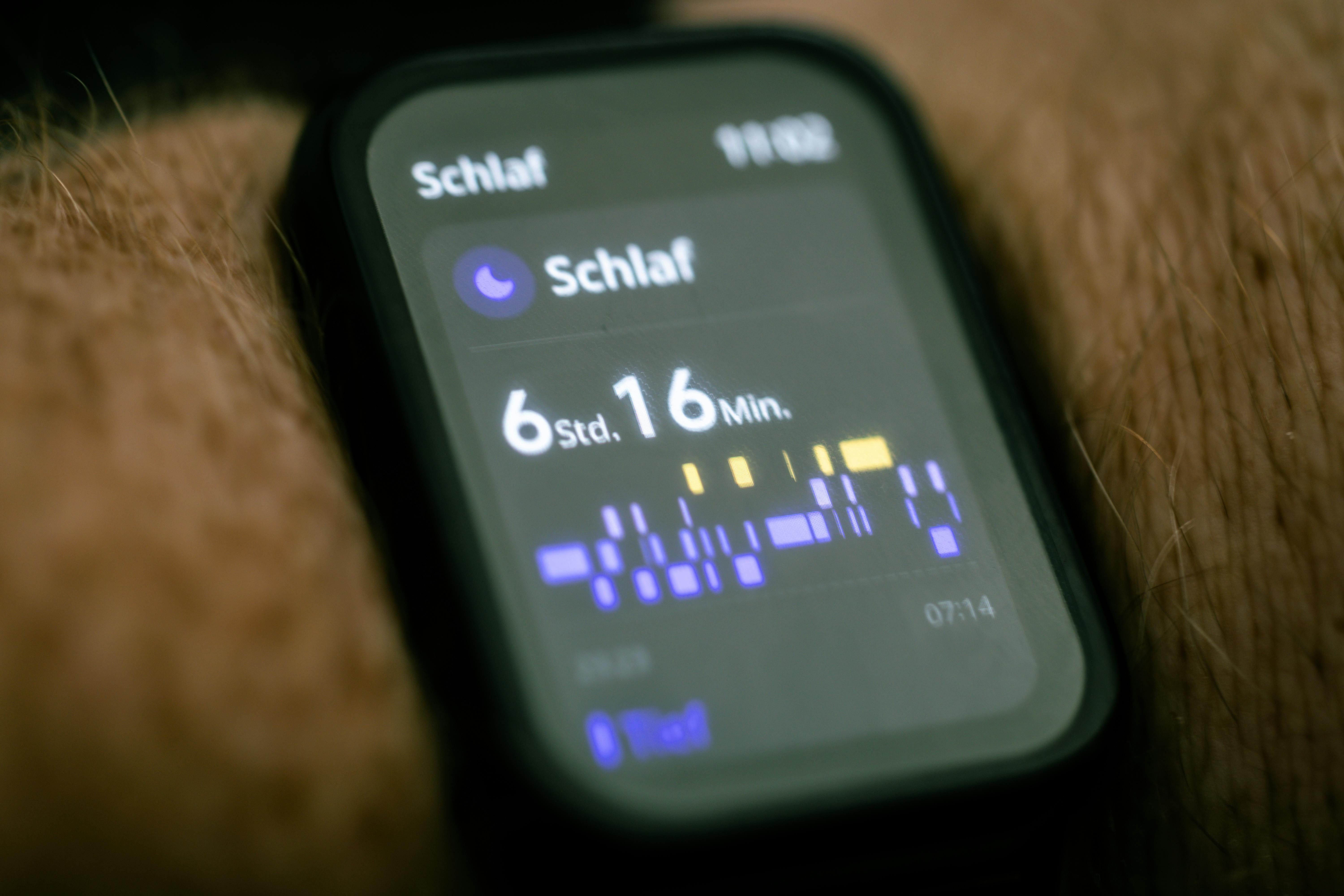
In 2025, nearly half of American adults had strapped, clipped, or slipped a device onto their body to track their sleep. The global market for these gadgets — rings, watches, headbands, mattress sensors — sat at $2.64 billion and is projected to more than double to $6.86 billion by 2034, growing at 11.2% annually, according to Research and Markets. The promise is hard to resist: wear a device, wake up to a score, and finally understand what happens during the third of your life you spend unconscious.
Evidence, though, points in a more complicated direction. The same gadgets that have turned sleep into a cultural fixation are also, increasingly, the reason people cannot sleep at all. A 2025 American Academy of Sleep Medicine survey found that 76% of US adults report losing sleep because they are anxious about their sleep — a phenomenon clinicians now call orthosomnia. Dr. Daniel Barone, associate medical director at the Center for Sleep Medicine at Weill Cornell Medicine, put it bluntly to New York Magazine: his advice to patients who wake up feeling fine but are distressed by a poor readiness score from their Oura Ring is, “Take the Oura Ring and throw it away.”
Wearable sleep tech’s rise sits on a fault line. On one side: devices that reliably detect whether you are asleep or awake. On the other: algorithms that classify what kind of sleep you are getting with accuracy that ranges from mediocre to abysmal, depending on the stage and the night. The question is no longer whether these products are popular. It is whether the gap between what they measure and what they mean is doing more harm than good.
How accurate are consumer sleep trackers, really?
The gold standard for sleep measurement is polysomnography, or PSG — an overnight lab study that records brain waves, eye movements, muscle tone, heart rhythm, and breathing. It is cumbersome, expensive, and impossible to replicate in a ring or a watch. Consumer devices use photoplethysmography (light-based pulse sensing) and accelerometry (motion detection) to infer what your brain is doing. They are making an educated guess, not taking a direct measurement.
A 2023 multicenter validation study published in JMIR mHealth and uHealth tested 11 consumer devices — including the Oura Ring Gen3, Fitbit Sense, Apple Watch Series 7, and Withings Sleep Analyzer — against simultaneous PSG in 60 participants. On the binary question of “is this person asleep or awake?”, most devices performed well, with sensitivities above 95%. But when the task shifted to classifying sleep into its four stages — light sleep (N1/N2), deep sleep (N3), and REM — the picture deteriorated. Macro F1 scores, a combined measure of precision and recall, ranged from 0.26 to 0.69 across devices.
A macro F1 of 0.26 means the device was wrong about what sleep stage you were in roughly three-quarters of the time. At 0.69, it was right about two-thirds of the time — better, but still a long way from clinical-grade. Another 2024 paper, this one in Sensors, compared the Oura Ring Gen3, Fitbit Sense 2, and Apple Watch Series 8 against PSG and found broadly consistent results: sleep-wake detection was strong (above 95% sensitivity), but stage-specific sensitivity dropped to between 50% and 86% depending on the stage and device.
Group-level averages often look reassuring. Individual-night error, however, can be substantial. On any given night, the gap between what a tracker reports and what a PSG would measure can reach 30 minutes of total sleep time or 20 percentage points of REM. Those are errors large enough to meaningfully distort how someone interprets their night.
What the trackers actually get right
For the thing most people care about — total sleep duration — the devices are reasonably accurate, typically within 15 to 30 minutes of PSG-measured values. If someone is trying to figure out whether they are consistently getting six hours of sleep or seven, a tracker will generally tell them the truth.
A 2025 study in Scientific Reports examined wearable finger-ring trackers specifically in a clinical setting and found that while they could not replace PSG for diagnosing disorders like sleep apnea or narcolepsy, they provided useful longitudinal data — night after night, week after week — that a single lab study cannot capture. This is a familiar trade-off in consumer health technology: you sacrifice point-in-time precision for continuous, real-world data.
Consumer devices are also genuinely good at detecting patterns. If your total sleep time drops from seven and a half hours to five and a half over the course of a stressful work week, the absolute numbers may be off by 20 minutes, but the trend is real. Emerson Wickwire, section chief for sleep medicine at the University of Maryland Medical Center, acknowledged to New York Magazine that trackers can serve as a useful entry point for patients who have never thought seriously about their sleep. The problem, he said, is what happens next.
The orthosomnia problem
Wickwire coined a term that has since entered the sleep-medicine lexicon: orthosomnia, from the Greek ortho (correct) and somnia (sleep) — the pursuit of perfect sleep through data. “Becoming overfocused on sleep can be a problem in and of itself,” he told New York Magazine. Obsessing over scores can create a feedback loop: anxiety about poor metrics produces worse sleep, which produces worse metrics.
The AASM’s 2025 survey captured the scale of the problem. Of the 48% of US adults who had used a sleep tracker, a substantial share reported checking their data first thing in the morning — before coffee, before conversation, before assessing how they actually felt. The 76% figure for sleep-related anxiety is not limited to tracker users, but the overlap is hard to ignore. A population that has never had more data about its sleep is also a population that has never been more anxious about it.
Dr. Barone has seen the clinical consequences firsthand. Patients arrive at his office with months of Oura Ring data, convinced they have a sleep disorder because their deep-sleep percentage hovers around 15% instead of a supposed ideal of 20% — never mind that deep sleep naturally declines with age and that a single night of PSG would likely tell a different story. Some patients have already begun self-medicating with melatonin, magnesium, or unregulated supplements based on nothing more than a readiness score.
A device designed to illuminate sleep is, for a growing subset of users, making it worse.
What clinicians want you to know
Dr. Shalini Paruthi, a spokesperson for the American Academy of Sleep Medicine’s Emerging Technology Committee, has tried to articulate a middle path. “Sleep trackers can be valuable tools for raising awareness about sleep health,” she wrote, adding the essential caveat: “However, it’s important that tracking enhances sleep and doesn’t cause more stress about it.”
That tension — between awareness and stress — has become the central issue in consumer sleep technology. The validation research offers a useful rule of thumb. If a tracker tells you that you slept five hours and you feel exhausted, it is probably right. If it tells you that you got zero minutes of deep sleep but you wake up feeling rested, the device is probably wrong.
Then there is the deeper problem: the proprietary algorithms that power these devices. Every brand — Oura, Fitbit, Apple, Whoop, Samsung — uses its own machine-learning model trained on its own data. The algorithms are updated regularly, sometimes without clear disclosure, meaning a software update can change your sleep-stage breakdown overnight without any change in your actual sleep. As the 2023 JMIR study concluded, a standardized, independent validation framework for consumer sleep technology is urgently needed. No regulatory body currently requires one.
How to use a sleep tracker without losing sleep
None of the clinicians interviewed for this piece suggested that consumers should throw their devices away en masse. Dr. Barone’s advice about the Oura Ring was directed at a specific patient profile: someone whose subjective experience of sleep is good but whose tracker data is causing distress. For everyone else, the guidance is more nuanced.
The clinicians pointed to a few principles. First, look at trends, not single nights. A single night of poor deep-sleep data means very little. A month of declining total sleep time is worth investigating. Second, trust how you feel before trusting the score. If you wake up refreshed and your tracker says your sleep was poor, believe your body. The devices are inferring sleep from heart rate and movement; they are not measuring brain activity directly. Subjective and objective sleep quality are not the same thing, and consumer trackers measure neither perfectly.
Third, do not self-diagnose. A tracker is not a substitute for a sleep study. If you consistently struggle with falling asleep, staying asleep, or waking unrefreshed, see a sleep physician. The tracker data might help frame the conversation, but it should not dictate the treatment.
Finally, be aware of the anxiety loop. If you find yourself checking your sleep score within minutes of waking — or worse, lying in bed worrying about what the score will be — consider taking a break from the device for a week. The data will still be there when you come back. You may find that you sleep better without it.
The wearable sleep-tech market is on track to surpass $6 billion within the decade. These products are not going away. Whether the companies building them will invest in the validation research, the transparency, and the user-experience design necessary to ensure that tracking sleep improves it rather than undermines it — that remains an open question.
References
- Lee T, Cho Y, Cha KS, et al. Accuracy of 11 Wearable, Nearable, and Airable Consumer Sleep Trackers: Prospective Multicenter Validation Study. JMIR mHealth and uHealth. 2023. https://pmc.ncbi.nlm.nih.gov/articles/PMC10654909/
- Svensson T, Madhawa S, Chung UI, et al. Accuracy of Three Commercial Wearable Devices for Sleep (Oura Gen3, Fitbit Sense 2, Apple Watch 8) vs PSG. Sensors. 2024. https://pmc.ncbi.nlm.nih.gov/articles/PMC11511193/
- Fietze I, Rosenblum L, Salanitro M, et al. Performance of wearable finger ring trackers for diagnostic sleep measurement in the clinical context. Scientific Reports. 2025. https://www.nature.com/articles/s41598-025-93774-z
- American Academy of Sleep Medicine. Sleep Prioritization Survey: Using Sleep Tracking Devices 2025. 2026. https://aasm.org/wp-content/uploads/2026/01/sleep-prioritization-survey-2025-using-sleep-tracking-devices.pdf
- Scocca T. Sleep Doctors Have Some Complaints About the Oura Ring. New York Magazine / Intelligencer. 2025. https://nymag.com/intelligencer/article/oura-ring-sleep-medicine-complaints-insomnia-sleep-deprivation.html
- Paruthi S. Are Sleep Trackers Improving Your Sleep or Fueling Sleep Anxiety? Sleep Education / AASM. 2026. https://sleepeducation.org/are-sleep-trackers-improving-your-sleep-or-fueling-sleep-anxiety/
The Vitalspell brief
Evidence-based supplement science — weekly in your inbox.
Subscribe