How APOE2 helps neurons repair DNA and resist aging
APOE2 and brain aging are linked through DNA repair, a 2026 Aging Cell paper found, offering a new clue to why the variant tracks with longer life.
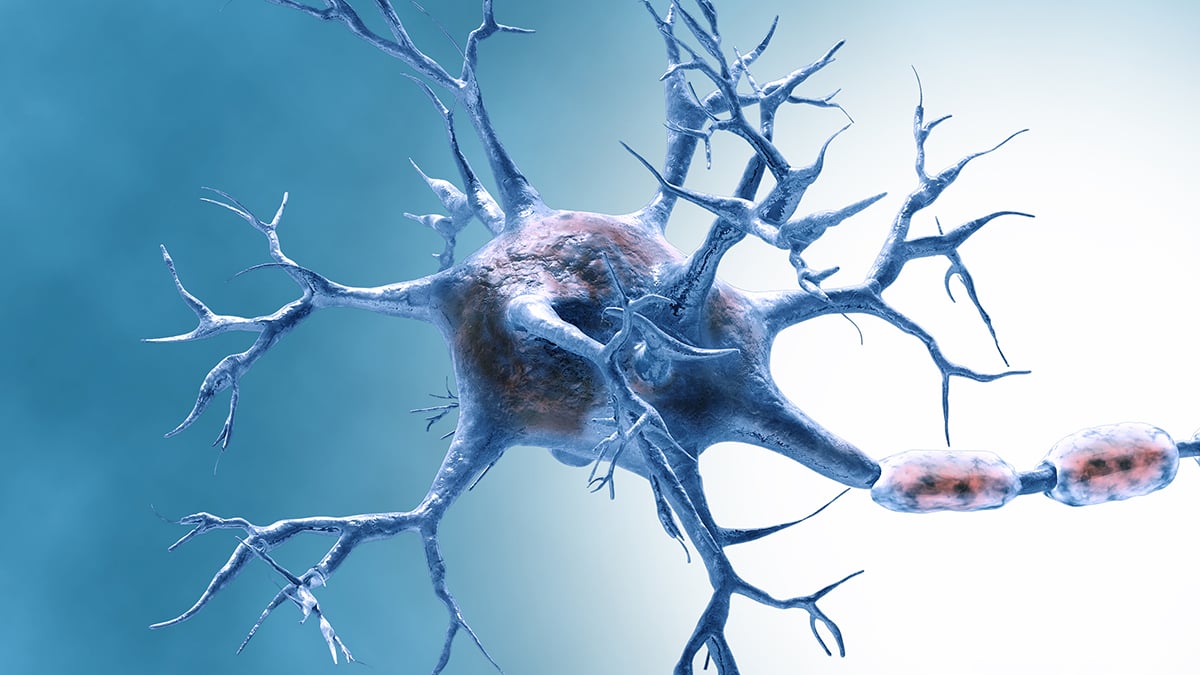
Inside an aging brain, every neuron lives with a housekeeping problem. DNA gets nicked, bent, and chemically stressed over time — and the cell cannot simply divide and start over. That is what makes APOE2 interesting right now. The gene variant long linked to longer life increasingly looks as if it may help neurons keep their own instruction manual in better shape.
In a 2026 Aging Cell paper, Buck Institute researchers led by senior author Lisa M. Ellerby reported that human neurons carrying APOE2 showed less baseline DNA damage, a stronger DNA-damage response, and fewer signs of cellular senescence than neurons carrying APOE3 or APOE4. Co-first author Cristian Gerónimo-Olvera and colleagues were not chasing a lifestyle headline. They were trying to answer a narrower, harder question: why has APOE2 kept showing up as the odd allele out in aging research?
The same evidence reads differently from the skeptic’s chair. A 2023 JAMA Neurology analysis and a 2024 Nature Reviews Neurology review both point to the same caveat. APOE2 appears protective in several settings, especially around Alzheimer disease risk, but it is not a warranty card for a healthy old age. It does not erase the ways ancestry, sex, vascular disease, or other pathologies shape the aging brain.
That tension is what makes the new paper useful. It offers a concrete cellular mechanism for an older hunch — that APOE2 is not merely associated with longevity by coincidence. It also sharpens the warning that mechanism is not destiny. A mechanistic finding is stronger evidence than a population correlation, even if it still stops far short of a treatment.
What the new paper actually found
Gerónimo-Olvera and colleagues built their case at the level of stressed human neurons. Rather than asking whether APOE2 carriers live longer in the abstract, they looked at what happens when neuronal DNA takes damage and has to be repaired. The answer, in their model, was that APOE2 neurons looked calmer at baseline and faster on the rebound. That distinction matters because senescence in the brain is less about wrinkles and more about whether battered cells keep doing their jobs.

From the authors’ perspective, APOE2 promotes DNA-signalling pathways that resist cellular senescence — a claim that places genome maintenance near the centre of the longevity story rather than at its edge. In practical terms, the paper suggests that APOE2-bearing neurons are not simply accumulating less trouble by luck. They may be better prepared to detect damage, organise a response, and preserve the nuclear architecture that keeps the genome readable.
As Ellerby said in the Buck Institute release, the point is not that APOE2 is magically youthful. It is that the variant appears to change how neurons handle stress.
“Our work shows that APOE2 neurons are better at preventing and repairing DNA damage.”
— Lisa M. Ellerby, Buck Institute for Research on Aging
A gene linked to better repair is more biologically interesting than a gene linked to a vague lower risk score. It suggests a pathway that could, in theory, be studied in people who do not carry APOE2 at all.
Gerónimo-Olvera also framed the result in terms of recovery speed, not only baseline protection. In the same Buck Institute report he said APOE2 neurons recovered faster after stress — a more demanding test of resilience than a single snapshot.
“APOE2 neurons aren’t just less damaged at baseline, they recover faster when stressed.”
— Cristian Gerónimo-Olvera, Buck Institute for Research on Aging
Why APOE2 already looked unusual in aging research
Earlier work had already tilted the literature in APOE2’s favour. Long before this mechanistic explanation, epidemiologists and aging researchers had noticed that APOE2 seemed to travel with a different risk profile than APOE4, the allele more commonly linked to Alzheimer disease. What had been missing was a convincing story about what the gene might be doing inside vulnerable brain cells.

One of the strongest earlier signals came from Mitsuru Shinohara’s 2020 eLife analysis, which drew on 24,661 people from the National Alzheimer’s Coordinating Center and paired those human data with targeted-replacement mice. In that study, APOE2 was associated with longevity independent of Alzheimer disease, while the mouse work found median lifespans of 911 days in apoE2-targeted mice versus 825 days in apoE3 mice, 753 days in apoE4 mice, and 738 days in Apoe-knockout animals. Those numbers did not prove how the effect worked, but they made the pattern hard to dismiss as noise.
A 2024 Cellular & Molecular Biology Letters study pushed the story in another direction by tying APOE2 to healthier neuronal mitochondrial function through ERRα signalling. Using single-nucleus RNA sequencing from 52 individuals and bulk RNA sequencing across 470 samples, the authors argued that APOE2 may help neurons preserve energy metabolism under amyloid stress. Set next to the new Aging Cell paper, the picture sharpens. APOE2 may be showing up in longevity research not because it performs one trick well, but because it supports several forms of cellular maintenance at once.
The field now has human longevity data, mitochondrial data, and DNA-repair data that all point in the same general direction. None is decisive on its own. Together, they make APOE2 harder to treat as a statistical curiosity.
Why the gene is not a personal longevity guarantee
That is also where the consumer-genetics version of the story starts to wobble. If APOE2 lowers risk in some studies, the temptation is to translate that immediately into a personal forecast. Risk alleles are not fates, protective alleles are not prescriptions, and no one should come away from this paper thinking a supplement stack can imitate an inherited genotype.
A better cautionary reading comes from the broader APOE literature. The 2023 JAMA Neurology paper on genotype and Alzheimer disease risk across age, sex, and population ancestry shows that APOE effects change with context. Meanwhile, the 2022 Frontiers in Aging Neuroscience review on APOE2’s neuroprotection makes almost the opposite point from the hype cycle. APOE2’s benefits are real enough to take seriously, but they have limits, and they do not neutralise the rest of brain aging.
For ordinary readers, this matters because brain resilience is not a single pathway problem. Vascular health, inflammation, sleep loss, head injury, metabolic disease, and plain bad luck all write on the same tissue. Even if APOE2 improves DNA repair, every APOE2 carrier will not automatically avoid cognitive decline. Nor is every APOE4 carrier locked into it. Genes tilt the table. They do not finish the game.
The new paper works best as a map of vulnerability, not as a consumer message. It tells researchers where one form of protection may live. It does not tell readers how to buy that protection.
What the finding changes for brain-aging research
For biologists, the most interesting part of the paper is not the familiar headline that APOE2 looks good. It is the narrowing of the question. If APOE2-bearing neurons preserve DNA signalling pathways and resist senescence more effectively, then brain-aging research can stop treating the allele as a black box and start asking which downstream repair systems are doing the work. That kind of mechanistic progress can eventually matter beyond genetics.

That does not mean a therapy is around the corner. The current paper is still a cell-biology story, not a clinical one. Yet it gives the field something sturdier than association. It suggests that one reason APOE2 keeps appearing in lower-risk and longer-life cohorts may be that the allele helps neurons keep up with the molecular paperwork of aging — a refreshingly testable claim in a field crowded with grand theories about plaques, tangles, inflammation, and mitochondrial failure.
As Ellerby put it in a EurekAlert summary of the work, the study also connects the APOE story to a wider aging framework rather than to Alzheimer disease alone.
“By showing that APOE alleles also tune how neurons defend their genome, this study connects a major longevity gene to two of the most actively studied hallmarks of aging.”
— Lisa M. Ellerby, EurekAlert
For readers worried about brain aging, the takeaway is not that APOE2 is a secret advantage waiting to be unlocked. Resilience may depend on the unglamorous work cells do after damage arrives. APOE2 now looks like one route into that biology. The harder question — and the one the next wave of studies will have to answer — is whether any part of that repair programme can be strengthened in people who were not born with it. That is the difference between a provocative gene story and a usable aging hypothesis.
References
- Gerónimo-Olvera C, Ellerby LM, et al. Exceptional longevity modifying allele APOE2 promotes DNA signaling pathways resisting cellular senescence in human neurons. Aging Cell. 2026. https://doi.org/10.1111/acel.70494
- APOE2 protects against Aβ pathology by improving neuronal mitochondrial function through ERRα signaling. Cellular & Molecular Biology Letters. 2024. https://link.springer.com/doi/10.1186/s11658-024-00600-x
- Shinohara M, et al. APOE2 is associated with longevity independent of Alzheimer’s disease. eLife. 2020. https://pmc.ncbi.nlm.nih.gov/articles/PMC7588231/
- Apolipoprotein E genotype e2: neuroprotection and its limits. Frontiers in Aging Neuroscience. 2022. https://www.frontiersin.org/journals/aging-neuroscience/articles/10.3389/fnagi.2022.919712/full
- APOE genotype and Alzheimer disease risk across age, sex, and population ancestry. JAMA Neurology. 2023. https://pubmed.ncbi.nlm.nih.gov/37930705/
- Multifaceted roles of APOE in Alzheimer disease. Nature Reviews Neurology. 2024. https://www.nature.com/articles/s41582-024-00988-2
The Vitalspell brief
Evidence-based supplement science — weekly in your inbox.
Subscribe