GLP-1 Drugs Shed Mostly Fat, Not Muscle, Real-World Data Show
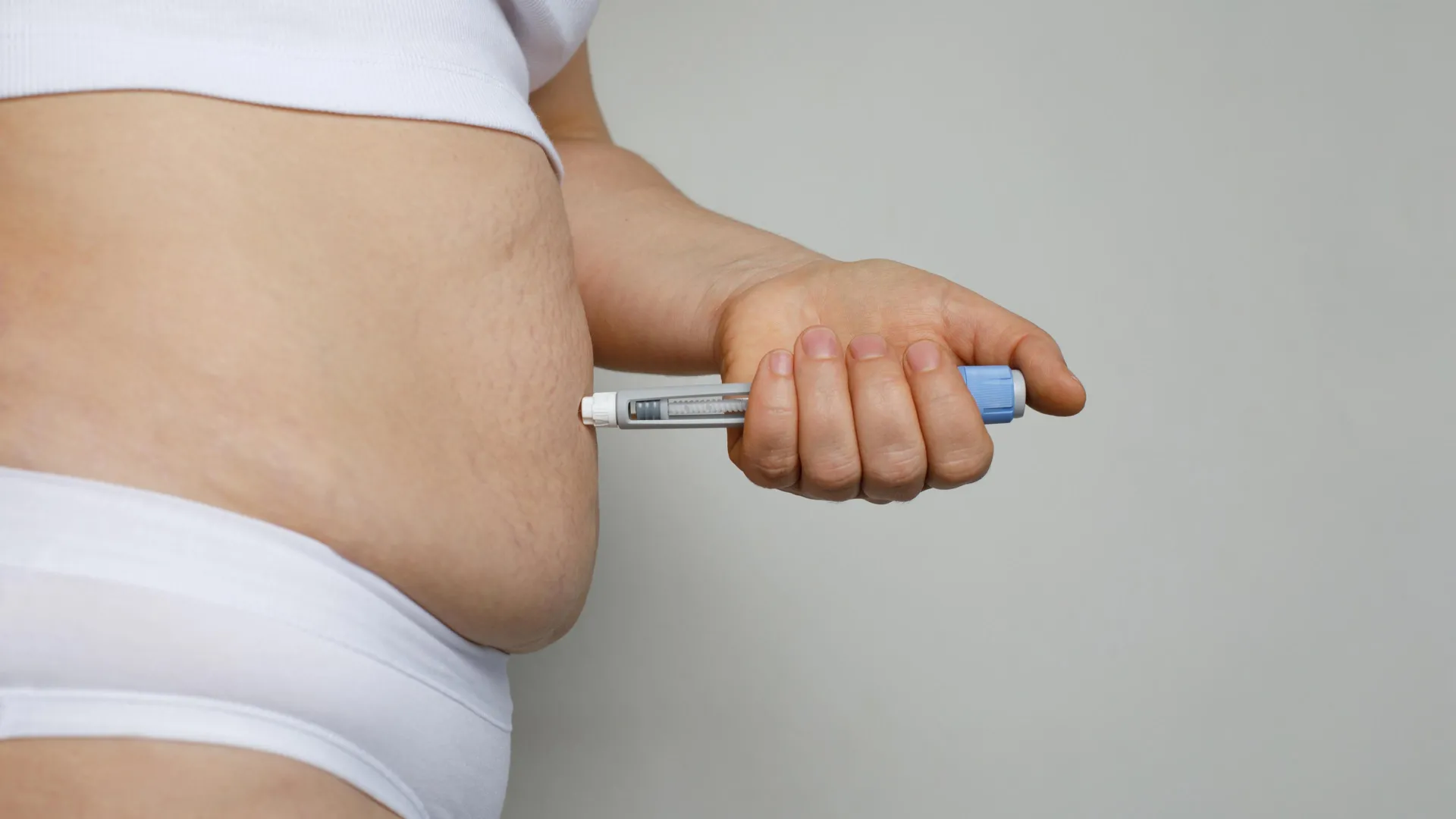
New real-world data from Vienna suggests GLP-1 obesity drugs primarily reduce fat mass while preserving skeletal muscle, challenging the narrative that the drug class causes clinically meaningful muscle wasting.
GLP-1 Drugs Shed Mostly Fat, Not Muscle, Real-World Data Show
The loudest criticism of GLP-1 obesity drugs — that they strip away muscle just as aggressively as they strip away fat — ran into a wall of data at Europe’s biggest obesity meeting this week. Findings from a Vienna clinic, presented at the European Congress on Obesity (ECO 2026) in Istanbul, indicate that 80 to 85 percent of the kilos patients shed over more than a year of treatment came from fat. Relative skeletal muscle mass, in the meantime, stayed level or actually went up in most people studied. The numbers push back against a story line that has dogged these medications since they became blockbusters, and they land while doctors are still trying to settle on how much lean tissue loss is too much in exchange for large, lasting drops in body fat.
The research, led by Emilia Ida Frohner and colleagues at Vienna’s Metabolism Center N°12 Antonigasse and the Medical University of Vienna, ranks among the largest real-world body-composition assessments under GLP-1 and dual GIP/GLP-1 receptor agonist therapy so far. The top-line figures are hard to ignore: across roughly 14 months of treatment, fat mass fell by 18 percent while skeletal muscle dropped by only 5 percent. That is not the indiscriminate wasting critics of the drug class have described.
What the Vienna team measured
Frohner’s group drew on retrospective data from 486 patients treated at a single Vienna obesity clinic between 2022 and 2025. The cohort leaned heavily female — 82 percent — and the average patient was just under 50 years old with a starting BMI of 37.68, well into the severely obese classification. They were prescribed either a GLP-1 receptor agonist (semaglutide, sold as Wegovy) or a dual GIP/GLP-1 receptor agonist (tirzepatide, sold as Mounjaro and Zepbound). Body composition was tracked with bioelectrical impedance analysis — a practical tool, though one with known limitations. BIA sends a weak current through the body and estimates fat versus lean mass from the resistance it encounters, rather than imaging tissue directly.
After a mean of 14 months on medication, the typical patient had lost 9.9 percent of their baseline weight. What mattered was how the loss broke down: fat mass dropped by 9.0 kilograms (an 18 percent reduction), and skeletal muscle mass fell by just 1.2 kilograms (5 percent). In upwards of 70 percent of the group, relative skeletal muscle mass — the share of lean tissue once you correct for the smaller body — was either maintained or rose during treatment.
Frohner and her co-authors, Dr Alexander Jürets and Dr Bianca Karla-Itariu, kept their conclusion measured but were not cagey about where the evidence pointed. “In this real-world cohort, GLP-1RA or GIP/GLP-1 RA therapy was associated with substantial fat mass reduction while largely preserving skeletal muscle mass in relative terms,” they wrote. And then, pushing against the worst-case reading of muscle on these drugs: “Our analyses indicate that skeletal muscle mass remains stable over time when accounting for changes in fat mass, supporting the concept that GLP-1RA-induced weight loss reflects favourable body composition changes rather than clinically relevant muscle wasting.”
The counterargument has not gone away
Vienna’s data may sit on one side of the debate, but the other side has a sizable stack of papers behind it. A systematic review led by Batsis and colleagues, highlighted in a recent American College of Physicians briefing, calculated that muscle-related indices represented 34.9 percent of total kilos lost in pooled studies of incretin-based treatments. That is comfortably above the 25 percent threshold many clinicians use as the upper bound for acceptable lean mass reduction. Within the Batsis data set, 68 percent of the included studies blew past that ceiling — enough to make some physicians, geriatricians in particular, reluctant to hand these prescriptions to older adults already short on muscle.
The mismatch between the Vienna figures and the Batsis meta-analysis may not be as wide as the raw numbers suggest. Much comes down to measurement method. Bioelectrical impedance, which the Vienna investigators used, can overstate muscle preservation in people losing substantial weight, because fluid shifts during rapid fat loss throw off the algorithms — most of which were calibrated on weight-stable reference populations. DXA and MRI-based measures, which appear in several of the papers Batsis pooled, are more reliable but also more costly and harder to deploy in a busy clinic.
Distinguishing absolute from relative loss matters too. Shedding 1.2 kilograms of muscle over 14 months sounds minor, but an adult past 50 typically loses 0.2 to 0.5 kilograms of muscle a year from sarcopenia alone. Pile another kilogram on top of that baseline and the numbers start looking less benign, especially for patients in their sixties and seventies whose lean mass reserves were already thin. A 2026 paper on sarcopenic obesity risk pressed this point: older adults dropping weight fast on GLP-1 drugs could tip past a threshold where the muscle loss becomes disabling — particularly if the weight loss unfolds without resistance training and sufficient protein.
Adaptive, maladaptive, or somewhere in between
Whether muscle loss on GLP-1 therapy is harmful comes down to what you track. In 2024, Neeland and colleagues published a review in Circulation that mapped the two competing frameworks. Under the adaptive model, the body loses lean mass in rough proportion to overall weight reduction — about 25 percent of shed kilos are muscle — and what stays behind works better: less fatty infiltration, less of the chronic, low-grade inflammation that obesity brings. People often gain grip strength, walking speed, and stair-climbing ease even as absolute muscle mass declines, because they are hauling less weight and the muscle they still have is operating under less metabolic stress.
The maladaptive framework worries that GLP-1 drugs trigger a kind of pharmacologically accelerated wasting — faster and deeper than what diet and exercise would produce on their own. The danger is not that a 35-year-old with a BMI of 38 will turn frail after dropping 15 kilograms. It is that a 68-year-old with a BMI of 32 whose muscle mass was already low — undiagnosed, never measured — will lose enough lean tissue on semaglutide to cross into functional dependence.
The SEMALEAN trial and related studies, cited in the Circulation paper, have given the adaptive camp some ballast. Functional measures — grip strength, gait speed, sit-to-stand counts — held steady or ticked up slightly during GLP-1 treatment in those data sets, even when DXA detected small drops in appendicular lean mass. If a patient walks farther, lifts more, and gets out of a chair more easily after shedding 15 kilograms — yes, three of them may have been muscle — the functional trade looks worth taking for the great majority of people.
What clinicians are telling patients
The working consensus that has settled in over the past two years, and that shows up in recent obesity-medicine guidelines from both sides of the Atlantic, is neither panicked nor indifferent. The message is straightforward: prescribe the drug, but write resistance training and adequate protein into the plan alongside it.
The targets clinicians reach for most often are resistance exercise twice a week minimum, covering the major muscle groups, and daily protein in the range of 1.2 to 1.6 grams per kilogram of body weight. For someone at 100 kilograms, that is 120 to 160 grams a day — a number that is genuinely hard to hit when the drug has suppressed your appetite. Many patients need deliberate meal planning and, in a fair number of cases, protein supplementation to get there.
The Vienna findings, if they replicate in broader and more varied populations, would reinforce the argument that GLP-1 drugs deliver a metabolically sound pattern of weight loss. But the study has limits that Frohner and her team are upfront about. The cohort skewed female, came from a single clinic, and was overwhelmingly white — a narrow base for generalizing. The analysis was retrospective, meaning patients chose (or were chosen for) a GLP-1 or GIP/GLP-1 drug rather than being randomized, and the factors that drove that choice could also shape body composition independently.
The dose question remains open. Novo Nordisk’s STEP UP trial, reported earlier in 2026, showed that a higher semaglutide dose produced 27.7 percent mean weight loss — close to triple the average reduction in the Vienna data. No body composition results from that trial have been released, so nobody knows whether the favourable fat-to-muscle ratio persists when the losses are that steep, or whether lean mass erosion accelerates once total weight reduction crosses a certain line.
For now, the practical guidance for patients is not about to change much. Protein still matters. Lifting still matters. And the drugs, for everything still unresolved about what they do to muscle, are generating weight loss that looks — in the strongest data we have — fairly close to what clinicians want: mostly fat, relatively muscle-sparing, and meaningful at the functional level.
References
- Frohner EI, Jürets A, Karla-Itariu B. Body composition changes during GLP-1 receptor agonist and GIP/GLP-1 receptor agonist therapy: a real-world retrospective cohort study. Presented at: European Congress on Obesity (ECO) 2026; May 2026; Istanbul, Turkey. https://www.news-medical.net/news/20260513/GLP-1-obesity-drugs-mainly-reduce-fat-while-preserving-muscle-mass.aspx
- Neeland IJ, et al. Muscle mass and GLP-1 receptor agonists: adaptive or maladaptive response to weight loss? Circulation. 2024. https://www.ahajournals.org/doi/10.1161/CIRCULATIONAHA.124.067676
- Batsis JA, et al. Weighing the risk of GLP-1 treatment in older adults: should we be concerned about sarcopenic obesity? PubMed. 2026. https://pubmed.ncbi.nlm.nih.gov/40819408/
The Vitalspell brief
Evidence-based supplement science — weekly in your inbox.
Subscribe