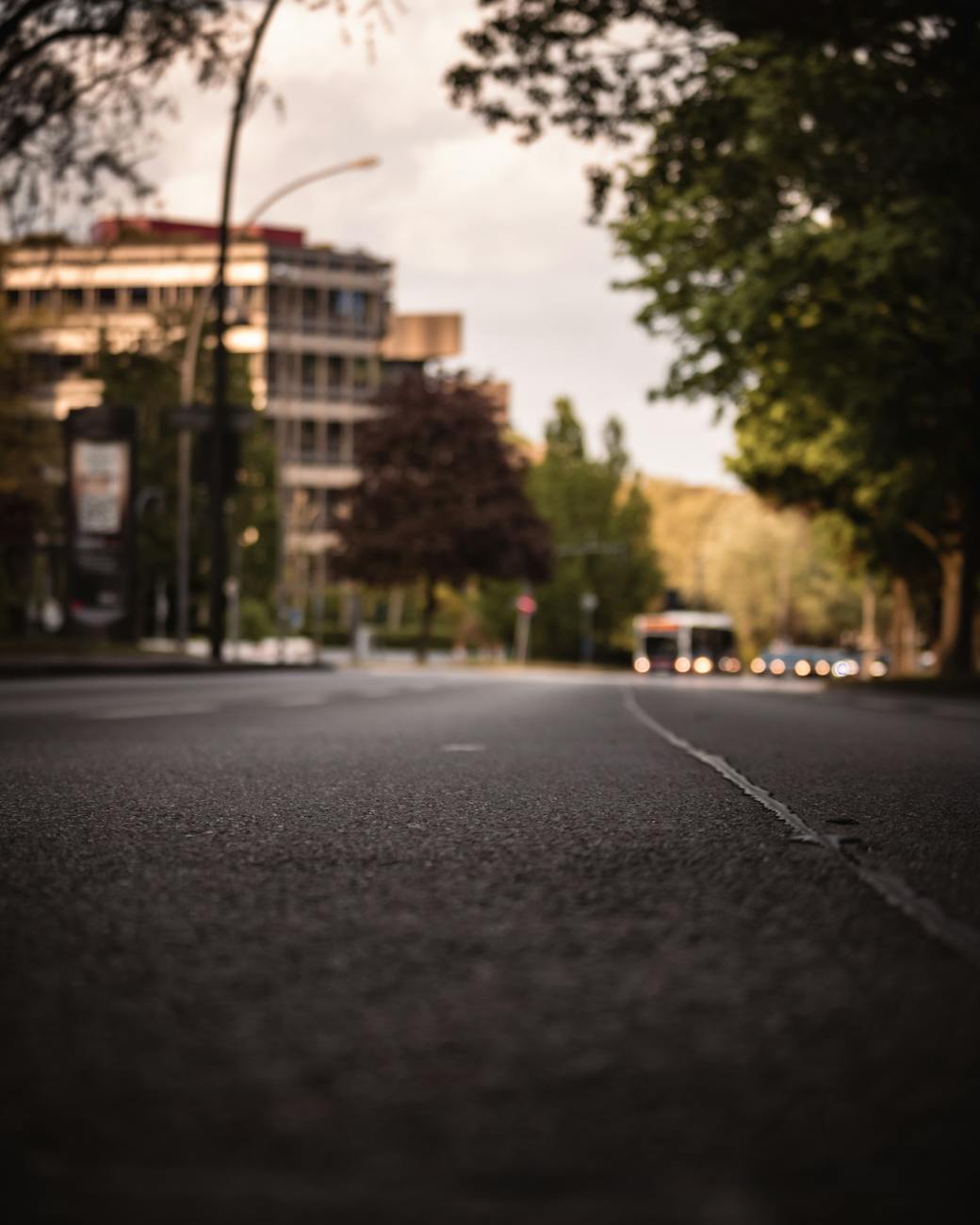
Can cooler asphalt cut toxic emissions? What the Arizona State study found
Arizona State researchers found heat and humidity can drive toxic asphalt emissions, while algae-derived biochar sharply reduced their toxicity in lab tests.
A hot parking lot has its own scent — not petrol, not quite tar. On the first brutal afternoon of summer, the air above dark pavement tastes singed. That street-level haze is the starting point for new Arizona State research asking a blunt question: when asphalt heats up, what else comes off the road besides the heat?
Before that turns into a sweeping health claim, the limits need to sit near the top. These were not human trials, and nobody showed that cooler streets prevent asthma, cancer or heart disease. The load-bearing evidence comes from a 2026 paper in Science of The Total Environment on heat, sunlight and humidity, plus a companion 2026 study in Clean Technologies and Environmental Policy on algae-derived biochar. Both papers are about emissions chemistry and modelled toxicity — not diagnosed harm in people.
The broad picture is still striking. Asphalt covers a staggering amount of ground, and the Arizona team argues we have treated it more as inert infrastructure than as a chemical source. ASU News notes that Phoenix is about 40% roads, parking lots and paved surfaces; the United States alone has roughly 4 million miles of roads. If heat and humidity make those surfaces release more volatile organic compounds — VOCs — then everyday exposure may be larger than most city air models assume.
What the asphalt studies actually showed
In the Science of The Total Environment paper, lead author Saba Shariati and colleagues tested how weather conditions affect asphalt emissions and surface decay. The answer was not simply “hotter is worse.” Humidity also registered. The paper describes moisture as a hidden driver that accelerates both chemical aging and the release of VOCs, a class of carbon-based gases that can irritate airways and feed urban smog chemistry.
That finding nudges the story beyond the usual heat-island frame. The concern is not only that black pavement gets hot in summer. It is that a warmer, wetter atmosphere can change what asphalt gives off over months and years. Elham Fini, the Arizona State engineer behind the work, told ASU News that “Heat is worsening the situation. It’s exacerbating the emissions from asphalt.” A mechanistic claim, not a clinical one — but it sits at the core of the research.
The notion that pavement itself could be a meaningful urban emissions source is not brand new. A 2023 paper in Environmental Science: Atmospheres estimated that asphalt pavements in Paris emitted 0.148 Gg of non-methane VOCs per year, or 21.3% of road-transport NMVOC emissions in that city. Street geometry, pavement age and traffic abrasion all affect what a person actually inhales on a given block. Still, numbers like those help explain why researchers think tailpipes may not be the whole outdoor-air story anymore.
Why “cooler asphalt” is only part of the story
The NPR segment that brought the work to a wider audience understandably leaned on the surprising intervention. The honest answer: cooler asphalt could help, but these papers do not settle that question on their own. If heat drives emissions, reducing heat should help in principle. But the more direct mitigation result in this package was not a neighbourhood cooling trial. It was a lab-based test of algae-derived biochar, a charcoal-like material made from biomass.
This second paper is the most eye-catching part of the story. Researchers reported that the biochar selectively removed the most toxic asphalt VOCs and cut measured biological toxicity by about 100-fold, even when the drop in total VOCs was more modest. “Less pollution” and “less toxic pollution” are not always the same thing. Some compounds do far more damage per unit than others, so changing the chemical mix can matter almost as much as changing the total amount.
It also explains why the Arizona team keeps circling back to human health rather than road durability alone. Fini told ASU News, “To make something truly sustainable, you cannot ignore the human side of it.” A road material does not become benign just because it lasts longer or stores less heat. If it still releases a harmful cocktail at street level, that is a public-health question.
But this is where caution belongs near the top, not the bottom. The studies did not track real residents breathing real street air for months or years. They did not tie asphalt emissions to diagnosed disease. They did not compare one city block before and after a cooling intervention. Fini herself acknowledged, in a KJZZ interview, that existing air-quality models may be undercounting what happens “especially at the city level, and the street level.” Freshly laid pavement, older oxidized surfaces, traffic abrasion and the shape of a street canyon could all change what a person actually inhales. That is an argument for better measurement, not proof that a single materials fix solves the problem.
What to take from it
The most useful frame is not “roads are secretly poisoning everyone.” It is that common built-environment exposures can be chemically active in ways public conversation often overlooks. Health coverage spends endless time on what people put into their bodies — far less on what they stand, drive and walk on every day. These papers argue that asphalt belongs in that second conversation.
They also suggest a more disciplined way to read environmental health headlines. When a study says an intervention reduced toxicity, ask what was actually measured. Was it a blood marker, a disease outcome, a chamber assay, a cell model or a computer estimate? Here, the answer is much closer to emissions chemistry than to medicine. That does not make the work weak. It just defines what the evidence can honestly say in 2026.
So, can cooler asphalt cut toxic emissions? The Arizona State evidence says heat and humidity do appear to make asphalt emissions worse, and an algae-based material can sharply reduce the toxicity of those emissions in the lab. What it does not yet show is how much a citywide cooling or reformulation strategy would change human exposure on an ordinary street. That is the next question — and it is the one public-health researchers still need to answer.
References
- Shariati S, Parast MM, Hu M, Lostier A, Romanias MN, Hung AM, et al. Humidity: A hidden driver of toxic emissions and asphalt decay in a changing climate. Science of The Total Environment. 2026. https://doi.org/10.1016/j.scitotenv.2026.181729
- Fini EH, Pahlavan F, Kaur H, Truong L, Ackerman-Biegasiewicz LKG, Lamanna A, et al. Selective removal of toxic VOCs by algae-derived biochar dramatically reduces the toxicity of asphalt emissions. Clean Technologies and Environmental Policy. 2026. https://doi.org/10.1007/s10098-026-03482-z
General assignment health reporter covering nutrition science, wellness trends, and clinical research. Reports from Toronto.
The Vitalspell brief
Evidence-based supplement science — weekly in your inbox.
Subscribe