How Many Carbs Do Runners Actually Need in 2026
A new review in Endocrine Reviews argues runners only need 10 grams of carbs per hour during long efforts, challenging decades of sports nutrition guidelines. Five experts weigh in on what the evidence actually says and what everyday runners should do.
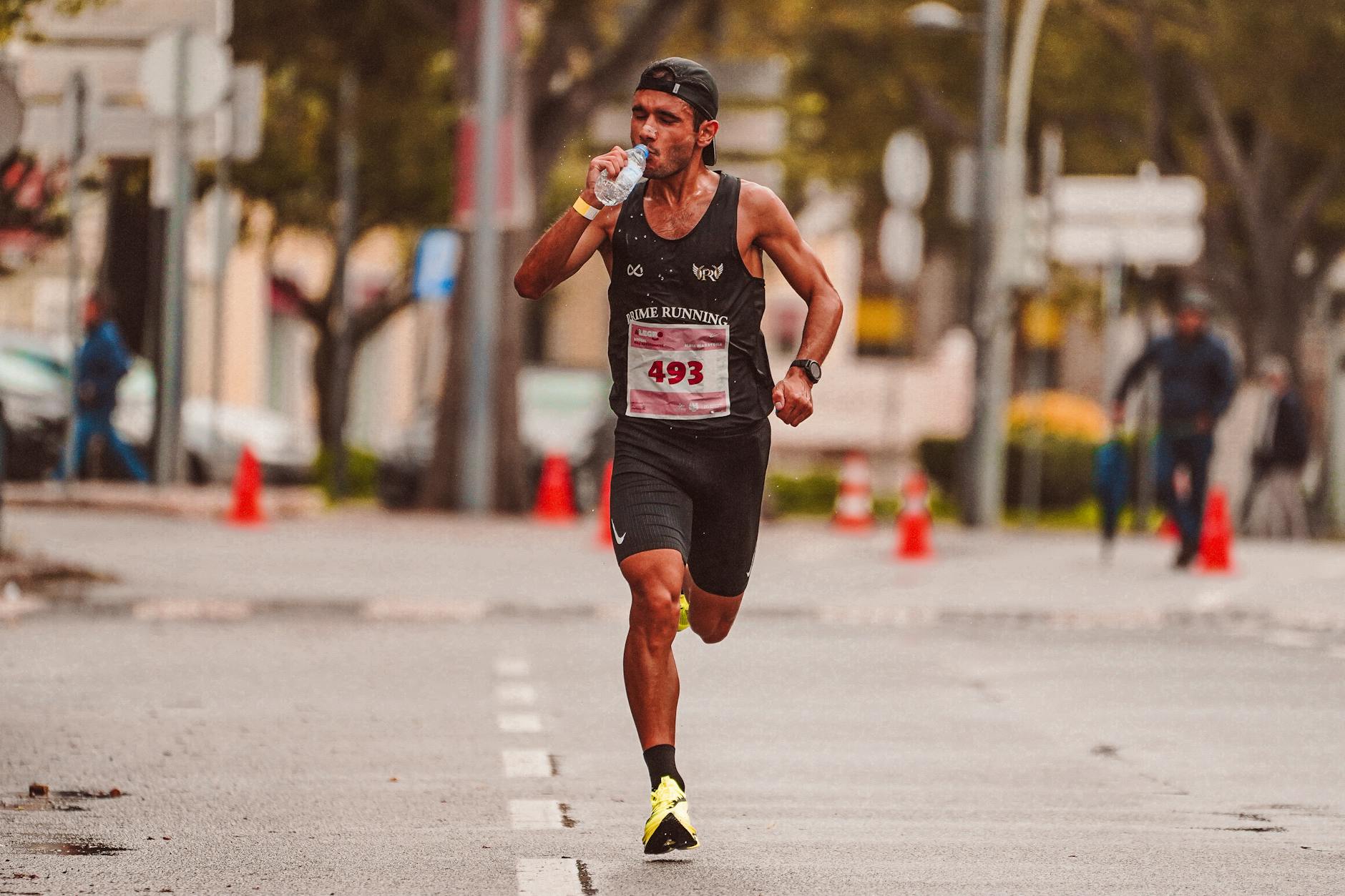
For the past several years, sports dietitians have told runners the same thing: eat more carbohydrates. “More miles equals more carbs,” Ohio-based sports dietitian Meghann Featherstun tells her clients. The American College of Sports Medicine’s 2016 position stand on nutrition and athletic performance recommends 30 to 60 grams of carbs per hour during a race, or up to 90 grams per hour for events lasting longer than 90 minutes. Some researchers have pushed for 120 grams or more.
Then a review paper landed in Endocrine Reviews in January 2026 and set off a debate.
The paper examined more than 160 exercise performance studies and over 600 sports nutrition research papers. Its conclusion: runners may only need about 10 grams of carbohydrate per hour during endurance exercise. The rest, the authors contend, is unnecessary at best and potentially harmful at worst.
“What we’re seeing is that athletes aren’t immune to the negative health consequences of the food environment,” says Andrew Koutnik, PhD, a research faculty member at Florida State University’s Institute for Sports Sciences and Medicine and one of the study’s authors.
What the mainstream guidelines say
The logic behind high-carb recommendations starts with glycogen, the stored form of carbohydrate in muscle. During high-intensity efforts like races or hard interval sessions, muscles rely on it heavily. “It’s far easier for the body to call on the glycogen that’s already sitting right there in the muscle than go through the lengthier process of converting fat into fuel,” explains Tim Podlogar, PhD, a sports performance and nutrition lecturer at the University of Exeter.
Chad Kerksick, PhD, director of the Exercise and Performance Nutrition Laboratory at Lindenwood University, is more direct: “If an athlete needs to go up a gear to climb a hill, sprint after a ball on a soccer field, carbohydrate has been shown time and time again to fuel that.”
The pre-race carb-loading protocol follows from this. Dietitians recommend 8 to 12 grams of carbohydrate per kilogram of body weight daily for one to three days before a major race. For a 150-pound runner, that means roughly 550 to 800 grams of carbohydrates each day. Research suggests this can improve endurance performance by up to 3 percent, a meaningful margin in a sport measured in seconds.
The low-carb counterargument
The Endocrine Reviews paper, led by researchers that include keto advocate Timothy Noakes, challenges the premise that muscle glycogen depletion causes runners to hit the wall. Instead, the authors argue that fatigue during prolonged exercise comes from a drop in blood glucose. The brain detects the drop as a threat to its fuel supply and slows the body down to protect itself.
If blood sugar is the real bottleneck, runners only need enough carbohydrate to keep it stable. The paper sets that amount at roughly 10 grams per hour, a figure that looks like a typo next to the ACSM’s 90-gram ceiling.
The paper also raises a claim about health risk: athletes consuming 120 grams of carbs per hour show blood markers consistent with prediabetes and type 2 diabetes, including elevated insulin and suppressed fat oxidation. In a 2023 study Koutnik co-authored, 30 percent of athletes on a month-long high-carb diet showed elevated glucose levels. Other studies have found the effect in fewer than 10 percent of participants.
Why conflict of interest matters
Stephanie Hnatiuk, a Winnipeg-based registered dietitian and running coach, notes a context the paper does not foreground. “They’re very much entrenched in promoting low-carb dieting,” she says. Every author on the paper has written a low-carb diet book, sits on the board of a low-carb foundation, or works in a low-carb research lab. “They’re operating from a paradigm in which anything that increases our requirement for insulin, even in the short term, is inherently a negative thing.”
Koutnik counters that the evidence should be evaluated on its own merits, not by the affiliations of its authors. But the paper draws from a particular well, and readers should know which one.
What the physiology actually suggests
Podlogar acknowledges that athletes become mildly insulin resistant when their glycogen stores are full. He argues this is a transient state, not a chronic disease pathway. As long as runners keep depleting those stores through training, the cycle resets. Kerksick adds that skeletal muscle acts like a sponge for blood glucose during and after exercise, which is one reason elite runners rarely develop type 2 diabetes regardless of their carb intake.
Age appears to matter. “Those who really need to focus on this are athletes who are in their 30s to upwards of their 50s,” Koutnik says, since glucose tolerance tends to decline with age. Featherstun adds that runners with a family history of type 2 diabetes may also want to be more deliberate about how they fuel.
The experts interviewed by RUN Magazine agree on at least one point: extreme high-carb protocols of 120-plus grams per hour are not relevant to most recreational runners. “The vast majority of us are simply incapable of using that many carbs,” Podlogar says. Elite athletes burn through fuel at rates a four-hour marathoner cannot match, and unused carbohydrate becomes excess blood sugar.
What everyday runners should do
Featherstun tells runners to periodize their nutrition. Ramp carbohydrate intake up when training volume climbs. Scale it back during lower-volume periods. A runner who eats marathon-training levels of pasta and bread year-round may see hemoglobin A1C drift upward. Overconsuming fat can do the same thing.
For most runners the evidence supports a moderate approach. Bump carbohydrates slightly for one to three days before a hard effort or race. Take in 30 to 60 grams per hour during the event, or up to 90 grams for efforts beyond 90 minutes. After the run, consume 1 to 1.2 grams of carbohydrate per kilogram of body weight per hour for the first four hours. That timing window matters for glycogen recovery, based on a 2025 review in Nutrients.
Gastrointestinal tolerance counts as much as the dosing numbers. That same review suggests 10 practice sessions over two weeks, consuming gels at regular intervals during training runs. Gut training reduces race-day distress. What works on paper has to work in your stomach.
Featherstun’s advice: “If you found something that works for you, keep doing it.” The science of carbohydrate fueling is still evolving. The gulf between what elite physiologists argue about and what a recreational runner actually needs is wide. Until the research firms up, pick the strategy that gets you to the finish line without gastrointestinal regret.
References
- Koutnik A, Noakes T, et al. Carbohydrate ingestion on exercise metabolism and physical performance. Endocrine Reviews. 2026. https://doi.org/10.1210/endrev/bnaf038
- Thomas DT, Erdman KA, Burke LM. Nutrition and athletic performance. Journal of the Academy of Nutrition and Dietetics 116(3):501-528. 2016. https://doi.org/10.1016/j.jand.2015.12.006
- Wang Y, et al. A review of carbohydrate supplementation approaches and strategies for optimizing performance in elite long-distance endurance. Nutrients 17(5):918. 2025. https://pmc.ncbi.nlm.nih.gov/articles/PMC11901785/
Rafael Costa
Strength coach and nutritionist covering protein science, creatine, recovery protocols, and body composition. Reports from Miami.