Marathoners consume 16 percent fewer carbs than they think during races
A 2025 study in the European Journal of Sport Science found that marathon runners take in 16 percent less carbohydrate during races than they plan to, and overestimate how much they have consumed. The shortfall is driven by gel wastage, poor sleep, and pre-race anxiety, but there is an easy fix.
Most marathoners know they need to take on carbohydrate during a race. But a new study in the European Journal of Sport Science finds a gap between what runners plan to consume and what actually makes it into their bloodstream, and it is big enough to affect performance.
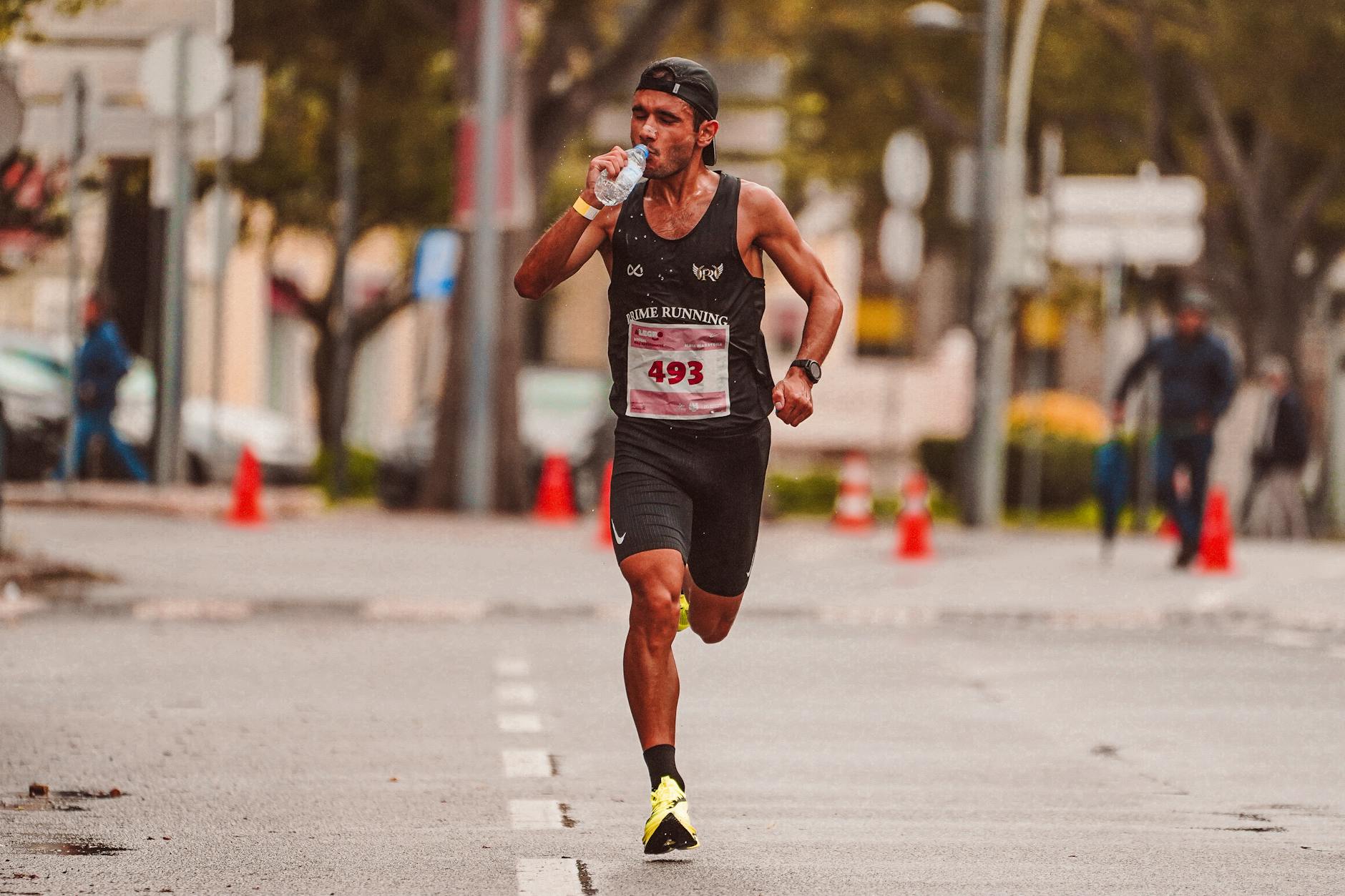
Researchers led by Asli Devrim Lanpir recruited 60 trained endurance athletes, 38 marathoners and 22 cyclists, and tracked their carbohydrate intake during two official races. The method was direct and more reliable than the food diaries that dominate sports nutrition research. Athletes deposited their finished gel, bar, and chew wrappers into collection bags stationed at course markers. The research team weighed the leftovers against the original unopened product weight, calculating actual consumption to the gram.
The marathon group planned to consume 25.9 grams of carbohydrate per hour. They actually consumed 21.7 grams per hour, a shortfall of 16 percent. When the researchers asked the same runners how much they thought they had taken in, the answer was roughly 26 grams per hour, nearly identical to what they had planned. Runners overestimated their intake by the same margin they under-consumed. They thought they had executed their fuelling strategy. They had not.
Cyclists in the study showed a similar proportional gap, falling about 17 percent short. But in absolute terms they planned much higher targets, roughly 59 grams per hour, and still managed 49 grams per hour after the shortfall, more than double what the runners achieved. The lesson is not that cyclists are better at eating on the move. Marathoners are aiming too low to begin with. The regression analysis confirmed race type as a significant predictor of intake, independent of other variables.
Why the gap exists
The energy gel is the biggest problem. Ninety-seven percent of the runners got most of their carbohydrate from gels, and gels had the highest leftover rate of any fuel format tested, ahead of drinks and gummies. Draining a gel packet completely at race pace is hard. Runners tear the top, squeeze, and tuck the wrapper away before it is empty. A few grams stay behind each time. Over 26.2 miles, those grams compound into a meaningful deficit. The researchers measured this directly by weighing used wrappers against fresh ones, a method that captures waste that food diaries miss entirely.
Gel mechanics explain part of the gap, but not all of it. The study identified two behavioural predictors of actual carbohydrate intake during the race. Better sleep, measured by the Athlete Sleep Behavior Questionnaire, and lower cognitive anxiety, measured by the Competitive State Anxiety Inventory, both predicted higher intake. The regression model explained 41 percent of the variance, a substantial effect for a behavioural study. The authors offer two mechanisms. Poor sleep and high anxiety may blunt a runner’s ability to stick to a planned fuelling schedule while managing pace, terrain, and hydration. Or runners with high pre-race anxiety deliberately under-fuel because they are worried about gastrointestinal distress, a concern that can cause athletes to skip scheduled gel windows.
How to close the gap
The simplest fix is mechanical. Squeeze gels from the bottom of the packet upward rather than from the middle. Open waterier gels slowly to minimize spillage. Both techniques take practice but require no change to race-day nutrition planning. If clean gel consumption is not realistic at race pace, carrying one extra gel per hour more or less cancels the 16 percent deficit.
The bigger adjustment is to raise the intake target. The runners in the Lanpir et al. study planned for 26 grams of carbohydrate per hour, well below the 60 grams per hour that sports nutrition guidelines recommend for endurance events lasting longer than two and a half hours. Even with a 16 percent execution gap, targeting 60 grams per hour would leave a typical marathoner at roughly 50 grams of actual intake, nearly double what the study participants achieved. The gap between recommendation and reality is wide: most recreational marathoners finish in four to five hours, which at 26 grams per hour means just over 100 grams of total carbohydrate across the race, enough to cover perhaps half of what a working body burns. Switching some fuel from gels to a carbohydrate drink closes the gap another way: drinks are easier to consume while breathing hard and leave no half-finished packet to discard.
Sleep and anxiety are harder to adjust on race morning. But knowing both affect fuelling execution gives runners two more variables to optimize in the days before a race, alongside carb loading and hydration. A consistent bedtime during race week and a pre-race routine that keeps anxiety in check may do as much for race-day fuelling as the gels in your pocket. Execution matters as much as intention, and measuring what you actually consume beats trusting what you planned to.
References
- Lanpir AD, Eroglu MN, Ozyildirim M, et al. Under consumed and overestimated: discrepancies in race-day carbohydrate intake among endurance athletes. European Journal of Sport Science. 2025. https://pmc.ncbi.nlm.nih.gov/articles/PMC12501108/
Rafael Costa
Strength coach and nutritionist covering protein science, creatine, recovery protocols, and body composition. Reports from Miami.