Can vitamin D help you sleep? What the evidence says
Vitamin D may matter for sleep in some people, but the human evidence still does not support it as a general sleep aid.
Sleep researchers keep circling back to vitamin D, but the evidence still does not support treating it like melatonin. A 2025 mini review by Cai and colleagues in Frontiers in Nutrition lays out several pathways through which vitamin D could influence sleep regulation. The harder part is the human evidence. Most of it comes from observational studies, a handful of supplementation trials in selected groups, and large database studies that can show association without proving cause.
Mechanism and treatment are not the same thing. Read conservatively, the literature suggests vitamin D matters most when someone is deficient, has a defined metabolic or sleep-disorder context, or is tracked over time rather than given a quick bedtime fix.
Why scientists think vitamin D could affect sleep
The biology is plausible because vitamin D receptors appear in brain regions involved in sleep-wake control. Researchers also point to effects on inflammation, neurotransmitters, and circadian rhythms, the roughly 24-hour timing system that helps the body know when to feel alert and when to wind down.

Cai’s Frontiers review is useful mostly because it explains why low vitamin D status can travel with short sleep, irregular sleep timing, or sleep disorders. It does not argue that vitamin D is a settled insomnia treatment. Neuroimmune regulation, for example, describes the traffic between the nervous system and immune signals. When that traffic is disrupted, sleep can suffer too.
Vitamin D may influence sleep through multiple molecular pathways, including modulation of neurotransmitter systems, maintenance of circadian rhythms, and neuroimmune regulation.
— Cai et al., Frontiers in Nutrition (2025)
Biological plausibility gets the topic onto the table. It does not settle the question. Plenty of nutrients look promising in mechanism papers and fall flat in trials, so the practical test is whether supplementation changes measurable sleep outcomes in real people.
What supplementation trials have actually shown
Clinical trials offer some support, though not much breadth. In the 2022 systematic review and meta-analysis by Mirzaei-Azandaryani and colleagues, vitamin D supplementation improved sleep-quality scores across five studies, with a modest pooled effect and no major safety signal reported. That is encouraging, but the evidence base is still small, and pooled questionnaire scores do not prove broad relief for insomnia.
Li’s 2024 post hoc analysis of a randomized trial in European Journal of Nutrition makes the same point in a more specific population. Xing Li and colleagues studied 212 adults with prediabetes for 24 weeks and reported changes in Pittsburgh Sleep Quality Index, or PSQI, scores, especially in subgroup and combination analyses. PSQI is a standard sleep-research questionnaire, but it remains subjective. Just as important, these participants were not a general cross-section of people with insomnia. They were adults with a specific metabolic profile.
Across studies, the signal keeps clustering in people who already have a reason to be more vulnerable: deficiency, metabolic disease, or another clinical problem that may make sleep more fragile. That does not erase the findings. It does make the usual supplement-marketing leap look too large.
Where the association looks strongest
A different clue comes from sleep stability rather than sleep onset. In a 2025 study in the American Journal of Physiology-Regulatory, Integrative and Comparative Physiology, Meral Culver and colleagues followed 130 apparently healthy adults using actigraphy, a wearable method that estimates sleep patterns from movement, alongside survey data. Lower 25-hydroxyvitamin D, the blood marker clinicians use to assess vitamin D status, tracked with greater variability in sleep duration. It did not line up clearly with every sleep measure.
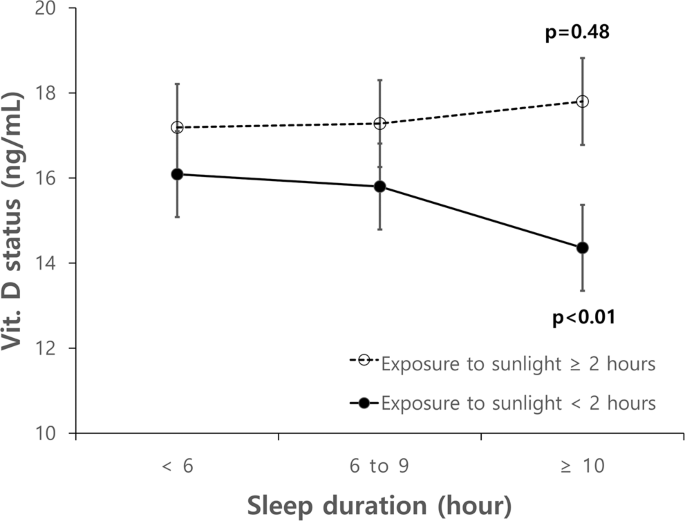
That finding fits a narrower reading of the field. Vitamin D may matter more for sleep regularity, or for the stability of a sleep pattern, than for a sweeping promise of better sleep quality in everyone.
Vitamin D is associated with sleep quality and duration, but it is unclear whether vitamin D status influences sleep variability.
— Culver et al., American Journal of Physiology-Regulatory, Integrative and Comparative Physiology (2025)
The sleep-apnea literature adds another conditional signal. In a 2025 retrospective study in Frontiers in Nutrition, I-Wen Chen and colleagues matched 126,563 people with sustained vitamin D deficiency to 126,563 controls. Incident obstructive sleep apnea, a sleep-breathing disorder in which the airway repeatedly collapses overnight, occurred in 5.7 percent of the deficiency group versus 4.4 percent of controls. The hazard ratio was 1.26. That is a notable association. It is not proof that vitamin D deficiency causes sleep apnea, and it is not a reason to treat vitamin D as an apnea therapy. It does suggest that the clearest sleep signal may sit in risk patterns and vulnerable subgroups rather than in a broad over-the-counter sleep-aid story.
For this explainer, sleep apnea belongs in the background, not the headline. It sharpens the picture without changing the bottom line. The strongest sleep claim for vitamin D remains conditional.
So should you take vitamin D for sleep?
Not as a stand-alone sleep aid, and not on current evidence as a substitute for better-studied care. For now, the more defensible view is that vitamin D deserves attention when someone is deficient, when sleep complaints overlap with a broader metabolic or inflammatory picture, or when a clinician is already treating low vitamin D for other reasons. That is different from calling it a natural sleep remedy.
If low vitamin D is suspected, the next step is to confirm status with a clinician, look at the larger sleep picture, and treat a deficiency in the context of overall health rather than as a do-it-yourself insomnia shortcut. Anyone considering a supplement for sleep should consult a doctor before starting it.
What would change the picture is better trial design: larger randomized studies in clearly deficient adults, more objective sleep outcomes, and cleaner separation between ordinary poor sleep and defined sleep disorders. Until then, vitamin D belongs in the maybe-relevant column for sleep, not the proven one.
References
- Cai Z, Rui S, Huang N, Feng F, Luo Y. The role of vitamin D in sleep regulation: mechanisms, clinical advances, and future directions. Frontiers in Nutrition. 2025. https://www.frontiersin.org/journals/nutrition/articles/10.3389/fnut.2025.1595813/full
- Mirzaei-Azandaryani Z, Abdolalipour S, Mirghafourvand M. The effect of vitamin D on sleep quality: A systematic review and meta-analysis. Nutrition and Health. 2022. https://pubmed.ncbi.nlm.nih.gov/35578558/
- Li X, Miao Y, Zhang L, et al. Effects of vitamin D and/or calcium intervention on sleep quality in individuals with prediabetes: a post hoc analysis of a randomized controlled trial. European Journal of Nutrition. 2024. https://link.springer.com/article/10.1007/s00394-024-03345-7
- Culver MN, Linder BA, Robinson AT, et al. Do not sleep on vitamin D: vitamin D is associated with sleep variability in apparently healthy adults. American Journal of Physiology-Regulatory, Integrative and Comparative Physiology. 2025. https://pubmed.ncbi.nlm.nih.gov/39873709/
- Hung KC, Yu TS, Lai YC, et al. Vitamin D deficiency and subsequent risk of obstructive sleep apnea: a multi-institutional retrospective study. Frontiers in Nutrition. 2025. https://www.frontiersin.org/journals/nutrition/articles/10.3389/fnut.2025.1651712/full
The Vitalspell brief
Evidence-based supplement science — weekly in your inbox.
Subscribe