HIIT for older adults preserved muscle in a 6-month trial
HIIT for older adults cut fat without reducing lean mass in a six-month trial, but the effect was small and the workouts were supervised.
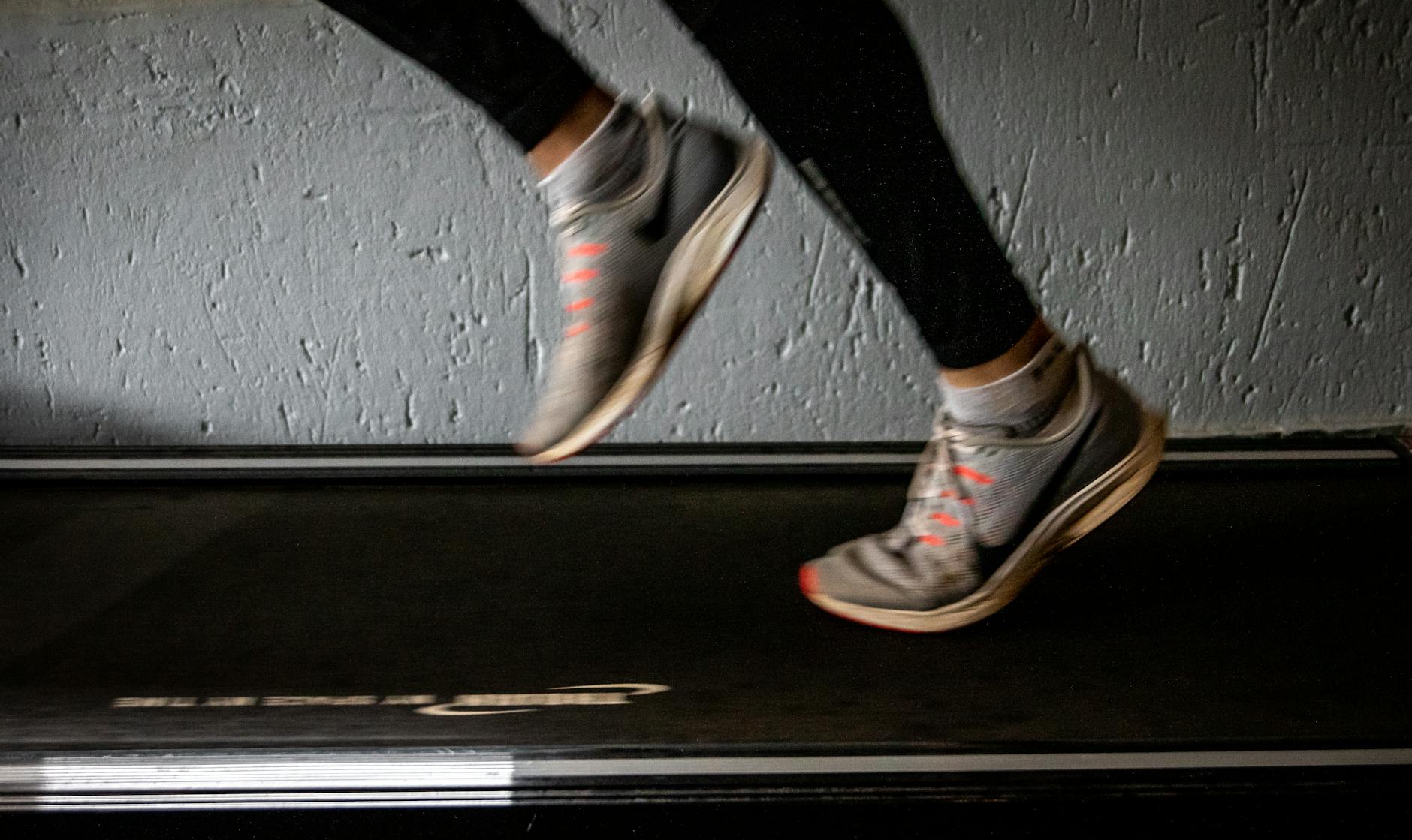
A treadmill interval session can look almost too small to matter: a minute or two of hard effort, a slower stretch to catch the breath, then another push. For younger gymgoers, that pattern is often sold as a faster route to fitness. For older adults, the question has a sharper edge. Can harder bursts help trim fat without speeding up the muscle loss that already comes with age?
In a 2025 paper in Maturitas, Grace Rose and colleagues reported an answer that was useful, but narrower than the headlines made it sound. In a six-month randomized trial, all three exercise groups lost a modest amount of fat. Only the high-intensity interval training group held on to lean mass. The authors did not dress that up as a transformation. They wrote that the body-composition changes were small, and not clearly clinically meaningful once measurement error was taken into account.
That caveat belongs near the top. Losing a little fat can help. Keeping muscle while fat comes off matters more, because age-related declines in muscle raise the odds of frailty, falls and loss of independence. This study does not mean every older adult should start doing punishing sprints. It suggests that exercise intensity may change the tradeoff between fat loss and muscle preservation.
What the trial actually tested
Rose and colleagues enrolled 123 healthy older adults with an average age of 72 years. Their average body mass index was 25.8 kg/m2, near the edge of the overweight range rather than deep into obesity. Over six months, participants completed three supervised 45-minute treadmill sessions each week. One group did HIIT: repeated short bouts of harder exercise separated by recovery periods. Another trained at a steady moderate intensity. The active control group kept to low-intensity sessions.
To track the changes, the researchers used dual-energy X-ray absorptiometry, better known as DEXA, at the start, three months and six months. Bathroom scales cannot tell whether weight change came from fat, water or muscle. By the end, both the HIIT and moderate groups had reduced fat mass more than the low-intensity group. The moderate-intensity group, though, also lost fat-free mass over the first three months and across the full six months. HIIT did not show the same lean-mass penalty.
In comments carried by ScienceDaily, Rose summed up the finding in the line that made the paper travel.
“We found that high, medium and low intensity exercises all led to modest fat loss but only HIIT retained lean muscle”
— Grace Rose, University of the Sunshine Coast via ScienceDaily
For Vitalspell, the key word is modest. This was not a body-recomposition miracle. It was a small shift in a controlled setting, among healthy volunteers who showed up for supervised sessions three times a week.
Why intensity might matter for muscle
Fat and muscle do not leave the body in neat separate compartments. Ageing muscle already responds less strongly to exercise and protein, a pattern often called anabolic resistance. If a training plan nudges the scale down but does not give muscle enough reason to stay, some lean tissue can come off with the fat.

The paper cannot prove the exact mechanism. Its results do fit a familiar exercise-physiology idea: harder efforts create a stronger mechanical and metabolic signal for muscle to stick around. Mia Schaumberg made that argument in comments quoted by ScienceDaily.
“HIIT likely works better because it puts more stress on the muscles, giving the body a stronger signal to keep muscle tissue rather than lose it.”
— Mia Schaumberg, University of the Sunshine Coast via ScienceDaily
The limit is just as important. The trial does not show that HIIT builds large amounts of muscle in older adults. It shows preservation, not transformation. The HIIT group posted the only net improvement in body-fat percentage, and it outperformed the moderate group on a raw lean-mass difference at six months. Even so, the authors concluded that the overall changes were small. The study supports HIIT as a potentially better compromise, not as a shortcut.
Moderate training should not be read as a failure, either. It still improved visceral adipose tissue, the fat stored around internal organs that is more tightly linked to cardiometabolic risk. The trial was not a contest between a useless protocol and a useful one. It asked which approach best protected two goals at once: less fat, and preserved lean tissue.
What older adults should actually take from it
The practical takeaway is fairly narrow. Healthy older adults who can tolerate harder intervals may get a body-composition edge from HIIT, especially if preserving muscle is a priority. That does not mean everyone over 65 should jump into all-out intervals next week. Supervision is part of the story here. So is participant selection. These were healthy volunteers, not people with uncontrolled heart disease, major mobility limits or acute illness.

That caution appears in the independent reaction, too. Exercise physiologist Jason Machowsky told Health that HIIT can be useful for older adults, but it is not the right fit for everyone.
“HIIT can be a great option for older adults, but it’s not for everyone.”
— Jason Machowsky, Health
For readers, that is probably the fairest bottom line. If the goal is better body composition with age, intensity seems to matter. But more intense is not the same as maximal, and it is not a substitute for the rest of the muscle-preservation picture: enough protein, progressive resistance work, recovery and a plan that a person can keep doing for months. The PubMed record for the trial and the journal version in Maturitas both make clear that consistency, supervision and context shaped the result as much as the interval format itself.
Short harder bursts may protect lean tissue better than a steady middle pace when cardio is the tool. That is a useful nuance for older adults who are trying to keep both aerobic capacity and muscle. The evidence is interesting, but still early, specific and smaller than the hype around HIIT often implies.
References
- Rose G, Hume E, Blackmore D, Mitchell J, Belford S, Skinner T, et al. Exercise intensity influences body composition: a 6-month comparison of high-intensity interval, moderate- and low-intensity training among healthy older adults. Maturitas. 198:108763. 2025. https://doi.org/10.1016/j.maturitas.2025.108763
- Rose G, Hume E, Blackmore D, Mitchell J, Belford S, Skinner T, et al. Exercise intensity influences body composition: a 6-month comparison of high-intensity interval, moderate- and low-intensity training among healthy older adults. Maturitas. 2025. https://pubmed.ncbi.nlm.nih.gov/41175500/
Strength coach and nutritionist covering protein science, creatine, recovery protocols, and body composition. Reports from Miami.
The Vitalspell brief
Evidence-based supplement science — weekly in your inbox.
Subscribe