Wildfire smoke health effects in the latest reviews
Wildfire smoke health effects extend beyond coughing and burning eyes. Recent reviews map the strongest evidence to lungs, heart strain and indoor air.
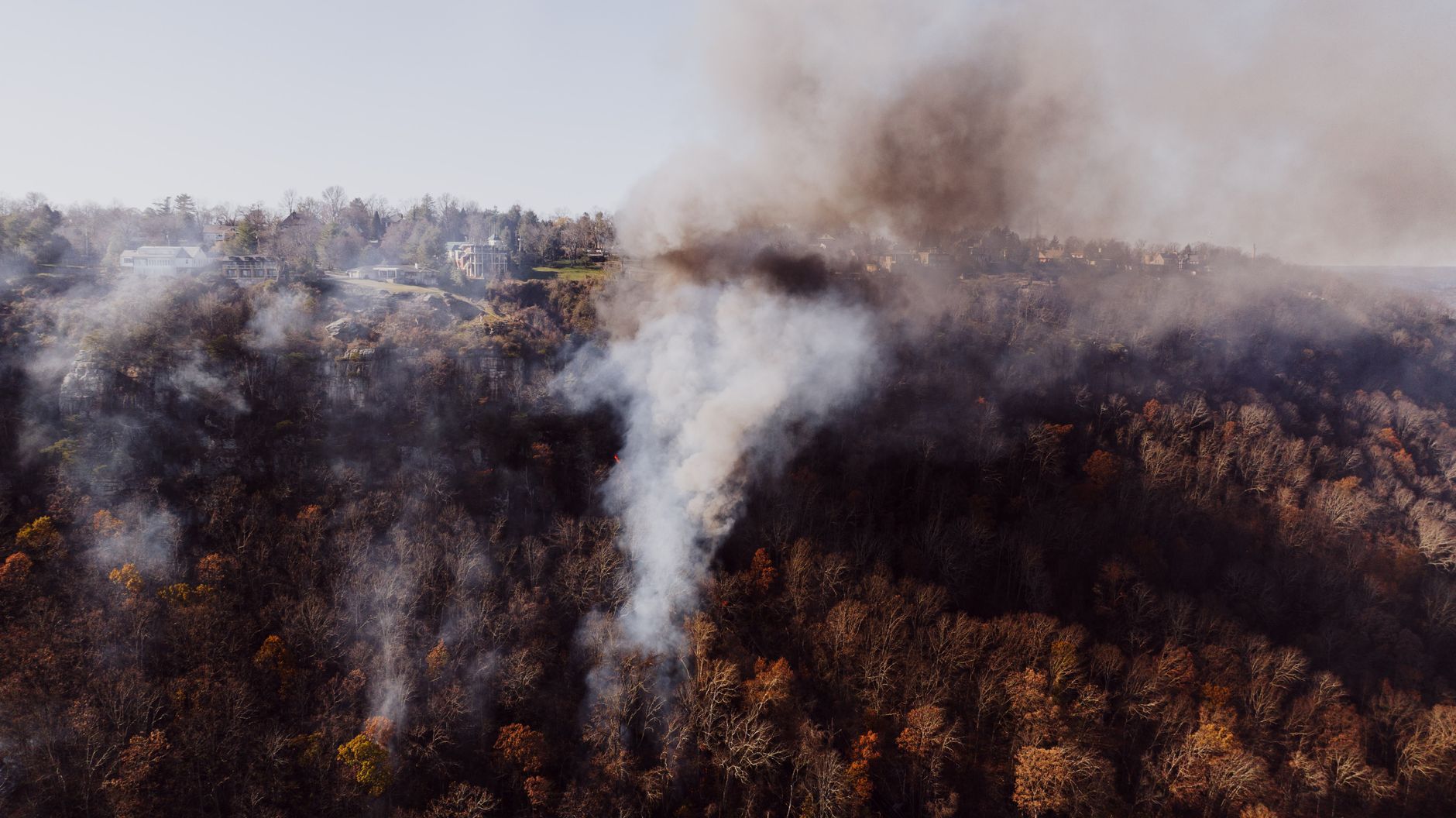
The smoke came back over Chicago, Detroit and the US north-east this week, and so did the familiar script: shut the windows, skip the run, wait for the alert to lift. Recent review papers make that advice feel necessary but thin. Xinyue Ye and colleagues’ 2026 review in GeoHealth gathered 139 peer-reviewed studies and found a pattern that starts in the airways, then reaches into other systems researchers are still trying to measure cleanly.
Respiratory scientists start with a correction. Wildfire smoke is a moving chemical mix, not ordinary dirty air under a dramatic sky. In Veronica L. Penuelas and David Lo’s 2026 review in Frontiers in Public Health, the central issue is how far inflammation can travel after a plume ages, mixes with traffic and industrial pollution, and breaks into smaller particles.
Hadley and colleagues come at the exposure from the heart. Their review in Circulation describes smoke as a possible cardiovascular trigger, especially for people already living with heart disease, hypertension or diabetes. That risk often gets lost in daily coverage, which still treats smoke as a short-lived nuisance once the coughing stops.
This week’s plume turns a review-paper problem into a kitchen-table one. The Guardian’s reporting on this week’s smoke spread described more than 100 million people under poor-air alerts. For health readers, the useful question is what the reviews say smoke does after it gets into the body, where the evidence is firmest, and where scientists still have to separate toxicity from heat, fear, evacuation and the rest of fire season.
The lung story is still the clearest
Airways come first because the evidence there is hardest to dismiss. In Carlos F. Gould and colleagues’ 2024 review in Annual Review of Medicine, wildfire smoke exposure was linked to higher all-cause mortality and to a 0.25% rise in respiratory hospitalisations for every 1 μg/m³ increase in wildfire PM2.5. Children, older adults, pregnant people, and anyone with asthma or COPD appear repeatedly as the groups least able to treat smoke as a passing inconvenience.

People do not need a meta-analysis to know smoke can sting the eyes or turn an easy walk into a coughing fit. The reviews add scale and mechanism. Penuelas and Lo argue that the older picture of smoke as simple particulate irritation is too blunt. Fresh smoke changes as it drifts; sunlight, heat and urban chemistry can alter the mixture, producing aged smoke that may behave differently in the lungs than the plume that first rose from the fire line.
A harder respiratory question sits underneath the obvious symptoms: is this mainly acute irritation, or deeper airway injury? For now, the answer is both, with uneven evidence. Acute effects show up most clearly in emergency visits, inhaler use and symptom flares. Longer-running airway injury is biologically plausible and increasingly supported by lab work, although human studies still lean on short windows after exposure. The clinical signal is loudest when smoke arrives, even if the full bill takes longer to tally.
Smoke does not stop at the chest
For cardiologists, the past few fire seasons have been an argument against a comforting myth, the idea that the danger has passed if a person is not wheezing. Hadley and colleagues’ 2022 Circulation review described substantial evidence for short-term cardiovascular effects. One figure is hard to shrug off: a 1.9% increase in cardiovascular mortality for every 10 μg/m³ rise in three-day wildfire PM2.5 exposure.

The more useful question is narrower than the headline version. How immediate is the trigger, and how much of the burden reflects cumulative injury rather than a same-day shock? The literature answers the first half better than the second. The strongest evidence still points to smoke as an acute trigger for vulnerable people, not as a neatly measured long-term dose-response curve. That is enough to matter. A trigger does not need decades of follow-up to be dangerous if it lands on someone already carrying cardiac risk.
In the 2024 Annual Review of Medicine synthesis, cardiovascular results were less consistent than respiratory ones, which helps explain why public messaging has lagged. Less consistent does not mean absent. Often it means the exposure windows differ across studies, the biology is harder to isolate, and the people getting hit also face heat, chronic disease, work exposure or limited access to filtered indoor air.
No smoke day meets a blank body. One person may come away with a mild headache. Another may feel chest tightness and a jump in blood pressure. Age, medication, asthma, pregnancy, vascular disease and housing conditions can all change the dose, or trap it indoors.
The brain signal is real, but still messy
The fastest headlines tend to come from the most unsettled part of the literature. Haneen Abou El Khair and colleagues’ 2026 review in Genes gathered evidence on neurological outcomes, mental health and epigenetic pathways, and its useful contribution is its caution. Ultrafine particles could plausibly contribute to neuroinflammation. Mood and cognitive symptoms appear in exposed populations. Animal work adds biological plausibility. Human wildfire seasons, though, rarely behave like clean experiments.
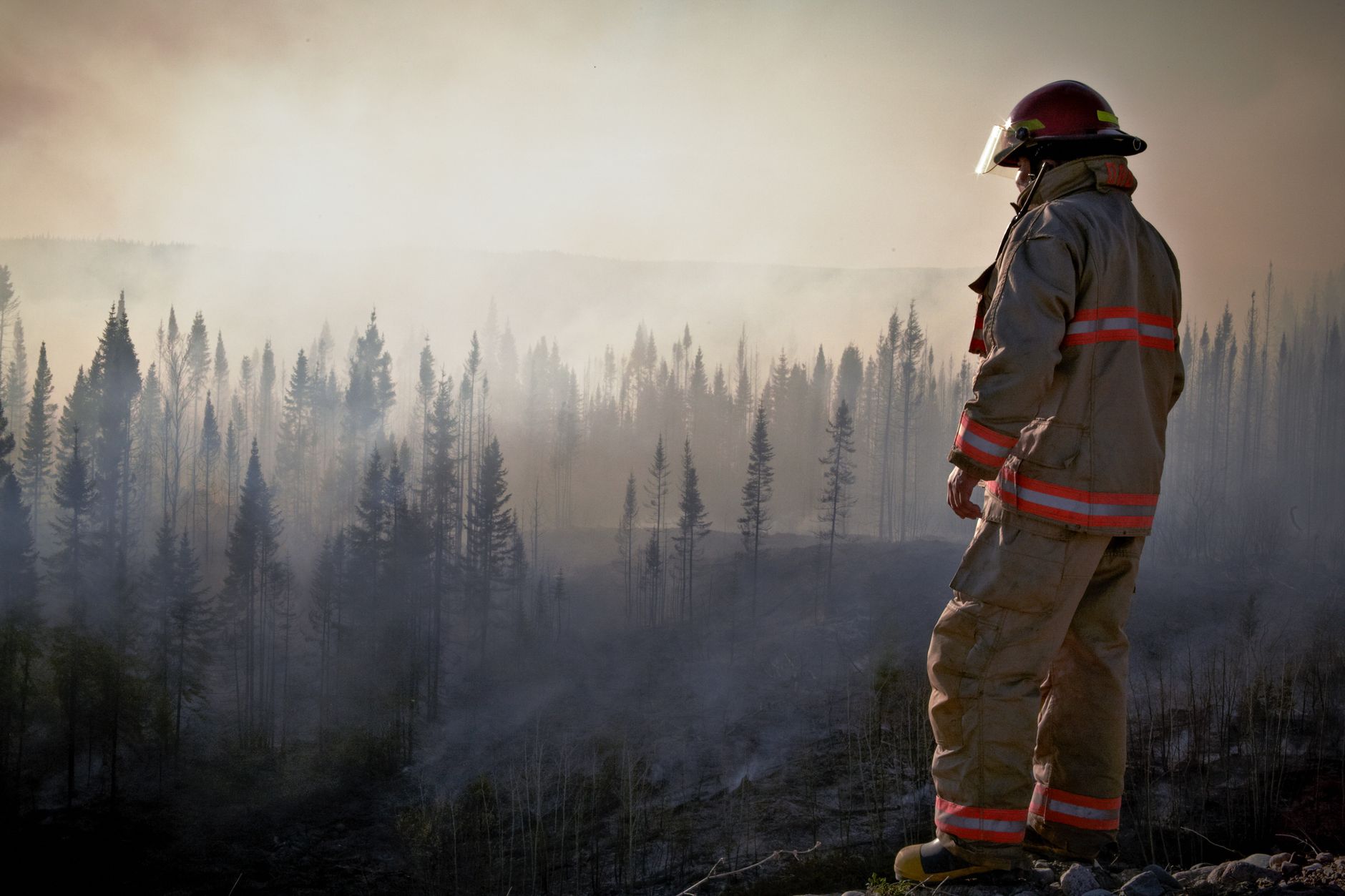
Skepticism belongs in this section. Fires also bring fear, evacuation, lost sleep, extreme heat, lost wages and sudden displacement. If an exposed person reports anxiety, headaches, poor focus or low mood, the experience is real. The harder question is which part of the fire experience produced it. That is why the neurological signal should be described as emerging rather than settled.
In an NPR explainer on keeping smoke out of homes, University of Washington researchers put one part of the concern plainly:
Smaller ultrafine particles (PM 0.1) can pass into the bloodstream and organs, including the brain.
Source: University of Washington researchers, via NPR
That quote does not prove the size of the real-world neurological effect during a bad smoke week. The review literature does not fully prove it either. It does explain why scientists are no longer satisfied with limiting the conversation to burning eyes and scratchy throats. Once particles move beyond the upper airway, the plausible map of harm gets wider.
The practical burden falls where filtration does not
Housing brings the evidence back to daily life. Tessa Wardle and colleagues’ 2026 review in the Journal of Exposure Science & Environmental Epidemiology looked across twenty-six intervention studies and found the strongest support for an unglamorous package: stay indoors when possible, seal rooms, use HEPA or high-efficiency filtration, and wear a well-fitted N95 when outdoor exposure cannot be avoided.

The same review answers a practical question: which indoor interventions work during a real smoke episode? Filtration beats bravado. Cleaner-air rooms matter. Children and pregnant people are distinct vulnerability groups in this literature, not smaller adults. Their protection depends on schools, homes and public guidance, not simply individual caution. A current Guardian analysis of air purifiers and smoke lands in much the same place, and the NPR box-fan purifier guide makes the equity point obvious: people improvise because commercial protection is not evenly available.
A recent STAT opinion essay on wildfire smoke and public health put the broader lesson this way:
history teaches us to never let a health-related environmental crisis go to waste.
Source: STAT op-ed authors, STAT News
That line comes from a policy argument rather than a review paper, but it captures the practical asymmetry in the science. Smoke harm is uneven because protection is uneven. A person with central air, spare filters, flexible work and room to stay indoors lives in a different exposure reality from a warehouse worker, a schoolchild in an older building or a household that cannot keep buying filters through a long fire season.
Wildfire smoke remains, first and most clearly, a lung story. The latest reviews do not overturn that. They make it harder to pretend the lungs are where the story ends. The cardiovascular signal is credible, the neurological signal is growing, and the intervention literature says the burden is shaped as much by buildings and resources as by biology. When the sky turns orange, the most honest evidence-based line is that wildfire smoke is a whole-body exposure with one well-established front door and several consequences researchers are still learning to measure.
References
- Gould CF, Heft-Neal S, Johnson M, Aguilera J, Burke M, Nadeau K. Health effects of wildfire smoke exposure. Annual Review of Medicine. 2024. https://www.annualreviews.org/content/journals/10.1146/annurev-med-052422-020909
- Ye X, Ye Y, Huang X, Onega T. Wildfires and public health: a comprehensive review of human-centric studies. GeoHealth. 2026. https://doi.org/10.1029/2025GH001534
- Penuelas VL, Lo D. From combustion to consequence: respiratory health concerns from primary and aged smoke at the wildland–urban interface. Frontiers in Public Health. 2026. https://doi.org/10.3389/fpubh.2026.1763671
- Hadley M, Henderson SB, Brauer M, Vedanthan R. Protecting cardiovascular health from wildfire smoke. Circulation. 2022. https://doi.org/10.1161/CIRCULATIONAHA.121.058058
- Abou El Khair H, Toor V, Cao-Lei L. The effect of wildfire exposure: neurological outcomes, mental health, and epigenetic insights. Genes. 2026. https://doi.org/10.3390/genes17040420
- Wardle T, Syed A, Scanlan LD, Saxena P, Basu R, Miller MD, et al. Narrative review of wildfire smoke interventions: considering the unique vulnerabilities of children and pregnant individuals. Journal of Exposure Science & Environmental Epidemiology. 2026. https://doi.org/10.1038/s41370-026-00847-w
The Vitalspell brief
Evidence-based supplement science — weekly in your inbox.
Subscribe