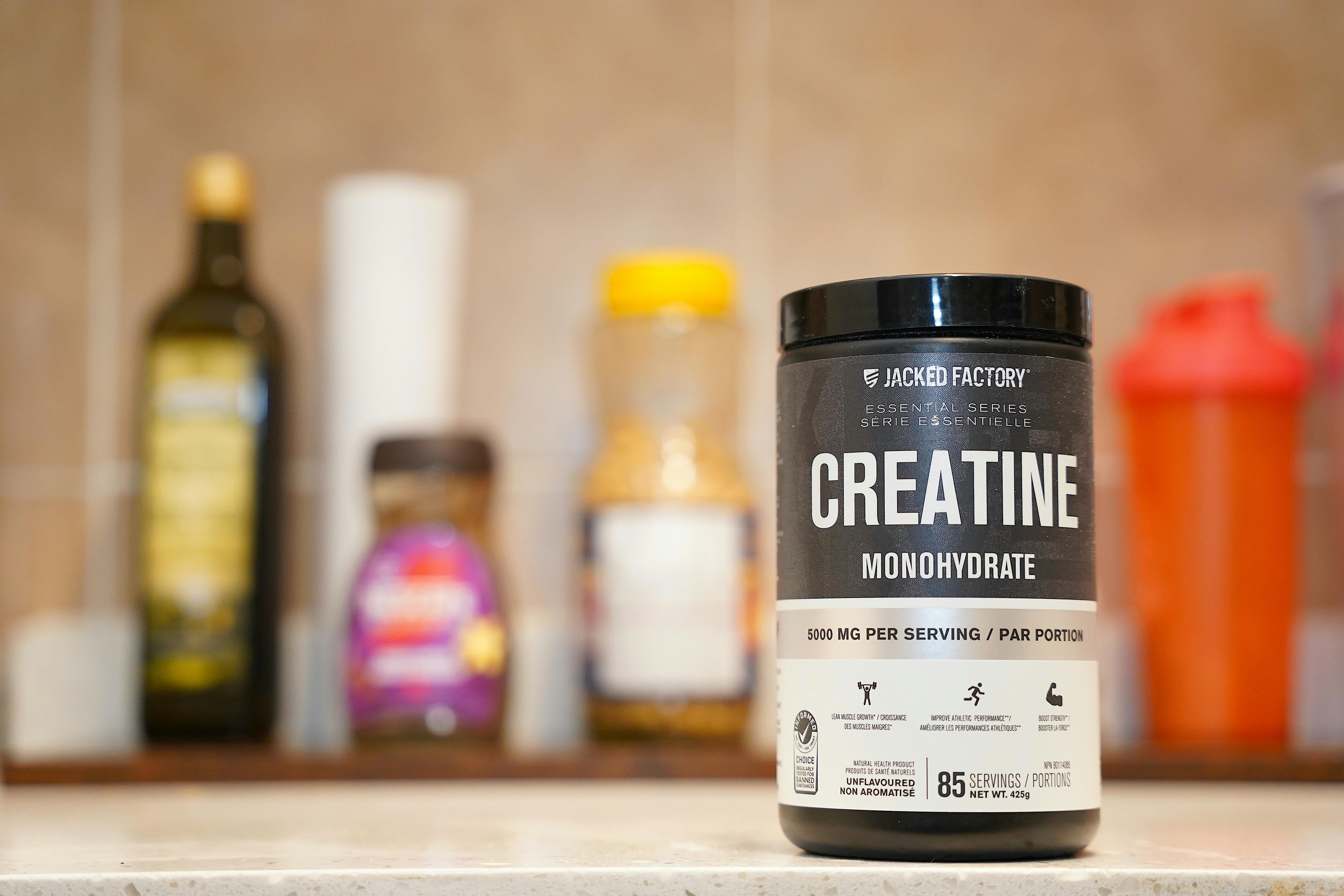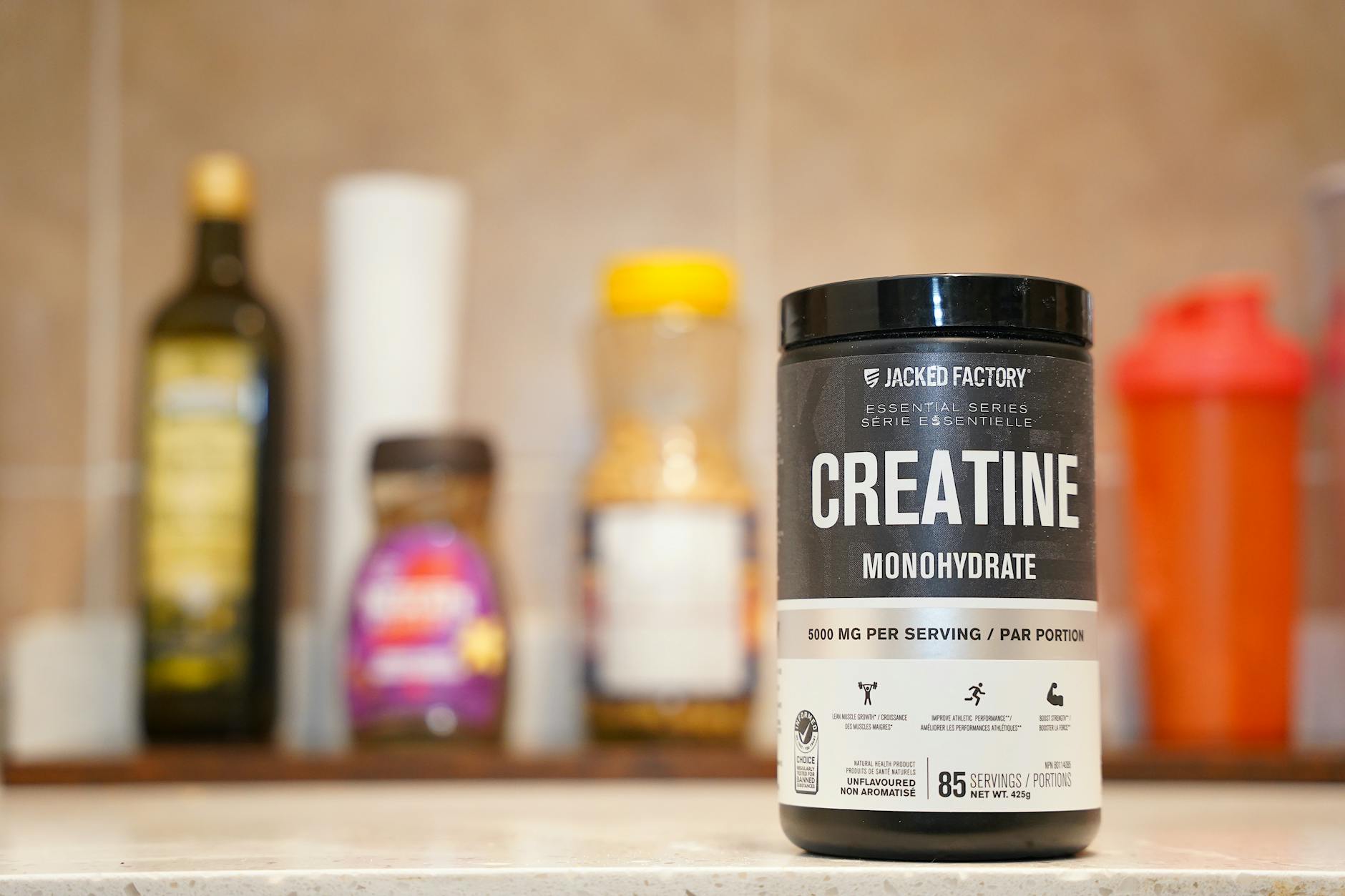
Why women have less creatine in their brains — and what the evidence says about supplementing it
Women have 70 to 80 percent lower brain creatine stores than men. A 2024 meta-analysis and the 2025 CONCRET-MENOPA trial suggest supplementation may improve memory and processing speed — here is the evidence, the gaps, and what we still do not know.
Walk into any supplement aisle this year and you will hear it: creatine is not just for muscle. It targets brain fog, perimenopause, the cognitive drift women feel in their forties and fifties but cannot quite name. The claim has basis. The question barely addressed by research is how many women in this conversation actually have measurably low brain creatine stores, as distinct from the lower levels that are normal for female physiology.
This tension sits at the centre of the creatine-for-women story. Trials and meta-analyses on one side report real, measurable cognitive effects. Perimenopause on the other — the life stage most creatine marketing now targets — remains almost entirely unstudied for this supplement. The 2025 CONCRET-MENOPA randomized controlled trial became the first to examine creatine’s effect on cognition in perimenopausal and menopausal women specifically, with 36 participants enrolled.
The evidence base for women deserves closer examination than the marketing copy provides.
Endogenous creatine stores run approximately 70 to 80 percent lower in women than men, with the gap especially pronounced in the frontal cortex — the region responsible for memory, focus, and mood regulation. A 2021 review by Smith-Ryan and colleagues in Nutrients identified this finding as the physiological anchor for the entire women-and-creatine research agenda. If the brain runs on creatine as part of its ATP-recycling energy system, and women have substantially less of it, supplementation logic follows.
Chen Xu and colleagues reached a more nuanced conclusion reading the same evidence base. Their 2024 meta-analysis appeared in Frontiers in Nutrition. Pooling data from 16 randomized controlled trials with 492 participants, they found a significant positive effect on memory (standardised mean difference 0.31, p < 0.00001). That effect exists. It also ranks as modest in Cohen’s taxonomy — small-to-medium. Processing speed showed a larger effect. The female-specific signal emerges there: the effect on processing speed time was SMD −0.87 in women compared to −0.35 in men. Women gained roughly 2.5 times more processing-speed benefit from creatine supplementation than men.
Xu’s team offers limited speculation on why. Across the pooled trials, the most parsimonious explanation — the one Smith-Ryan’s group had already laid out — depends on baseline: women start with lower brain creatine, the same dose produces a larger relative increase, and the largest functional gains accrue to those furthest from saturation. Vegetarians show larger creatine effects on muscle for the same reason.
The CONCRET-MENOPA trial, published in 2025 in the Journal of the American Nutrition Association, tested this hypothesis more directly. Thirty-six perimenopausal and menopausal women took either a placebo or 1,500 milligrams per day of creatine hydrochloride for eight weeks. Magnetic resonance spectroscopy measured brain creatine levels before and after. The supplemented group showed a 16.4 percent increase in frontal brain creatine and a 6.6 percent improvement in reaction time relative to placebo. Both effect sizes reached statistical significance. The sample size remains small. Both facts hold true.
The 2024 meta-analysis and the 2025 CONCRET-MENOPA trial form the evidence spine for creatine’s cognitive effects in women. The meta-analysis confirms that female-specific cognitive gains are real and larger than male gains across multiple trials and populations. CONCRET-MENOPA provides the first direct brain-imaging evidence that supplementation actually raises brain creatine levels in the target population, with functional cognitive improvement to match. Thirty-six women constitute a pilot. Eight weeks is a snapshot. Persistence, plateau, or fade-out with continued use remains unknown.
Smith-Ryan’s 2025 lifespan review in Nutrition Reviews threads these findings into a broader arc across the female life course: menstruation, pregnancy, and menopause. Estrogen fluctuations influence creatine kinase activity, according to the review — the enzyme that converts creatine into its active phosphorylated form — which means the same supplement dose may not produce the same effect at different points in the menstrual cycle. Pregnancy is flagged as a period of increased creatine demand, with placental creatine transport drawing down maternal stores. Menopause marks the life stage where declining estrogen coincides with both the largest drop in endogenous creatine synthesis and the highest cognitive symptom burden. Women likely under-supplement creatine relative to their physiological needs across all three transitions.
The review also identifies something the CONCRET-MENOPA trial design implies but does not state: the standard 5-gram daily dose used in most creatine research may not be the right target for women, who on average have lower lean body mass and different renal creatine handling. The hydrochloride form used in CONCRET-MENOPA demonstrates that 1,500 milligrams — less than a third of the standard monohydrate dose — still produces measurable brain-level increases. Practical implications follow. Many women avoid creatine due to concerns about water retention and gastrointestinal discomfort at standard doses.
Muscle-performance evidence predates the cognitive research by decades and stands more settled. Creatine monohydrate at 3 to 5 grams per day reliably increases lean body mass, strength, and high-intensity exercise performance in women, with effect sizes comparable to those seen in men. Increased phosphocreatine availability for ATP resynthesis during repeated bouts of high-intensity effort — the mechanism operates identically across sexes. The “creatine makes women bulky” concern, still circulating in gym-adjacent social media, has no physiological basis: women have 15 to 20 times lower circulating testosterone than men. Water retention creatine causes is intramuscular — not the cosmetic bloating some women fear.
Four honest gaps remain. Sustainability is first. Every trial showing cognitive benefit in women has a follow-up window measured in weeks. Whether the 16.4 percent brain-creatine increase in CONCRET-MENOPA holds at six months, or whether adaptive downregulation of creatine transporters erodes the effect, is unknown. Clinical significance is second: a 6.6 percent improvement in reaction time on a laboratory task does not indicate whether a woman will notice the difference in her daily life — whether she will feel less foggy at 3 p.m., retrieve names faster, or navigate a complex workday with less cognitive fatigue.
Confounding is third. Many of the women in these trials were also active, eating protein-adequate diets, and engaged in resistance training — lifestyle factors that independently improve cognition. Isolating creatine’s contribution from the lifestyle bundle is difficult.
The fourth gap comes from the skeptic perspective and identifies a real question: the number of women with brain fog who have measurably low brain creatine is unknown. The claim that women “need” more creatine because they have less relies on an assumption — that the lower baseline is a deficit rather than a physiological set-point. Women also have lower haemoglobin than men, and that does not mean every woman needs iron supplementation; it means the reference range differs. The creatine gap may be analogous. But the cognitive effect sizes suggest the lower baseline is not entirely benign either.
Cost-benefit calculus for an individual woman weighing supplementation favors supplementation by default. Creatine monohydrate costs roughly 10 to 25 cents per 5-gram serving in bulk powder form. Side-effect profile at standard doses — some reports of mild gastrointestinal upset, mostly resolved by splitting the dose — is benign compared to virtually any pharmaceutical cognitive intervention. Evidence for muscle and exercise performance is strong. Evidence for brain health is moderate and growing, with the largest effects in the populations that start with the lowest stores: women and older adults, and vegetarians. A loading phase of 20 grams per day for five to seven days saturates muscle creatine stores fastest, but a steady 3 to 5 grams per day achieves the same saturation within three to four weeks without the gastrointestinal load.
Clarifying what creatine is not helps. It is not a stimulant. Blood-brain barrier crossing occurs slowly — brain uptake is slower than muscle uptake, and steady-state brain levels take weeks rather than days to reach. It is not a nootropic in the acute sense either. The mechanism in the brain is the same as in muscle: creatine phosphate donates a phosphate group to ADP, regenerating ATP during periods of high energy demand. Cognitive benefit, if it materialises, will most likely appear during sustained mental effort — the long meeting, the complex analysis, the information-dense environment — rather than in the first hour after taking a scoop.
Smith-Ryan’s 2025 review concludes that creatine supplementation presents a promising strategy for enhancing various aspects of women’s health across the lifespan, with evidence suggesting it can improve muscle strength, exercise performance, body composition, and potentially offer cognitive and mood benefits. That conclusion holds. Evidence for muscle is robust. Evidence for cognition is building, with the female-specific processing-speed finding and the CONCRET-MENOPA brain-imaging data adding weight. Gaps — sustainability, clinical significance, and the baseline-deficit presumption — are real but navigable.
The claim increasingly common in wellness marketing that creatine is a proven treatment for menopausal brain fog lacks support. The trial that tested that claim did so in 36 women for eight weeks. It found a signal worth pursuing. Evidence accumulates this way — one trial, one question, one increment at a time. Women taking creatine in 2026 participate in that accumulation whether they know it or not.
References
- Xu C, Li Q, Zhang Y, et al. The effects of creatine supplementation on cognitive function in adults: a systematic review and meta-analysis. Frontiers in Nutrition. 2024. https://www.frontiersin.org/journals/nutrition/articles/10.3389/fnut.2024.1424972/full
- Smith-Ryan AE, Cabre HE, Eckerson JM, et al. Creatine in women’s health: bridging the gap from menstruation through pregnancy to menopause. Nutrition Reviews. 2025. https://www.tandfonline.com/doi/full/10.1080/15502783.2025.2502094
- Effects on cognition, clinical outcomes, and brain creatine levels in perimenopausal and menopausal women (CONCRET-MENOPA): A randomized controlled trial. Journal of the American Nutrition Association. 2025. https://www.tandfonline.com/doi/abs/10.1080/27697061.2025.2551184
- Smith-Ryan AE, et al. Creatine supplementation in women’s health: a lifespan perspective. Nutrients. 2021. https://www.mdpi.com/2072-6643/13/3/877
Strength coach and nutritionist covering protein science, creatine, recovery protocols, and body composition. Reports from Miami.
The Vitalspell brief
Evidence-based supplement science — weekly in your inbox.
Subscribe