What Creatine Actually Does for Women's Muscle, Brain and Menopause
A sweeping 2025 review argues women metabolise creatine differently than men — and the gap widens during the menopause transition. But a closer look at the cognitive evidence reveals a single small trial, uncorrected multiple comparisons, and a perimenopause-shaped hole in the research.
In May 2025, a team led by Dr. Abbie E. Smith-Ryan at the University of North Carolina published what amounts to the most comprehensive accounting yet of creatine’s effects across the female lifespan — from first menstruation through pregnancy and into postmenopause. The review, which appeared in the Journal of the International Society of Sports Nutrition, drew on decades of mechanistic work and a growing body of clinical trials to make a single, sharp argument: women metabolise creatine differently than men do, and the gap matters more than the supplement industry has bothered to explain.
On average, women eat 20 to 30 percent less dietary creatine than men and synthesise roughly 20 percent less endogenously. The reasons are partly dietary — creatine comes overwhelmingly from red meat, poultry and fish, and women on average consume less of all three — and partly hormonal. Oestrogen upregulates the expression of the creatine transporter SLC6A8, meaning creatine uptake into muscle and brain cells fluctuates across the menstrual month. During the luteal phase, when oestrogen is higher, transport efficiency rises. During the follicular phase and, critically, during the oestrogen decline of perimenopause, it drops. The result is a system in which women begin with lower creatine reserves and lose ground at precisely the life stage when the functional consequences — muscle loss, cognitive fog, fatigue — become most intrusive.
And yet, as Smith-Ryan’s team noted, precisely zero randomised controlled trials have ever enrolled perimenopausal women specifically for a creatine intervention. The RCTs that do exist cluster almost entirely in postmenopausal populations, where the hormonal landscape has already settled into a new, lower-oestrogen equilibrium. The perimenopause — the stretch, sometimes lasting a decade, when symptoms peak and the evidence base goes silent — remains an unexamined country on the creatine research map.
“There’s a lot of good data on creatine after menopause,” Smith-Ryan told NutraIngredients in a companion interview, “but it’s really that transition to menopause when women begin to struggle with sleep, bone health, muscle loss, joint pain, fatigue, brain fog and even inflammation.”
But the evidence picture is not uniformly rosy — and the loudest note of caution comes from a researcher who has spent her career warning against over-extrapolation from small trials. Dr. Jerilynn Prior, professor emerita of endocrinology at the University of British Columbia, reviewed the same set of studies and reached a blunter conclusion: the numbers do not yet justify the marketing. Her concern centres on a single trial that has become the primary citation in every news story about creatine and the menopausal brain.
That trial, known as CONCRET-MENOPA, enrolled 36 perimenopausal and menopausal women and randomised them across four arms — placebo, low-dose creatine HCl, medium-dose creatine HCl, and creatine ethyl ester — for eight weeks. The researchers tested more than 60 cognitive endpoints spanning reaction time, verbal memory, executive function and processing speed. They found a 6.6 percent improvement in reaction time in the medium-dose creatine HCl group compared with a 1.2 percent change in the placebo group. Brain creatine levels, measured by magnetic resonance spectroscopy, rose 16.4 percent in that same group versus 0.9 percent on placebo. Two other cognitive measures — a Stroop interference test and a delayed verbal recall task — also returned statistically significant gains.
That sounds promising.
But Prior’s objection is methodological, not ideological.
“The trial had too few participants and too many objectives to draw firm conclusions,” she told CBC News’ Second Opinion. With only nine women per group and more than five dozen endpoints, the probability that at least a handful of comparisons would reach p < 0.05 purely by chance is high. As the Health Integrity Project noted in its own analysis, the CONCRET-MENOPA authors did not report a correction for multiple comparisons in the published manuscript — a gap that makes the positive findings more suggestive than definitive. And the magnitude mismatch — a 16.4 percent rise in brain creatine translating to only 6.6 percent faster reaction times — hints at mechanistic uncertainty that a larger trial would need to resolve.
This is not an argument that creatine does nothing. It is an argument that the cognitive evidence, specifically, sits at the pilot-trial stage. And the distinction between statistical significance and clinical significance — a 6.6 percent faster reaction time on a laboratory test does not necessarily mean a woman notices she is thinking more clearly — has been largely elided in popular coverage, where “creatine cured my brain fog” anecdotes do the work that data has not yet done.
The muscle story is more settled. A 2024 umbrella review in Sports Medicine that we covered earlier this year confirmed that creatine monohydrate improves lean body mass and strength outcomes in women across age groups, with effect sizes comparable to those seen in men. Resistance-trained women who supplement with creatine reliably gain more lean mass and strength than those who train without it. The effect holds in older women as well — a group for whom preserving muscle is not cosmetic but functionally protective against falls, frailty and metabolic decline. A separate body of work, summarised in our earlier deep-dive on creatine and cognition in aging, suggests that the muscle-brain connection itself may be bidirectional: sarcopenia is an independent risk factor for cognitive decline, and interventions that preserve lean mass — including creatine — may slow that spiral.
Where the evidence thins out is in the connective tissue between muscle and brain. Smith-Ryan’s review argues that creatine’s cognitive benefits may operate indirectly: by reducing fatigue, it gives women the motivation to exercise; exercise then benefits muscle, bone, mood and cognition through well-characterised pathways.
“Will creatine fix all menopause symptoms? No,” she said, “but it can be really helpful in many indirect ways — for example, by reducing fatigue, which gives you the motivation to exercise, which then benefits your muscles and bones.”
This cascade — creatine → less fatigue → more movement → better health — is plausible but untested as a causal chain in a prospective trial. Every link in the chain has independent evidence behind it. Creatine’s role in the ATP-phosphocreatine energy shuttle is textbook biochemistry; its anti-fatigue effects in high-intensity exercise are replicated across dozens of studies. The chain itself, however, has not been put under experimental load in a menopausal population.
And then there is the money. The 2025 JISSN review was funded by Alzchem, a German creatine manufacturer, timed to coincide with the Creatine for Health conference in 2025. The CONCRET-MENOPA trial used creatine HCl and creatine ethyl ester donated by Vireo Systems, a US-based supplement supplier. Dr. Mark Tarnopolsky, a McMaster University researcher frequently quoted as a neutral expert in news coverage, owns a company that sells creatine supplements — a conflict he discloses in his academic publications, but one that rarely survives the journey from journal article to news headline.
None of this means the research is fraudulent. Industry funding is the default in supplement science; the NIH does not fund many trials on over-the-counter compounds that cannot be patented. Creatine sales surged 120 percent between 2021 and 2022, driven largely by women entering a category that had been marketed almost exclusively to men for three decades — a commercial opportunity that creates an incentive to talk up the evidence, not to fabricate it. But the funding structure does mean that the evidence base has been shaped by actors who stand to gain from positive findings, and that the burden of proof for claims that outpace the data should be higher, not lower, than it would be for an investigator-initiated trial with no commercial stake.
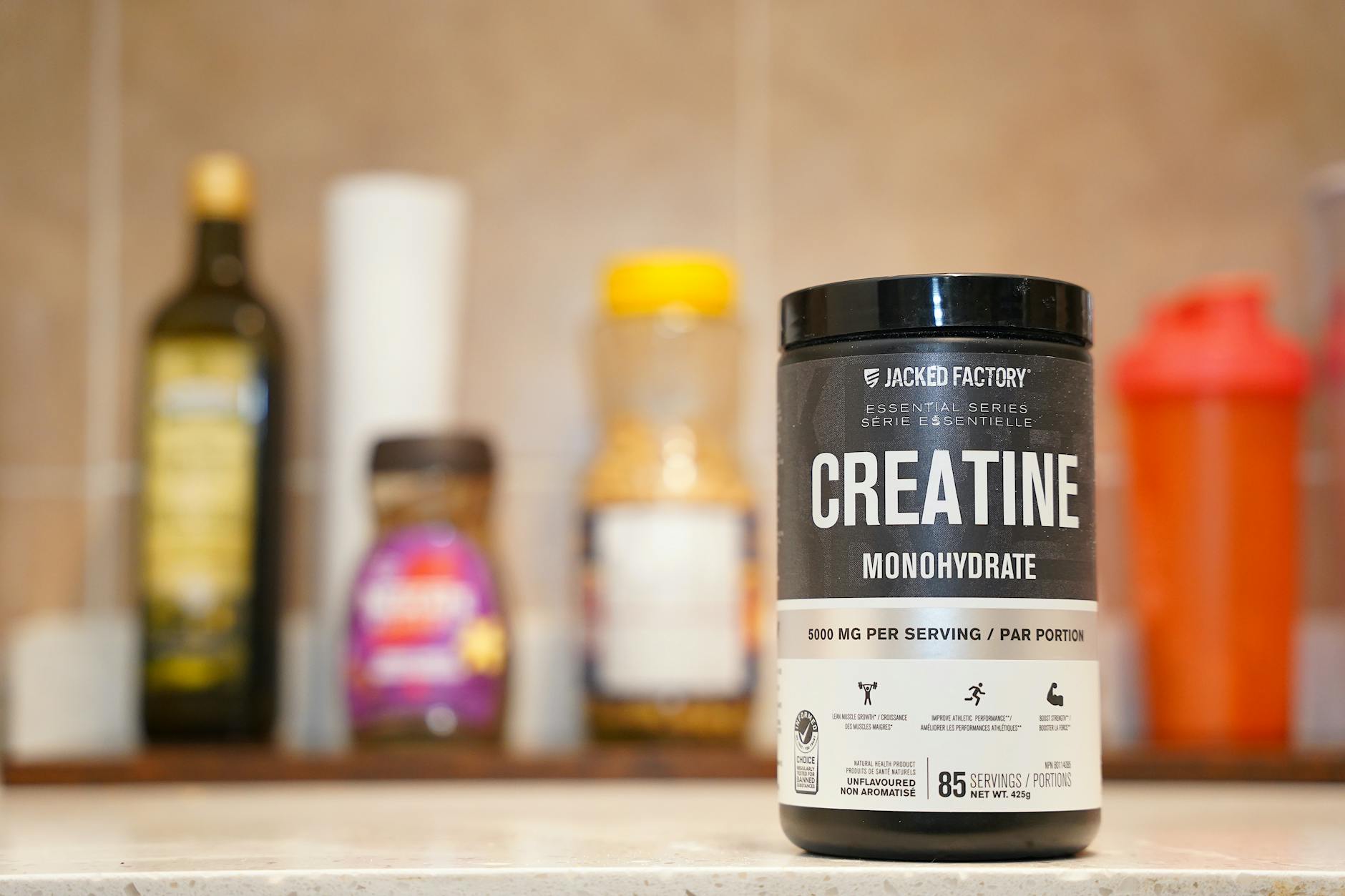
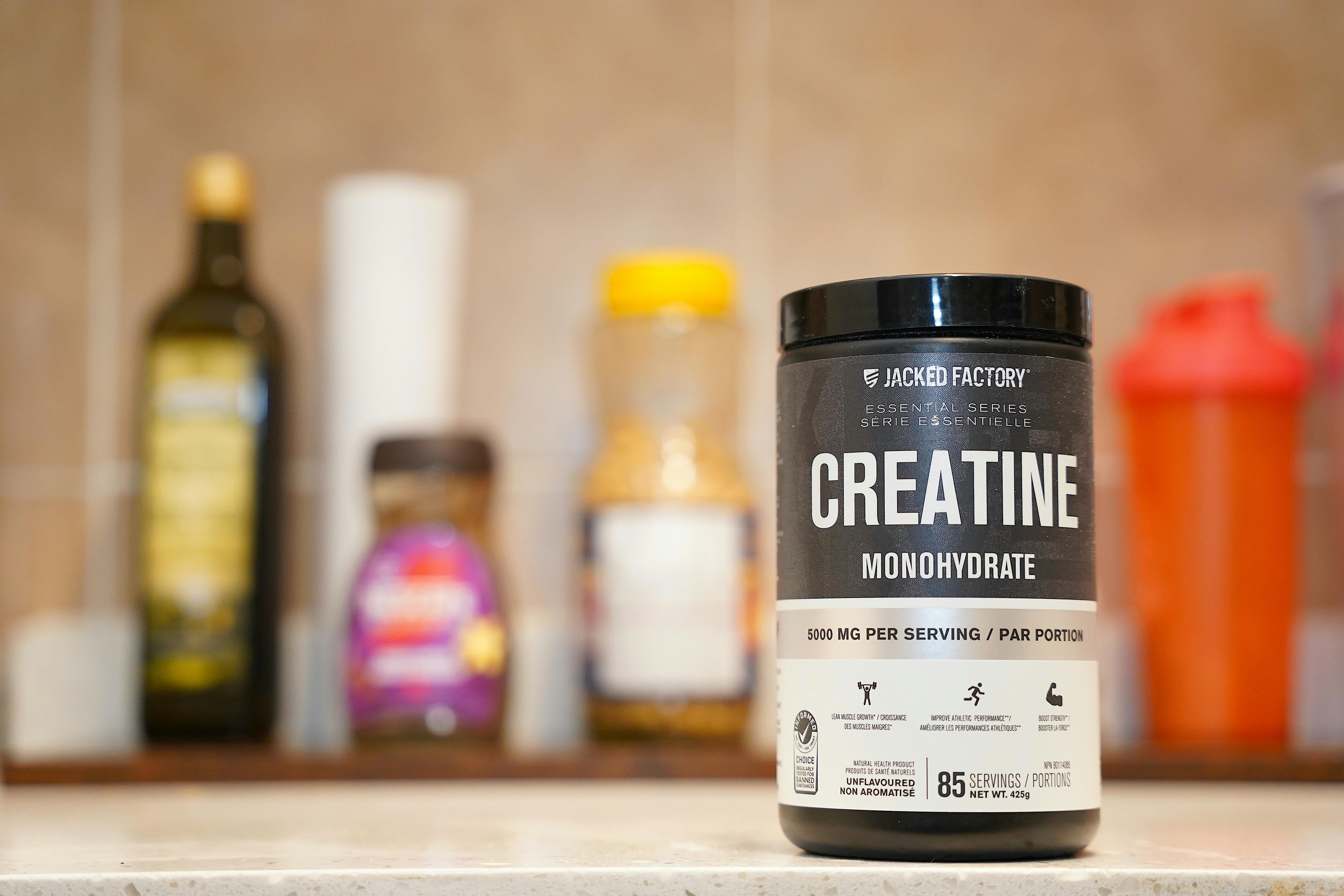
For women considering creatine, the practical calculus is reasonably straightforward. The safety record is strong: decades of use in athletic populations, no signal of renal or hepatic harm at standard doses in healthy adults, and a growing body of long-term safety data that we have covered in detail previously. The standard dose — 3 to 5 grams of creatine monohydrate per day — costs roughly 15 to 30 cents, dissolves adequately in water or coffee, and does not require the loading protocols that dominated 1990s advice. Creatine monohydrate remains the form with the most evidence; the HCl and ethyl ester variants used in CONCRET-MENOPA have far less long-term data and cost substantially more without demonstrated superiority for most outcomes.
The strongest case for creatine in midlife women rests on muscle — a domain where the evidence is mature and the benefits matter. The case for brain is younger, thinner, and more dependent on a single small trial with uncorrected multiple comparisons. And the case for perimenopause specifically, where symptom burden peaks and research is absent, is not a case at all yet. It is a gap with a question mark over it.
What would close that gap? A trial enrolling 150 to 200 perimenopausal women, randomised to creatine monohydrate or placebo, with pre-registered primary endpoints — say, verbal memory and fatigue scores — and a 12-week minimum follow-up. A trial that corrects for multiple comparisons. A trial designed to answer a specific clinical question rather than to screen for any signal at all. Until that trial exists, the honest answer to “should I take creatine for brain fog during perimenopause?” is: we do not know. For muscle, bone and the indirect benefit of having enough energy to exercise? The evidence points toward yes.
That is a narrower recommendation than the headlines suggest. It is also the one the data actually supports.
References
- Smith-Ryan AE, Cabre HE, Hirsch KR, et al. Creatine in women’s health: bridging the gap from menstruation through pregnancy to menopause. Journal of the International Society of Sports Nutrition. 2025. https://www.tandfonline.com/doi/full/10.1080/15502783.2025.2502094?src=exp-la
- The Effects of 8-Week Creatine Hydrochloride and Creatine Ethyl Ester Supplementation on Cognition, Clinical Outcomes, and Brain Creatine Levels in Perimenopausal and Menopausal Women (CONCRET-MENOPA). Journal of the American Nutrition Association. 2025. https://pubmed.ncbi.nlm.nih.gov/40854087/
Strength coach and nutritionist covering protein science, creatine, recovery protocols, and body composition. Reports from Miami.
The Vitalspell brief
Evidence-based supplement science — weekly in your inbox.
Subscribe