Probiotics and diet together reduced gut inflammation in autistic children
Two new studies strengthen the case that probiotics combined with dietary changes can reduce intestinal inflammation in children with autism spectrum disorder — but behavioural benefits remain unproven.
Close to 80 percent of children diagnosed with autism spectrum disorder live with significant gastrointestinal symptoms — constipation, diarrhoea, abdominal pain — layered on top of the behavioural and communication challenges the condition already brings. Parents and clinicians have been noting the connection for years without having the data to explain it. Two studies that appeared within weeks of each other in May 2026 begin to supply answers. One, a dietary-intervention trial led by Natalia A. Smolko at the Russian Scientific Center of Surgery, found that a rotational diet combined with probiotics reduced markers of intestinal inflammation in 96 children with ASD. The other, an industry-funded feasibility study of the Bio-K+ probiotic beverage, reported what its scientific director described as “promising” preliminary signals. Taken together, the papers add weight to an idea that has been circulating at the margins of autism research for more than a decade: the gut microbiome is part of the neurodevelopmental picture, and changing it might shift more than digestion.
But “promising” is doing a lot of work here. The Smolko study, published in Nutrients, was a controlled dietary intervention that tracked objective biomarkers: fecal calprotectin and zonulin, both well-validated measures of intestinal inflammation and barrier integrity. The Bio-K study was open-label — every family knew the child was getting the probiotic — and there was no placebo group at all. In a research area where the placebo effect in parent-reported ASD outcomes may account for up to half of observed improvement, that design choice isn’t a footnote. The distance between these two evidence tiers is where the story actually lives.
What the Smolko study found
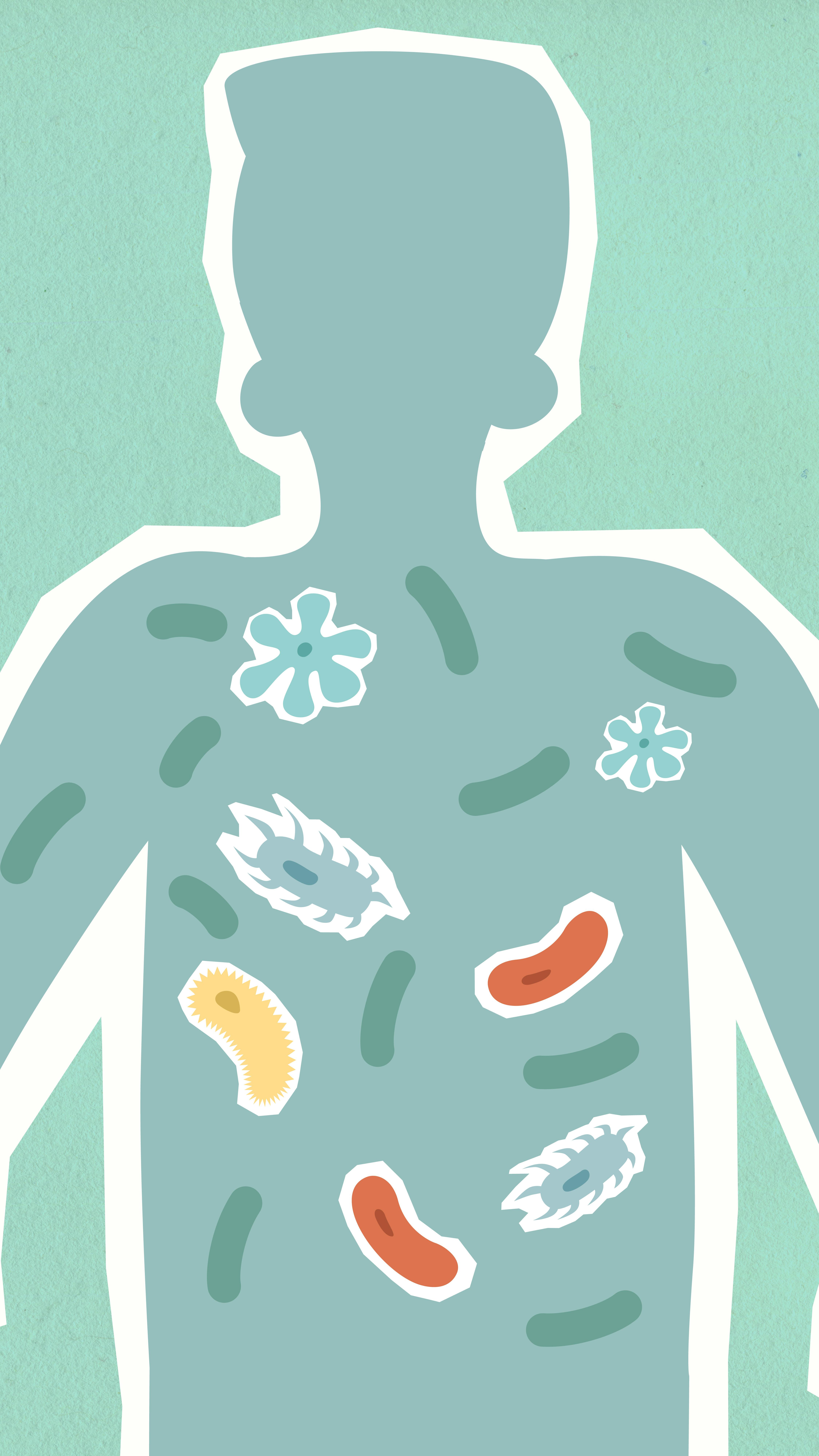
Smolko and colleagues at the Russian Scientific Center of Surgery enrolled 96 children with ASD alongside 39 neurotypical controls and mapped gut microbiota composition against detailed dietary records. Children with ASD carried significantly more Prevotella and Sarcina — bacterial genera previously tied to low-grade inflammation — and substantially fewer butyrate-producing bacteria, the sort that maintain the colonic epithelium and regulate immune responses at the gut lining. Food selectivity, which most autistic children display to some degree, was linked to an even more pronounced inflammatory signature: higher Prevotella and elevated inflammatory taxa that the control children didn’t show.
Then came the intervention. Children followed either a rotational diet — cycling through food groups to reduce immune sensitisation — or an elimination diet that cut suspected trigger foods, and both groups also received probiotics. After the intervention period, fecal calprotectin dropped substantially in the elimination-diet group. Butyricicoccus, a butyrate-producing genus that had been depleted at baseline, rebounded. Fecal zonulin — a protein that regulates the tight junctions between intestinal cells, with higher levels signalling a more permeable gut lining — fell across both groups. Less zonulin generally means less of what researchers call “leaky gut.”
These are not behavioural outcomes. The study did not claim the children’s autism symptoms improved. It measured the biochemical footprint of gut inflammation, and it found that changing what these children ate — and adding probiotics — shifted that footprint toward something that looks healthier on a lab readout. Formula feeding history mattered too: children who had been formula-fed as infants showed increased Odoribacter, a genus linked to altered immune development in several prior paediatric cohorts.
That is both the strength and the limit of the paper. Whether a drop in fecal calprotectin translates to fewer tantrums, better sleep, or more communication is a separate question, and the study explicitly leaves it unanswered. The biomarkers moved. The behaviour didn’t get measured.
The Bio-K feasibility results
Bio-K+ is a Canadian probiotic beverage with three strains: Lactobacillus acidophilus CL1285, Lacticaseibacillus casei LBC80R, and Lacticaseibacillus rhamnosus CLR2. The company’s 30-week feasibility study — 14 weeks of supplementation, then a washout period — was built to test safety, tolerability, and whether any efficacy signal was worth chasing in a bigger trial.
Dr. Mathieu Millette, Bio-K’s scientific director, told Nutraceutical Business Review that the findings “contribute to an evolving understanding of the gut-brain connection and highlight the importance of continued research in this area.” The company’s press release described the emerging evidence as “promising and may help guide future approaches to supporting these children and their families.”
The framing was measured — no claims of efficacy, no breakthrough language — which is the right register for an open-label feasibility study. But the absence of a control group matters more than it sounds. In paediatric ASD research, where parent-reported outcome measures are the norm and expectation effects are well-documented, an open-label design can’t separate the biology of the probiotic from the psychology of being enrolled in a study. A 2025 review in the Journal of Neurodevelopmental Disorders put the problem bluntly: without blinding, “substantial placebo effects” make efficacy claims impossible to evaluate.
The company has already enrolled more than 120 children in a follow-up trial that is triple-blind and placebo-controlled. That design answers the most obvious critique of the current data. If the signals hold up under rigorous conditions, it will be a genuine contribution. If they wash out — and probiotic signals have a habit of doing exactly that when blinding enters the picture — the feasibility study will be remembered as the preamble that got the right trial funded.
What the meta-analyses tell us
Researchers have been testing probiotics against ASD symptoms for years. A 2024 systematic review and meta-analysis in Child and Adolescent Psychiatry and Mental Health pooled 10 randomised controlled trials with a combined 522 participants and found a borderline-significant beneficial effect of probiotics on core ASD symptoms. The standardised mean difference was -0.38 (95% CI: -0.58 to -0.18) — a small-to-moderate effect that barely cleared the statistical threshold. Multi-strain formulations consistently outperformed single-strain products, a pattern that fits with Bio-K’s three-strain approach.
But the meta-analysis also surfaced a structural problem that recurs across this literature. Most of the included trials did not measure gastrointestinal symptoms at all. The authors were explicit: they could not determine whether the behavioural improvements were a direct neurological effect of the probiotics or just the downstream consequence of relieving gut discomfort. A child whose stomach no longer hurts may well be calmer, more focused, and more communicative. That does not mean the probiotic is treating autism. It means it is treating constipation.
A more recent 2025 RCT in BMJ Paediatrics Open added another data point with similarly mixed results. Some behavioural measures improved. Others didn’t. And the GI-symptom question remained unresolved — the trial measured behaviour, not bowel function, making it yet another entry in a literature that keeps asking the same question without designing studies capable of answering it.
The problems that keep showing up
Three methodological problems keep surfacing in the probiotic–autism literature, and none of them are unique to this niche.
Design asymmetry is the most persistent. Open-label studies outnumber placebo-controlled ones, and when parents are the primary raters of symptom change — as they usually are in paediatric ASD research — expectation bias becomes impossible to rule out. The Bio-K feasibility study lands squarely in this category, which is precisely why the ongoing triple-blind trial is the one worth watching.
Heterogeneity is just as stubborn. Every trial uses a different probiotic formulation at a different dose for a different duration, measuring different outcomes with different scales. A PubMed-indexed review flagged this as the single largest obstacle to drawing any clinical conclusion from the probiotic–ASD literature. When no two studies measure the same thing with the same tool, meta-analyses become an exercise in averaging across things that aren’t comparable.
Then there’s the direction-of-causality problem, which the Smolko paper acknowledges but cannot resolve. Restrictive eating patterns, pervasive in ASD, may themselves alter the gut microbiome. An abnormal microbiota profile could therefore be a consequence of food selectivity rather than a contributor to autism symptoms. Treating the microbiota without addressing the eating pattern may miss the point — which is precisely why the Smolko study’s decision to combine dietary intervention with probiotics was the smarter design. It doesn’t try to isolate one variable at the cost of ignoring how these children actually eat.
What comes next
The Bio-K trial worth paying attention to is the one already underway: triple-blind, placebo-controlled, more than 120 children enrolled. If it replicates even a fraction of the feasibility signals under rigorous conditions, it will be among the strongest evidence yet that a specific probiotic formulation can change outcomes families actually care about. No other trial of this size and rigour currently exists in the probiotic–ASD space, which makes the stakes unusually high for a supplement-company study.
Until those results arrive, the evidence points in a direction that is cautiously encouraging and nowhere near settled. Dietary interventions — rotational or elimination diets designed by qualified clinicians — combined with multi-strain probiotics appear to reduce biochemical markers of gut inflammation in autistic children, a finding now supported by both the Smolko trial and the broader meta-analytic literature. Whether any of this changes their daily lives is the question the next generation of trials needs to answer. The gut-brain connection in autism is real. The evidence that manipulating it helps is still being pieced together, one blinded trial at a time.
References
- Smolko NA, Markelova MI, Synbulatova GE, et al. Influence of eating behavior and dietary patterns on gut microbiota formation in children with autism spectrum disorder. Nutrients 18(10):1506. 2026. https://doi.org/10.3390/nu18101506
- Multiple authors. The therapeutic effects of probiotics on core and associated behavioral symptoms of autism spectrum disorders: a systematic review and meta-analysis. Child and Adolescent Psychiatry and Mental Health 18:84. 2024. https://capmh.biomedcentral.com/article/10.1186/s13034-024-00848-3
- Multiple authors. Impact of probiotic supplements on behavioural and gastrointestinal symptoms in children with autism spectrum disorder: a randomised controlled trial. BMJ Paediatrics Open 9(1):e003045. 2025. https://bmjpaedsopen.bmj.com/content/9/1/e003045
Clinical researcher covering the gut-brain axis, probiotics, and metabolic health. Reports from Boston.
The Vitalspell brief
Evidence-based supplement science — weekly in your inbox.
Subscribe