Creatine for aging brain may need strength training
Creatine for aging brain health looks most plausible when paired with fast, structured resistance training, a 16-week trial suggests.
Measuring a scoop of creatine is easy. Showing up for hard, fast resistance work three times a week is the harder part.
That tension sits at the center of a new randomized trial in older adults. The study does not turn creatine into a brain supplement for everyone over 60. It points to a narrower claim: when creatine was paired with high-load, velocity-intentional resistance training, the combination seemed to add brain-adjacent and healthy-aging benefits that the powder alone should not be expected to deliver.
Creatine’s drift from gym staple to longevity product has outpaced the evidence in some corners of wellness culture. It is now sold to older adults as a muscle, cognition, and longevity aid, often with more confidence than the evidence can carry. Julio Fernandez-Garrido and colleagues’ 2026 trial in Experimental Gerontology gives that conversation a sturdier frame. The issue is not whether creatine is magic for memory. It is whether creatine can help a demanding training plan work a little harder for the aging body and brain.
Outside journals, the same idea has already been pulled into broader wellness language. A ScienceDaily story framed creatine’s appeal as going beyond muscle gains, while a recent STAT interview about the healthspan race treated muscle, cognition, and immune function as linked targets in aging research. Those angles help only if the trial itself stays in view.
Skepticism belongs near the top. Samantha Marshall and colleagues, in a 2026 systematic review in Nutrition Reviews, found encouraging signals for cognition in older adults. The evidence base was still small, mixed in quality, and short on long-duration trials. Creatine may help. It may also be getting credit for what training, better nutrition, and selection bias are doing around it.
Biomarkers are not sensations. People feel whether the bag of groceries is lighter than it was in January, whether the stairs still feel negotiable, whether one missed workout turns into two missed weeks. That is why this trial is most interesting as a training story with a supplement attached, not as a supplement story with exercise decoration.
What the 16-week trial actually tested
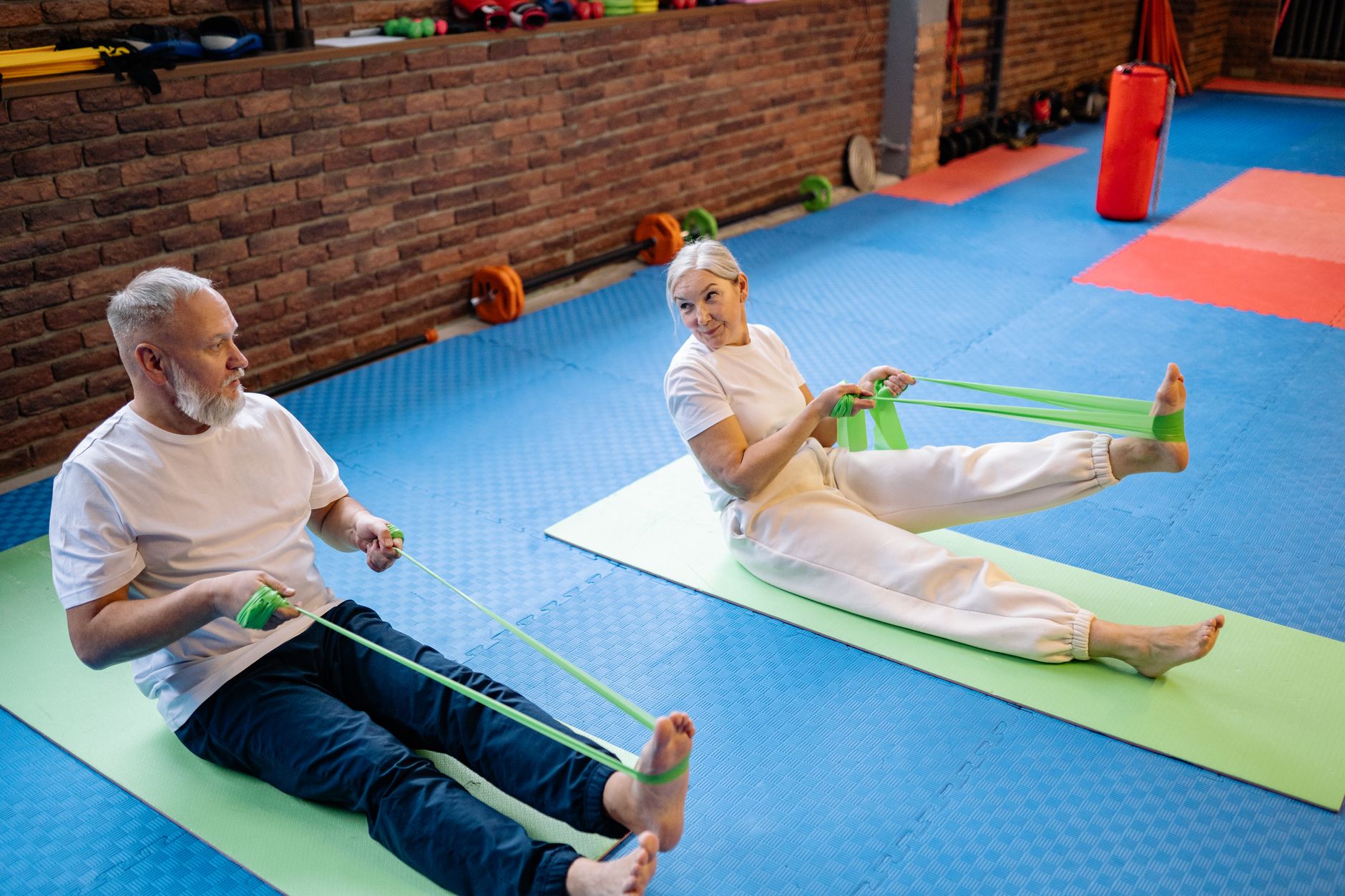
Researchers enrolled 103 community-dwelling older adults with a mean age of 68.2 years. Participants trained three times per week for 16 weeks, using high-load, velocity-intentional resistance work. In plain English, they were not just moving weights. They were trying to move them with intent and speed, the kind of power-oriented training that matters when an older adult needs to rise from a chair, catch a stumble, or climb stairs without turning the movement into a negotiation.

Fernandez-Garrido et al. compared training programs paired with either creatine or placebo. The creatine dose was 3 g/day, modest by gym standards and easier to sustain than the larger loading protocols sometimes used in sports nutrition. Outcomes ranged across neuroplasticity-related markers, oxidative stress, inflammation, strength, physical function, cognitive performance, and quality of life.
Their conclusion was deliberately combined, not supplement-first. In the PubMed abstract for the 2026 randomized trial, the authors wrote:
Creatine supplementation confers complementary, modality-specific benefits and supports their use in combination to high-speed resistance exercise to promote healthy aging.
Trial authors, Experimental Gerontology (2026)
That sentence carries the main caution. It does not say creatine replaced training. It says creatine added complementary benefits when used with a specific training stimulus. That is a different claim from the one implied by a tub of powder sitting next to a promise about brain health.
Creatine looks more like a multiplier than a shortcut
The strongest reading of the trial is that creatine may be a multiplier. Serious training supplied the base signal. Creatine appeared to alter the profile around that training, especially in areas tied to antioxidant and inflammatory responses, while the exercise itself remained the engine for strength and function.
That fits the wider exercise literature better than the supplement hype does. A 2025 systematic review and meta-analysis by Sharifian et al. in the European Review of Aging and Physical Activity pooled 20 trials and 1,093 older adults. Creatine plus exercise training improved one-repetition maximum strength and reduced body-fat percentage, while total-body bone mineral density did not significantly improve. The clearest wins stayed close to the training stimulus: strength and body composition, not every marker of aging.
For an older adult, that still matters. Strength is not cosmetic after 65. It is part of fall prevention, independence, glucose handling, and the ability to keep doing the unglamorous tasks that make up daily life. The new trial adds a brain-and-biomarker layer to that familiar muscle story, but it does not erase the hierarchy. Training first. Creatine second.
Many supplement stories ask the question too cleanly: “Does creatine improve cognition?” That framing treats the powder as if it acts in isolation. A better question is whether creatine helps a person adapt to a program already known to challenge muscle, metabolism, and possibly the brain. Fernandez-Garrido’s trial points toward the second question.
The aging-brain evidence is promising, not settled
The cognition case for creatine has become more interesting, but it is still early. Marshall et al.'s Nutrition Reviews paper looked specifically at adults 55 and older. Six studies made it into the review, with 1,542 participants. Five of the six found a positive relationship between creatine and cognition, especially around memory and attention, but the authors were careful about the limitations.

Their summary is worth quoting because it is both hopeful and restrained. In the 2026 systematic review, Marshall and colleagues wrote:
The current limited evidence suggests that creatine may be associated with benefits for cognition in generally healthy older adults.
Marshall et al., Nutrition Reviews (2026)
Limited evidence is not a throwaway caveat. It is the boundary around the claim. Some studies were small. Some were not designed like definitive drug trials. Others leaned on cognitive tests or biomarkers that may not translate neatly into everyday outcomes, such as remembering names, managing medications, or staying oriented in a new place.
A 2024 review and meta-analysis by Xu et al. in Frontiers in Nutrition reached a similar but cautious place for adults more generally. The authors concluded that creatine monohydrate supplementation may have beneficial effects on cognitive function, but that finding is not the same as proving protection against dementia or establishing a universal protocol for older adults.
Fernandez-Garrido’s study is useful for that reason. It does not settle the brain question. It gives the question a more believable setting. The brain does not age separately from muscle, inflammation, glucose control, sleep, and movement. A combined intervention may be messy to study, but it is closer to how healthy aging actually works.
The practical question is what changes Monday morning
For someone considering creatine, the answer is not simply “take 3 g.” The trial used 3 g/day, but dose is only one part of the intervention. Participants were also training three times per week for 16 weeks, under a protocol built around high-load, high-intent movement. Without that training piece, the evidence from this trial cannot be cleanly applied.

For readers, the friction is obvious. Buying creatine is easier than building a training habit. The powder can sit beside the coffee maker. The resistance sessions require time, supervision for some people, and enough confidence to move weight with speed rather than fear. That gap is probably where the real-world benefit will be won or lost.
Healthy older adults who already do resistance training may find creatine worth discussing with a clinician, especially if the goal is strength, lean mass, and possibly cognition as part of a broader routine. People with kidney disease, complex medication use, or a history of falls that makes unsupervised power training risky need medical and coaching guidance before a supplement order. Consult your doctor before starting any supplement, including creatine.
Training details change expectations. A person taking creatine without progressive resistance work should not expect the same outcome as someone in a supervised 16-week program. The trial is better read as evidence for a combined plan than as evidence for a stand-alone brain product.
What to watch next
Future studies need to be less dazzled by whether creatine can move a cognitive test by a small margin and more interested in whether it changes life outside the testing room. Do participants walk faster? Fall less? Keep training after the trial ends? Maintain memory or attention gains six months later? Do inflammatory or oxidative-stress changes predict anything readers would actually notice?
Those questions matter because healthy aging is not a lab value. It is the ability to carry groceries, remember an appointment, recover from illness, and keep enough reserve to live with less friction. Creatine may have a role in that picture, but the newest trial suggests the role is as part of the machinery, not the whole machine.
A cautious reading is also the most useful one. Fernandez-Garrido et al. add a useful piece to the creatine-and-aging puzzle: a modest dose, paired with hard and intentional resistance training, may support a wider set of physical and brain-related aging markers than training alone. Marshall et al. remind readers not to outrun the evidence. Taken together, the papers point to a sober conclusion. Creatine is most plausible for the aging brain when the person taking it is also willing and able to train.
References
- Fernandez-Garrido J, Martin EG, Saez-Berlanga A, Gargallo-Bayo P. Effects of high-load, velocity-intentional variable resistance training combined with creatine supplementation on neuroplasticity, oxidative stress, inflammation, physical function, cognitive performance and quality of life in older adults: A randomized, double-blind, placebo-controlled trial. Experimental Gerontology. 2026. https://pubmed.ncbi.nlm.nih.gov/41941966/
- Marshall S, Kitzan A, Wright J, et al. Creatine and cognition in aging: A systematic review of evidence in older adults. Nutrition Reviews. 2026. https://pubmed.ncbi.nlm.nih.gov/40971619/
- Sharifian G, Aseminia P, Heidary D, et al. Impact of creatine supplementation and exercise training in older adults: A systematic review and meta-analysis. European Review of Aging and Physical Activity. 2025. https://pubmed.ncbi.nlm.nih.gov/41062952/
- Xu C, et al. The effects of creatine supplementation on cognitive function in adults. Frontiers in Nutrition. 2024. https://pubmed.ncbi.nlm.nih.gov/39070254/
The Vitalspell brief
Evidence-based supplement science — weekly in your inbox.
Subscribe