Thinking About Creatine? What Researchers Actually Want You to Know First
Creatine monohydrate is one of the most studied supplements in existence — but most of what circulates online gets the details wrong. Researchers Richard Kreider, Jan Brauner, and Bruno Gualano unpack what 30 years of evidence actually shows about muscle, cognition, kidney safety, and why you can skip the loading phase.
If you have spent any time near a gym — or anywhere on fitness social media — you have almost certainly been told you should be taking creatine. The advice usually arrives with a handful of numbers and the unearned confidence of someone whose research consisted of three TikToks and a bro-science forum thread. Some of it is right. Some of it is wrong in ways that matter. Richard Kreider has spent three decades sorting which is which.
Kreider directs the Exercise & Sport Nutrition Lab at Texas A&M University and has published more than 150 peer-reviewed papers on creatine and sports nutrition, earning an h-index of 83 with more than 28,000 citations. He chaired the International Society of Sports Nutrition’s position stand on creatine. If there is a person on earth who knows what creatine actually does — and, just as important, does not do — it is him.
“The number one misconception I hear,” Kreider said, “is that creatine is just for bodybuilders.”
Muscle — the reason most people start taking creatine in the first place — is the most settled part of the evidence picture, and it has been for years. “Many studies indicate that creatine monohydrate supplementation increases gains in strength, high-intensity exercise performance, and muscle mass during resistance-exercise training,” Kreider said. His 2022 critical review in Nutrients examined the bioavailability, efficacy, and safety of creatine monohydrate against every novel form that has been marketed since: creatine HCl, buffered creatine, creatine ethyl ester, and a fourth contender, creatine nitrate. None increased muscle creatine concentrations more than plain monohydrate powder. None matched its safety record. Kreider’s conclusion was blunt — creatine monohydrate is the only form with substantial evidence for bioavailability, efficacy, and safety. It costs roughly a dime per 5-gram serving.
But when you move from muscle to cognition, the picture sharpens and blurs at the same time.
A 2026 systematic review by Sharma, Forbes, and Candow in Nutrition Reviews examined six studies enrolling 1,542 participants aged 55 and older. Five of the six — 83.3 percent — reported a positive relationship between creatine and cognitive performance, with memory and attention showing the clearest signal. “Several studies, particularly in older populations, have shown that consuming diets higher in creatine — more than 0.95 grams per day — is associated with better cognition,” Kreider said. Biologically, the finding makes sense: the brain runs on the same phosphocreatine energy system that powers muscle contraction, and aging brains may operate closer to the margin where extra substrate makes a difference.
And yet not everyone in the research community reads the data so expansively. The largest randomized controlled trial of creatine and cognition to date tells a more restrained story. Published in BMC Medicine in 2023 by Sandkühler and colleagues, that trial enrolled 123 participants in a preregistered, double-blind, placebo-controlled crossover design — each taking 5 grams of creatine monohydrate daily for six weeks. Bayesian analysis supported a small beneficial effect. For Backward Digit Span, a working memory measure, the effect size was d = 0.17. For fluid intelligence, measured by Raven’s Advanced Progressive Matrices, the score was d = 0.09. Jan Brauner, a co-author, presented the findings with appropriate restraint: a small effect, possibly real, possibly noise. Side effects were reported significantly more often under creatine than placebo — relative risk 4.25 — a detail the systematic review’s rosier picture tends to elide.
That gap between the review’s 83 percent positive rate and the largest single trial’s d = 0.17 captures the creatine-and-cognition literature in microcosm. Small samples and variable cognitive batteries make a single number elusive. So does the heterogeneity of study populations. For now the honest read is that creatine probably helps cognition modestly in older adults, and the effect is small enough that an individual might or might not notice it — the kind of benefit that matters at a population level but rarely announces itself in the mirror.
None of this ambiguity touches the kidney-safety question. That question is settled in healthy people. It simply refuses to die in public perception.
If you take creatine and then get routine blood work, your serum creatinine will rise. This is expected — creatinine is the breakdown product of creatine, and supplementing raises circulating levels. It can trigger a worried call from a doctor who reads the number as a distress signal rather than the predictable consequence of taking more of the precursor. Bruno Gualano has spent years examining this concern. He co-authored a 2023 narrative review that sifted through data from dozens of trials and reached an unambiguous conclusion: creatine supplementation does not impair glomerular filtration rate or cystatin C, two direct measures of kidney function. The creatinine bump is metabolic turnover, not organ damage. Healthy kidneys handle it without incident. The confusion persists because clinicians use serum creatinine as a screening marker for kidney function, and a supplement that predictably raises the marker looks, on a lab printout, indistinguishable from a kidney problem. It is not one.
People with pre-existing kidney disease are a different conversation — one where the data is thin enough that caution is the only defensible posture. For everyone else, the evidence has spoken.
Grant Tinsley, an associate professor at Texas Tech University, flags another thing beginners get wrong: the urge to load.
Traditional protocols call for 20 to 25 grams per day split across four or five doses for five to seven days, followed by a 3-to-5-gram maintenance dose. “A loading dose helps you increase muscle creatine concentrations more quickly,” Tinsley said, “but if you’re taking an appropriate maintenance dose of creatine, you will end up in the same place.” The difference is roughly two weeks. Load, and you saturate muscle stores in a week. Take 5 grams daily, and you reach the same saturation in about three weeks. For a supplement people take for years rather than weeks, the trade-off barely registers — and loading carries a meaningful chance of gastrointestinal discomfort that maintenance dosing almost never causes.
The vegetarian question has a similar arc of early promise that did not survive replication. Meat and fish are the primary dietary sources of creatine, so people who avoid both should, in theory, start with lower baseline stores and respond more dramatically to supplementation. An early study by Rae and colleagues appeared to confirm exactly that hypothesis. But it has not held up. The Sandkühler 2023 trial explicitly tested for an omnivore-versus-vegetarian interaction and found none — dietary creatine intake did not meaningfully predict cognitive response. The early result was likely a small-sample artifact, the kind of finding that looks compelling in a pilot study of 30 people and evaporates in a preregistered trial of 120. Vegetarians and omnivores, on current evidence, get roughly the same benefit from supplementation.
What about bone health? The signal is newer and more tentative. A study from Kreider’s group found that 0.1 grams of creatine per kilogram of body weight per day, combined with resistance training over one year, increased bone density in older adults. The mechanism makes physiological sense — creatine fuels osteoblast activity via the same phosphocreatine energy system — but this is single-study territory, and single-study territory is where nutritional science goes to generate headlines that later meta-analyses walk back. Watch this space. Do not bank on it.
So where does all of this leave someone standing in the supplement aisle, tub in hand?
Here is what the weight of evidence supports. Creatine monohydrate at 3 to 5 grams per day is among the most studied and safest supplements available — and it costs roughly a dime per serving. It will almost certainly improve high-intensity exercise performance and support modest gains in lean mass when paired with resistance training. The effect is not dramatic but it is reliable across decades of trials. It may offer cognitive benefits, particularly for older adults, though the effect size means an individual might or might not notice any change. It will raise your serum creatinine. That is fine. It will not damage your kidneys if yours are healthy. The expensive alternative forms — creatine HCl, buffered creatine, even creatine ethyl ester — are marketing, not science. And you do not need to load.
Kreider puts the landscape in perspective. Creatine is not a stimulant. It is not a hormone. And it is certainly not a magic bullet. It is a fuel substrate your muscles and brain already use, supplied at a higher rate. That its effects are modest and cumulative rather than dramatic and immediate is, in fact, a point in its favor. Supplements that work dramatically and immediately, in this industry, tend to be either illegal or imaginary.
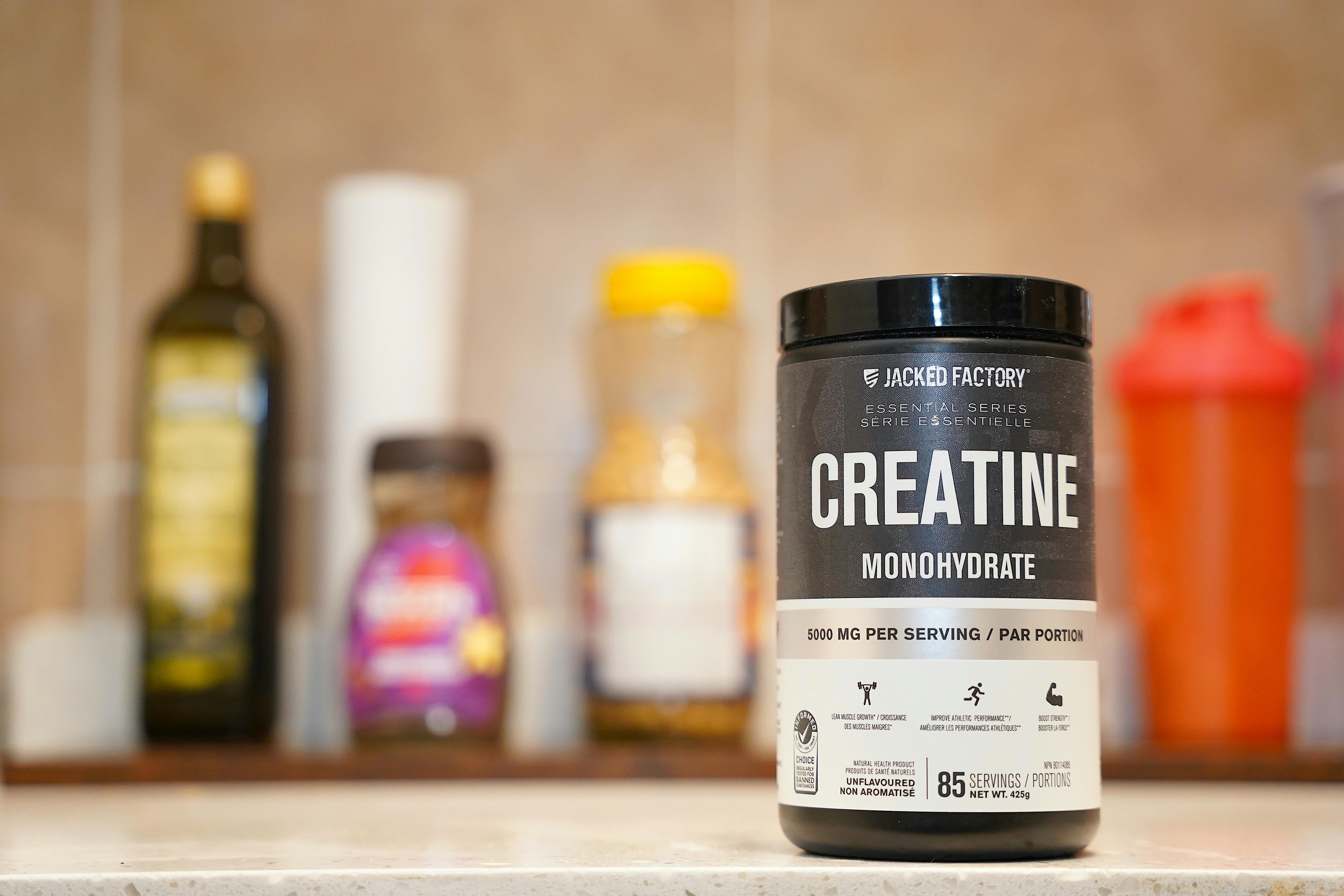
One closing note on what you are actually buying. A new creatine trade group formed in 2026 to establish purity standards for a market that has grown faster than its quality controls, and vitalspell previously examined the cognition literature in depth. Third-party testing — NSF Certified for Sport or Informed Sport — remains the simplest way to ensure the powder in the tub matches what is on the label.
References
- Sharma L, Forbes SC, Candow DG, et al. Creatine and cognition in aging: a systematic review of evidence in older adults. Nutrition Reviews. 2026. https://pubmed.ncbi.nlm.nih.gov/40971619/
- Sandkühler JF, Kersting X, Brauner J, et al. The effects of creatine supplementation on cognitive performance — a randomised controlled study. BMC Medicine. 2023. https://link.springer.com/article/10.1186/s12916-023-03146-5
- Kreider RB, Jäger R, Purpura M. Bioavailability, efficacy, safety, and regulatory status of creatine and related compounds: a critical review. Nutrients 14(5):1035. 2022. https://ncbi.nlm.nih.gov/pmc/articles/PMC8912867/
Strength coach and nutritionist covering protein science, creatine, recovery protocols, and body composition. Reports from Miami.
The Vitalspell brief
Evidence-based supplement science — weekly in your inbox.
Subscribe