Zone 2 cardio explained: what the evidence actually shows
Zone 2 cardio has benefits, but 2025 papers suggest it is not the singular best intensity for fitness, fat oxidation, or longevity.
Zone 2 cardio carries a clean promise: stay easy enough to repeat, and the body will build the aerobic machinery that supports endurance, fat use and, in some tellings, long-term metabolic health. Fitness podcasts, smartwatch dashboards and mainstream profiles of exercise scientist Inigo San Millán have helped make that promise familiar. Research is less obliging. A 2025 narrative review by Kristi Storoschuk and colleagues in Sports Medicine argues that the evidence does not establish zone 2 as the single best intensity for improving mitochondrial capacity, the cell’s energy-generating machinery, or fat oxidation in the general population.
Usefulness is the narrower claim. Steady, below-threshold aerobic work can be valuable because many people can recover from it and repeat it. Problems start when a practical training zone is treated as a universal prescription. In a 2025 paper by Benedikt Meixner and colleagues in Translational Sports Medicine, athletes landed in different so-called zone 2 ranges depending on which boundary method was used. Put plainly, one person’s easy aerobic pace can be another person’s moderate grind.
What zone 2 is supposed to mean
Most endurance models place zone 2 just below the first lactate threshold, when lactate begins to rise above resting levels, or just below the first ventilatory threshold, when breathing becomes noticeably deeper. Coaches often translate that as a pace where conversation is still possible, though not effortless. Its appeal is practical. The intensity feels sustainable, it can be accumulated for long stretches, and marketers often describe it as a sweet spot for teaching muscle to rely more on oxygen-driven metabolism.
A recent expert viewpoint by Sitko et al. on zone 2 definitions makes the same point, but with more caution than social media usually leaves room for.
“Experts reached consensus that zone 2 training should preferably be performed at intensities located immediately below the first lactate or ventilatory threshold.”
Source: Sitko et al., International Journal of Sports Physiology and Performance (2025)
Those qualifiers matter. “Preferably” is not “always.” “Located immediately below” is more exact than the broad heart-rate bands many watches and online calculators use. A small wording difference becomes important when a runner tries to build a plan around it.
Why the evidence is less decisive than the hype
Storoschuk’s review is the sharpest correction in the current debate. According to the authors, zone 2 gained authority partly because elite endurance athletes spend large volumes of time there and also show excellent mitochondrial and fat-oxidation capacity. Correlation does not prove that the intensity itself is uniquely responsible. Nor does it show that the same logic transfers cleanly to adults with ordinary schedules and much lower training volume.
Their conclusion is blunt.
“current evidence does not support Zone 2 training as the optimal intensity for improving mitochondrial or fatty acid oxidative capacity.”
Source: Storoschuk et al., Sports Medicine (2025)
Another shortcut needs attention. When influencers say zone 2 “builds mitochondria,” they often imply that harder work does not. Exercise physiology has long shown that hard intervals also trigger mitochondrial adaptations, sometimes more efficiently when total training time is limited. Storoschuk and colleagues therefore resist treating zone 2 as the one best answer for the general public.
Yin and colleagues add a useful check from a different literature. A 2023 meta-analysis by Mingyue Yin and colleagues in the Journal of Exercise Science & Fitness found that both HIIT and moderate continuous training improved maximum fat oxidation during exercise in overweight and obese adults. Bodies adapt to more than one aerobic stimulus. Time, enjoyment, injury history and recovery capacity all change which stimulus is realistic.

Image: Tiago L BR via Pexels.
Why one person’s zone 2 is another person’s tempo
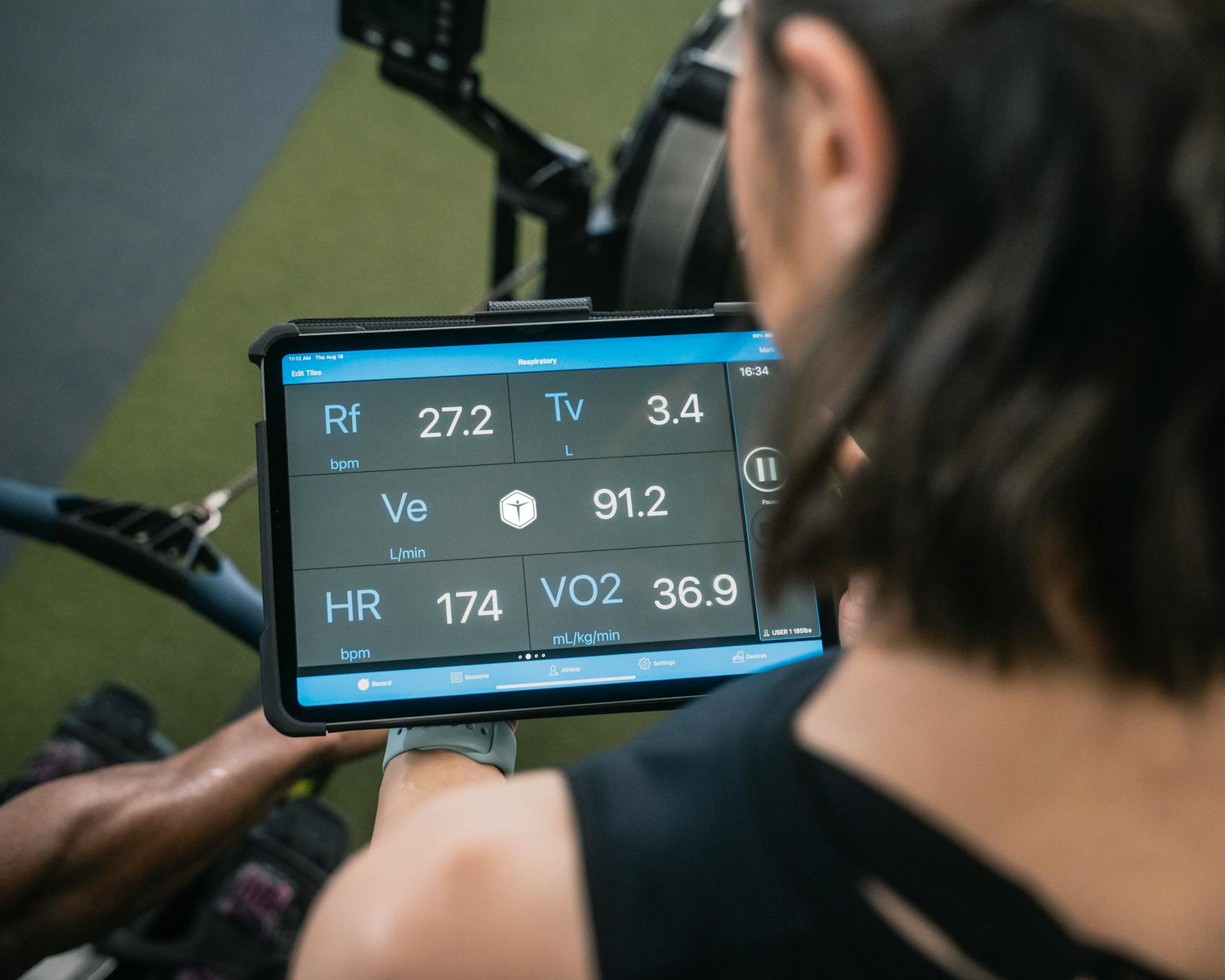
Definition is the next problem. The Meixner et al. 2025 study suggests that everyday trainees may not identify zone 2 as reliably as the label implies. Different submaximal boundaries, including percentages of maximum heart rate, ventilatory thresholds and lactate-based markers, can place the same athlete at meaningfully different workloads.
For anyone using a watch or formula, that gap matters. Such tools can be useful starting points, but they are not the same as measuring the biological boundary itself. An easy-feeling pace on a cool morning may drift upward on a hot afternoon. Medication, poor sleep, dehydration and training status can all shift heart rate at a given workload. If zone 2 is sold as precision, real training is messier than the brand.
A more grounded reading treats zone 2 as a broad description of steady aerobic work that stays below the first clear turn toward heavy breathing. It is not a magic number everyone has to chase. Better papers keep returning to thresholds because a threshold is a physiological transition. A slogan is not.

Image: VO2 Master via Pexels.
So does zone 2 cardio live up to the hype?
Mostly, yes, if the claim is kept modest. Zone 2 is a sensible way to accumulate aerobic volume with manageable fatigue. That can support endurance, metabolic health and consistency, especially for people who need training they can recover from and repeat. Current evidence does not show that zone 2 is the single best intensity for everyone, or that it should replace higher-intensity work in every plan.
Less glamorous, more defensible: a marathoner, a person trying to improve blood sugar control, and a person with three half-hour exercise windows each week may need different mixes. These papers point toward that plural view, not a one-zone doctrine. Zone 2 is a tool. It is not an exercise religion.
Useful next research will be less slogan-friendly: trials in ordinary adults, not just endurance-trained populations, with direct comparisons that hold training time constant. Until then, the safest evidence-based conclusion is simple. Steady aerobic work has value, but the stronger case is for a well-designed mix of intensities rather than for crowning one zone the winner.
References
- Storoschuk KL, Moran-MacDonald A, Gibala MJ, et al. Much ado about zone 2: a narrative review assessing the efficacy of zone 2 training for improving mitochondrial capacity and cardiorespiratory fitness in the general population. Sports Medicine. 2025. https://pubmed.ncbi.nlm.nih.gov/40560504/
- Meixner B, Filipas L, Holmberg HC, Sperlich B. Zone 2 intensity: a critical comparison of individual variability in different submaximal exercise intensity boundaries. Translational Sports Medicine. 2025. https://pubmed.ncbi.nlm.nih.gov/40225831/
- Yin M, Chen Z, Nassis GP. Chronic high-intensity interval training and moderate-intensity continuous training are both effective in increasing maximum fat oxidation during exercise in overweight and obese adults: a meta-analysis. Journal of Exercise Science & Fitness. 2023. https://pubmed.ncbi.nlm.nih.gov/37701124/
The Vitalspell brief
Evidence-based supplement science — weekly in your inbox.
Subscribe