Chlorpyrifos may raise Parkinson’s risk, UCLA study finds
Chlorpyrifos and Parkinson’s risk came into sharper focus after a UCLA-led paper linked long-term exposure to a more than 2.5-fold higher risk.
UCLA’s 2026 Molecular Neurodegeneration paper led by Kazi Md. Mahmudul Hasan, Beate Ritz and Jeff M. Bronstein is useful for a reason beyond the headline number. The paper moves between a human exposure signal and lab work that asks whether the signal makes biological sense. In the human arm, people with long-term residential exposure to chlorpyrifos were more than 2.5 times as likely to have Parkinson’s disease. In mice and zebrafish, the authors looked for damage that would make that association harder to wave away. That is why the finding matters.
A slogan would make the result sound cleaner than it is. This study does not prove that chlorpyrifos caused any one person’s Parkinson’s. Its value is narrower: a broad suspicion about pesticides becomes a testable claim about one chemical, then gets pressed against mechanism data. For a science reader, that narrower claim is the real news.
Skeptics still have room to push. Human exposure was reconstructed from home and work histories matched to pesticide-use records, not from blood samples taken years earlier. Misclassification remains possible. Nearby chemicals could have moved with the same agricultural patterns. Case-control studies also carry the usual confounding problems. The paper is stronger because it does not stop at epidemiology, but those limits still matter.
Read as a whole, the study works best where its evidence layers overlap. A large relative-risk signal is one thing. A plausible disease pathway is another. Together, they still do not give exposed residents an absolute-risk calculator, but they make the signal harder to dismiss.
Why this paper stands out from older pesticide warnings
Older Parkinson’s studies often treated pesticide exposure as a class-level concern. A 2018 dose-response meta-analysis in Regulatory Toxicology and Pharmacology already suggested that heavier pesticide exposure tracked with higher Parkinson’s risk. Specificity is what the UCLA group adds. Rather than leave the story at “pesticides may be involved,” the authors ask whether one organophosphate with a long regulatory history stands out on its own.
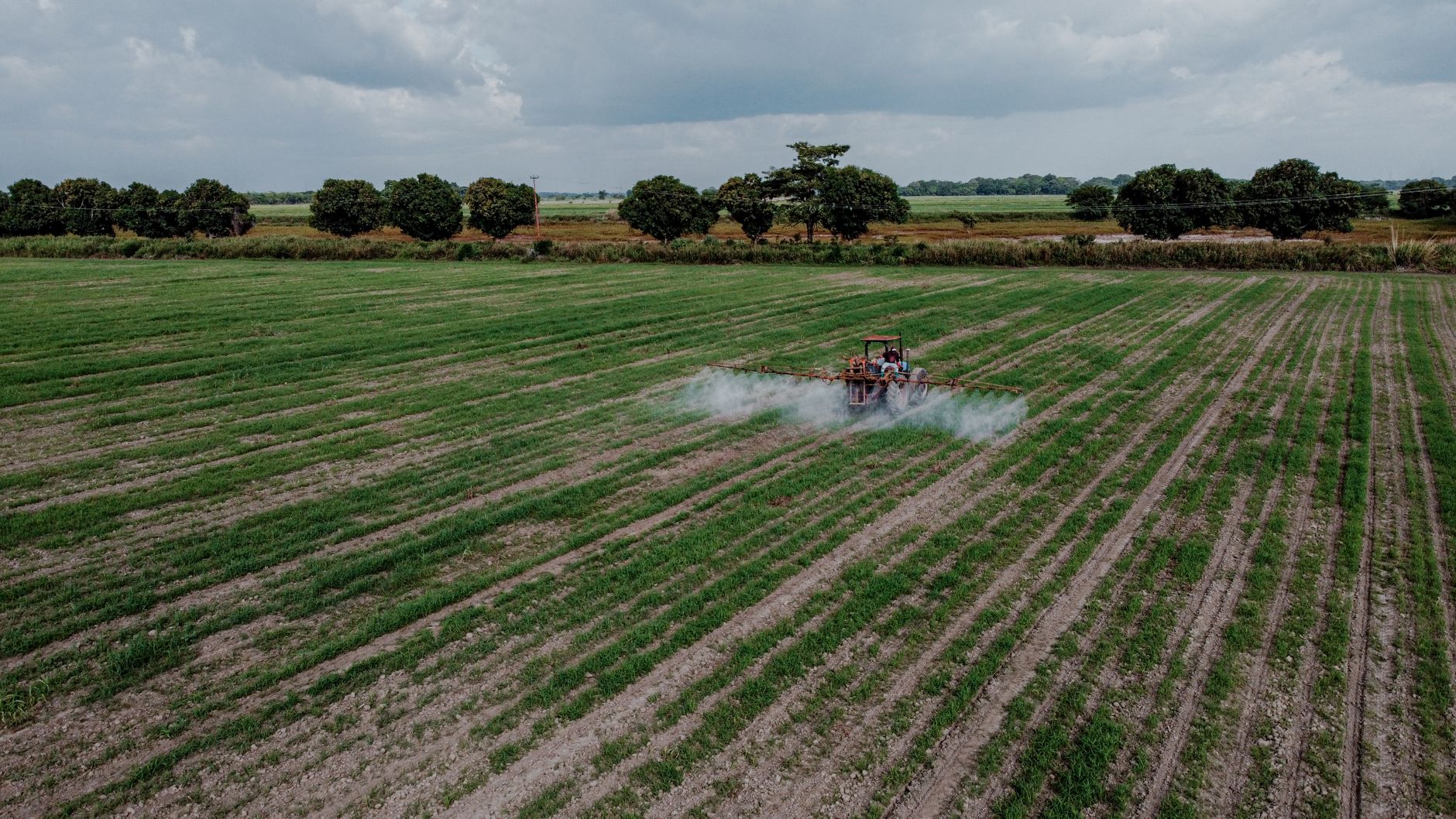
That specificity matters because broad environmental stories often get murky fast. If every farm chemical points in the same direction with similar force, interpretation stays messy. Here, chlorpyrifos is the chemical of interest in a study that included 829 Parkinson’s cases and 824 controls. Long-term exposure near the home drove the headline association, the authors report, while worksite exposure looked directionally similar but less precise. For an analyst, the signal is not simply “agriculture is risky.” One compound appears to carry a measurable association inside a noisier rural-exposure landscape.
Bronstein drew that distinction in a UCLA release:
This study establishes chlorpyrifos as a specific environmental risk factor for Parkinson’s disease, not just pesticides as a general class.
Jeff Bronstein, UCLA Health
Still, the grammar of the evidence matters. A risk factor is not a diagnosis. A relative increase also does not tell an exposed resident their personal absolute risk. The paper sharpens a hazard signal; it does not turn historical exposure into a bedside test.
How the study tried to answer the causality question
The section that lifts the paper above a familiar scare headline comes after the human data. Instead of declaring victory on association alone, the authors exposed mice to chlorpyrifos for 11 weeks and looked for the neuronal damage Parkinson’s researchers worry about: loss of dopamine neurons, disrupted cellular cleanup and buildup of alpha-synuclein, the protein that forms the disease’s hallmark aggregates.

Mechanism is the difference between an epidemiology result that only alarms and one that starts to inform. Parkinson’s is a disease process shaped by failing dopamine circuits, misfolded proteins and stressed cellular recycling systems. According to the publisher version of the paper, chlorpyrifos exposure pushed the mouse brain in that direction. Zebrafish experiments pointed the same way, which makes a one-species artifact less likely.
Bronstein made the causal argument plainly in the same UCLA announcement:
By showing the biological mechanism in animal models, we’ve demonstrated that this association is likely causal.
Jeff Bronstein, UCLA Health
The word “likely” is doing important work. Animal models cannot prove what happened in a given human community. They can make rival explanations weaker. If the human association were entirely a statistical mirage, it would be harder to explain why chlorpyrifos exposure also produces a Parkinson’s-like pattern in experimental systems. Skepticism does not vanish here; it just has less room.
What the paper changes, and what it does not
Policy context explains why this paper will draw attention outside academia. EPA’s current chlorpyrifos status page shows that chlorpyrifos is not an obscure legacy compound with no modern relevance. The chemical has been the subject of long fights over food tolerances, agricultural uses and public-health protection. A regulator’s concern is different from a neurologist’s concern, but the two overlap more directly if a specific chemical carries a stronger Parkinson’s signal than previously appreciated.
Current trace exposure should not be treated as equivalent to the long-term patterns studied here. The human dataset was built around years of residential and workplace history, not a one-time dietary measurement. The paper speaks most clearly to people who lived or worked near agricultural application over time, and to agencies deciding how much uncertainty they will tolerate around older pesticides. It says less about a shopper trying to interpret a single produce purchase.
Timing matters, too. Just this week, The Guardian reported on Australia’s decision to keep paraquat in use under restrictions despite Parkinson’s concerns, and another Guardian report on pesticide litigation showed how unsettled the legal and policy terrain remains. Chlorpyrifos is not paraquat, and this paper should not become a catch-all argument about every pesticide dispute. It does fit a broader pattern, though: Parkinson’s research keeps returning to environmental exposures that were once treated as tolerable background conditions.
The bottom line is narrower, and more important, than the headlines make it sound. Hasan and colleagues have produced one of the cleaner arguments yet that chlorpyrifos deserves to be discussed as a specific Parkinson’s risk factor, not merely as part of a vague agricultural haze. Their paper earns that claim by pairing a sizable human analysis with mechanism work that speaks the language of the disease itself. It does not close the case. It moves the burden of proof.
References
- Hasan KMM, Ritz B, Bronstein JM, et al. The pesticide chlorpyrifos increases the risk of Parkinson’s disease. Molecular Neurodegeneration. 2026. https://link.springer.com/article/10.1186/s13024-025-00915-z
- Pesticide exposure and risk of Parkinson’s disease: Dose-response meta-analysis of observational studies. Regulatory Toxicology and Pharmacology. 2018. https://pubmed.ncbi.nlm.nih.gov/29729297/
General assignment health reporter covering nutrition science, wellness trends, and clinical research. Reports from Toronto.
The Vitalspell brief
Evidence-based supplement science — weekly in your inbox.
Subscribe