Naked mole rat longevity gene extends mouse lifespan via HMW-HA transfer
Researchers successfully transferred a longevity mechanism from naked mole rats to mice, extending lifespan and reducing cancer risk—proof that evolution's solutions are portable.
Ten years passed between the discovery and the demonstration. Researchers first identified high-molecular-mass hyaluronic acid (HMW-HA) in naked mole rat tissues—this rodent lives 41 years, over a decade longer than similarly sized mammals—then spent a decade figuring out how to transfer that mechanism into mice.
It worked. In a 2023 study published in Nature, scientists moved the naked mole rat’s hyaluronic acid synthase 2 gene (nmrHas2) into mice. These transgenic mice produced more HMW-HA throughout their bodies. Their median lifespan increased 4.4%, maximum lifespan 12.2%. Cancer rates dropped by two-thirds. Inflammation markers fell. Gut barrier function strengthened.
Vera Gorbunova, a Doris Johns Cherry Professor of biology and medicine at the University of Rochester, views the result as validation for a long-held hypothesis. She bet that longevity mechanisms evolved in long-lived species could be transferred between mammals. “Our study provides a proof of principle that unique longevity mechanisms that evolved in long-lived mammalian species can be exported to improve the lifespans of other mammals,” she said.
This finding suggests something broader. Longevity isn’t fixed by evolutionary fate but by mechanisms that can be manipulated—if researchers can identify and access them.
Why naked mole rats resist cancer
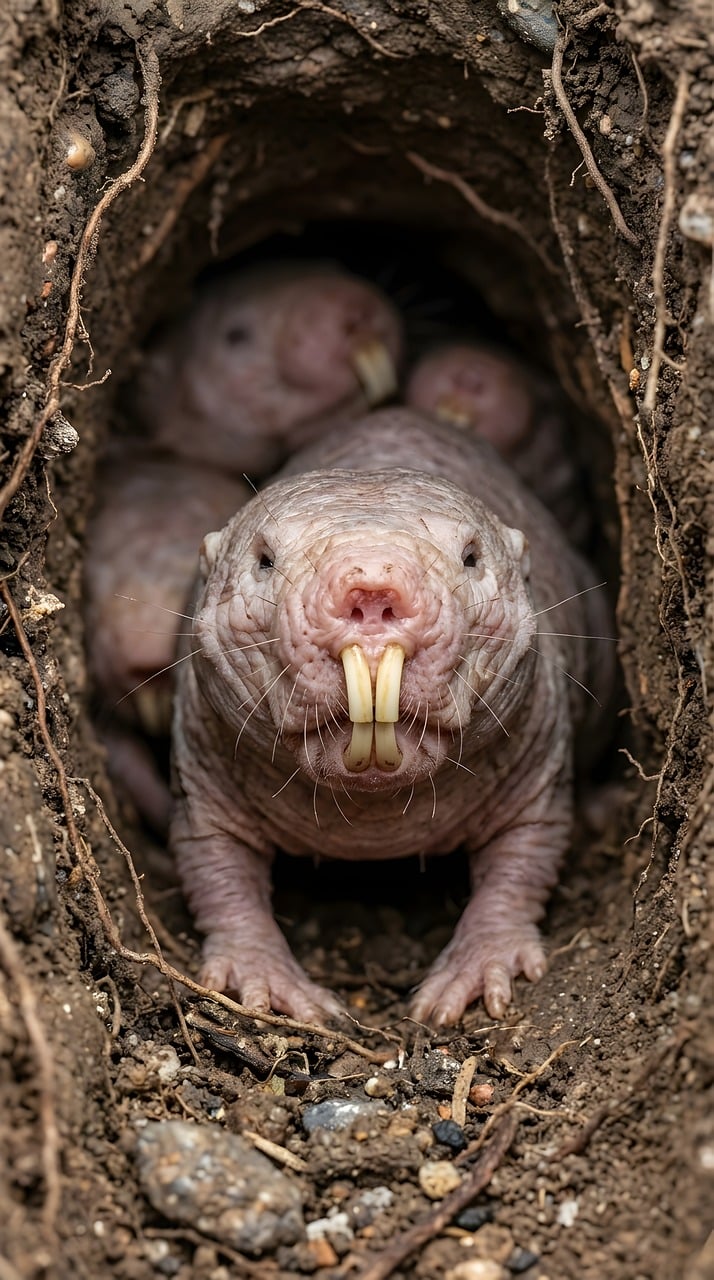
Gerontologists study naked mole rats for their cancer resistance. The animals rarely develop spontaneous tumors. They live in underground colonies across East Africa, with a social structure resembling an insect hive: one queen, subordinate workers, soldiers. Their metabolism runs slowly. They barely feel pain from capsaicin because their nerve endings lack a key receptor. Their tissues contain about ten times more HMW-HA than mice or humans.
Hyaluronic acid, a sugar polymer, occupies the extracellular matrix—the gel-like space between cells. Mammals produce two molecular sizes. Low-molecular-mass HA (LMW-HA) circulates in blood and lymph, fueling inflammation. HMW-HA stays locked in tissue, acting as both barrier and immunomodulator. Naked mole rats overproduce this bulky form.
Hyaluronic acid synthase 2 (Has2) builds HMW-HA. Humans and mice carry Has2 genes, but in most mammals the enzyme produces moderate hyaluronic acid before proteases degrade it. Naked mole rats seem to have modified Has2 that keeps working longer or faster. The result: tissue reservoirs of HMW-HA other rodents lack.
Moving the gene between species
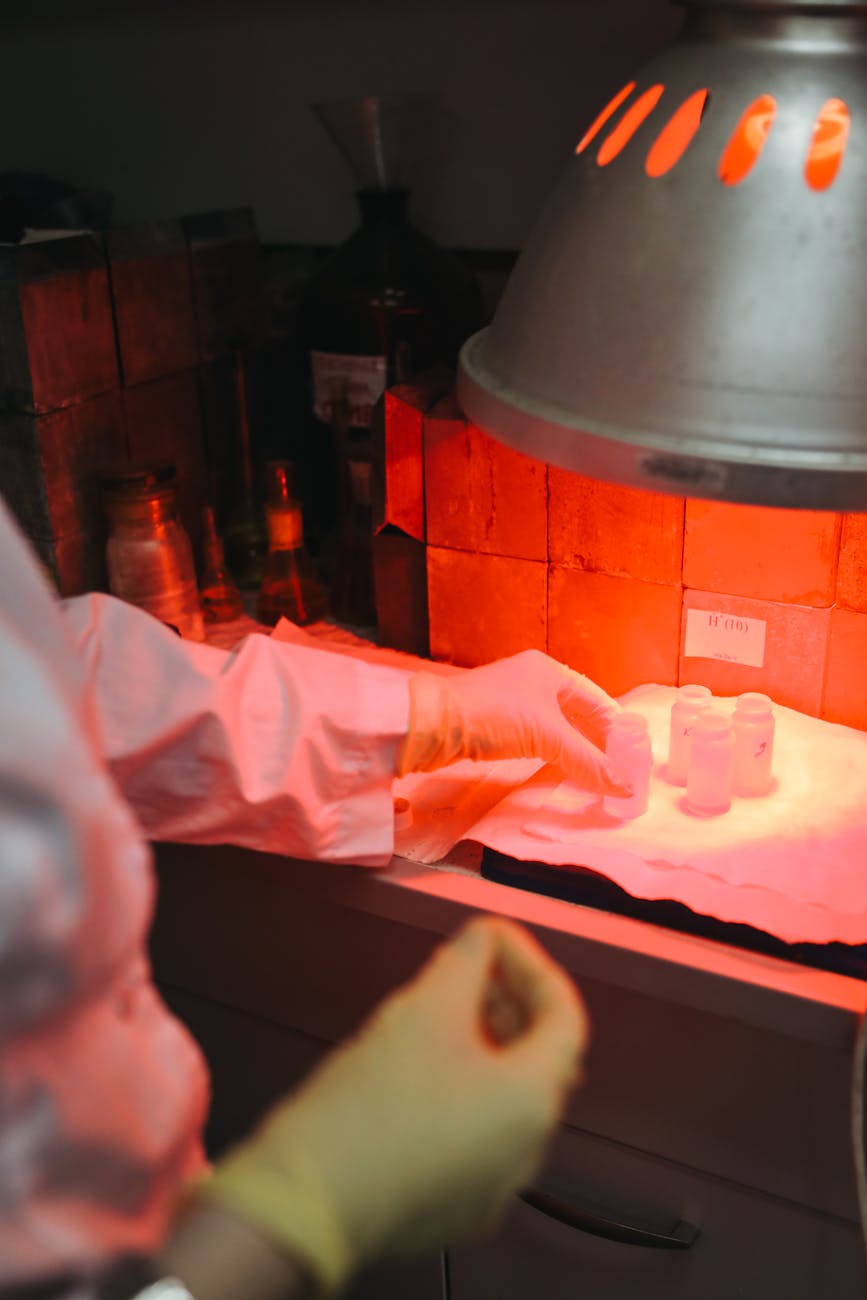
University of Rochester researchers, led by biology professors Andrei Seluanov and Vera Gorbunova with first author Zhihui Zhang, built transgenic mice carrying a copy of the naked mole rat Has2 gene. The mice produced extra HMW-HA in heart, lungs, liver, brain, and skin.
Aging these nmrHas2 mice revealed lifespan gains. Median lifespan rose 4.4%. Maximum lifespan—each cohort’s oldest mouse—jumped 12.2%. That’s statistically significant. Biologically, it’s proof of concept.
Beyond lifespan, transgenic mice showed health improvements:
Cancer incidence fell 34% in old age. Researchers didn’t induce tumors with carcinogens. They simply waited. Normal aging produced far fewer cancers in nmrHas2 mice than in controls.
Systemic inflammation decreased. IL-6 and TNF-α markers dropped across tissues. HMW-HA appeared to suppress the immune overactivation that characterizes aging.
Gut barrier function and microbiota composition improved. Intestinal epithelial cells held tighter. Microbial communities shifted toward profiles seen in younger animals, with more short-chain fatty acid producers.
Epigenetic clocks showed younger biological age. Aging involves chemical changes to DNA and histone proteins marking cellular age. Transgenic mice scored younger on multiple epigenetic clocks, including the Horvath clock, suggesting HMW-HA reversed some molecular aging hallmarks.
Limits and unanswered questions
The mechanism has boundaries. Rochester researchers published a 2025 preprint showing that nmrHas2 improved healthspan but failed to protect against age-related hearing loss. The hyaluronic acid boost didn’t reach all sensory systems equally. Inner ear hair cells died on the normal aging schedule.
This suggests the intervention targets specific tissues rather than acting as a universal anti-aging switch. Some tissues benefit; others don’t. The cytoprotective pathway downstream of HMW-HA—cancer suppression, inflammation dampening, barrier reinforcement—doesn’t fire uniformly throughout the body.
Translation to humans presents challenges. Mice lived in controlled lab conditions: inbred strains, stable housing, no infections, minimal stress. Wild animals encounter pathogens, temperature fluctuations, food shortages. The 4.4% lifespan gain might disappear outside controlled environments. Or it might persist. Data is lacking.
From mice to humans
Seluanov and Gorbunova are moving forward. “It took us 10 years from the discovery of HMW-HA in the naked mole rat to showing that HMW-HA improves health in mice. Our next goal is to transfer this benefit to humans,” Gorbunova said. Gene transfer isn’t the practical approach for humans. Instead, they target hyaluronic acid degradation enzymes—the proteases that break down HMW-HA.
Slowing these proteases could preserve HMW-HA without genetic modification. A drug or compound maintaining hyaluronic acid polymers might achieve the same effect. Researchers have identified candidates. “We already have identified molecules that slow down hyaluronan degradation and are testing them in pre-clinical trials. We hope that our findings will provide the first, but not the last, example of how longevity adaptations from a long-lived species can be adapted to benefit human longevity and health,” Seluanov said.
Delphinidin, an anthocyanidin found in anthocyanin-rich foods—blueberries, blackberries, red cabbage—is one known protease inhibitor. Food concentrations are too low for clinical effects, but purified, dosed versions could launch trials. Researchers are actively testing this pathway.
Why this finding matters—and what it doesn’t
The naked mole rat study marks a watershed in longevity research, though not because 4.4% lifespan extension is dramatic. The mechanism itself—HMW-HA—has been discussed in gerontology circles for years. The breakthrough is proof that a longevity adaptation from one mammal can transfer to another. Evolution’s solutions aren’t species-locked. They’re portable.
That opens possibilities. Other long-lived species may have exploitable mechanisms. Some bats live ten times longer than similarly sized mice. Certain tortoises live centuries. Whales reach 200 years. Each lineage solved aging differently. Naked mole rats use HMW-HA. What did bats find? What do whales use? The next decade of aging research will likely involve systematically mining long-lived species for cellular secrets and translating those discoveries into potential human interventions.
Reality imposes limits. A 4.4% mouse lifespan gain, even with improved cancer resistance and reduced inflammation, doesn’t guarantee a 4.4% human lifespan increase. Human physiology is far more complex. Aging involves multiple pathways. HMW-HA intervention might address the inflammatory, cancer-prone pathway while leaving others untouched. The hearing loss in aged transgenic mice reminds us of this specificity.
Dose and safety questions remain. In mice, the gene was always active from birth. Humans cannot be born with a transgene. Any human application would require a drug mimicking the effect, requiring approval from regulatory agencies that have never evaluated a “slow the degradation of tissue hyaluronic acid” candidate. Pre-clinical trials Seluanov mentioned are in early stages. Human clinical trials, if they occur, are years away.
The work’s significance lies in proof of concept and as a signal for future research. Naked mole rat longevity isn’t magic or luck. It’s a specific molecular configuration—elevated HMW-HA in tissues—with downstream effects on inflammation, cancer suppression, and barrier function. That configuration can be induced in another mammal with measurable aging effects.
That justifies investment. It supports a decade of pre-clinical work and possibly, eventually, human trials. Whether the 4.4% mouse lifespan gain translates to human years will take another decade to determine. For now, we know longevity mechanisms are portable. That changes the field.
References
- Zhang Z, Tian X, Lu JY, et al. Increased hyaluronan by naked mole-rat Has2 improves healthspan in mice. Nature. 2023;614(7947):314-320. https://doi.org/10.1038/s41586-023-06463-0
- Owens EA, Place DJ, et al. Expression of the naked mole-rat transgene for Has2 improved health span but did not attenuate age-related hearing loss. bioRxiv. 2025. https://www.biorxiv.org/content/10.1101/2025.07.27.667071
Dean Okonkwo
Molecular biology PhD turned health journalist. Covers aging clocks, NAD metabolism, and the supplement-longevity frontier. Reports from San Francisco.