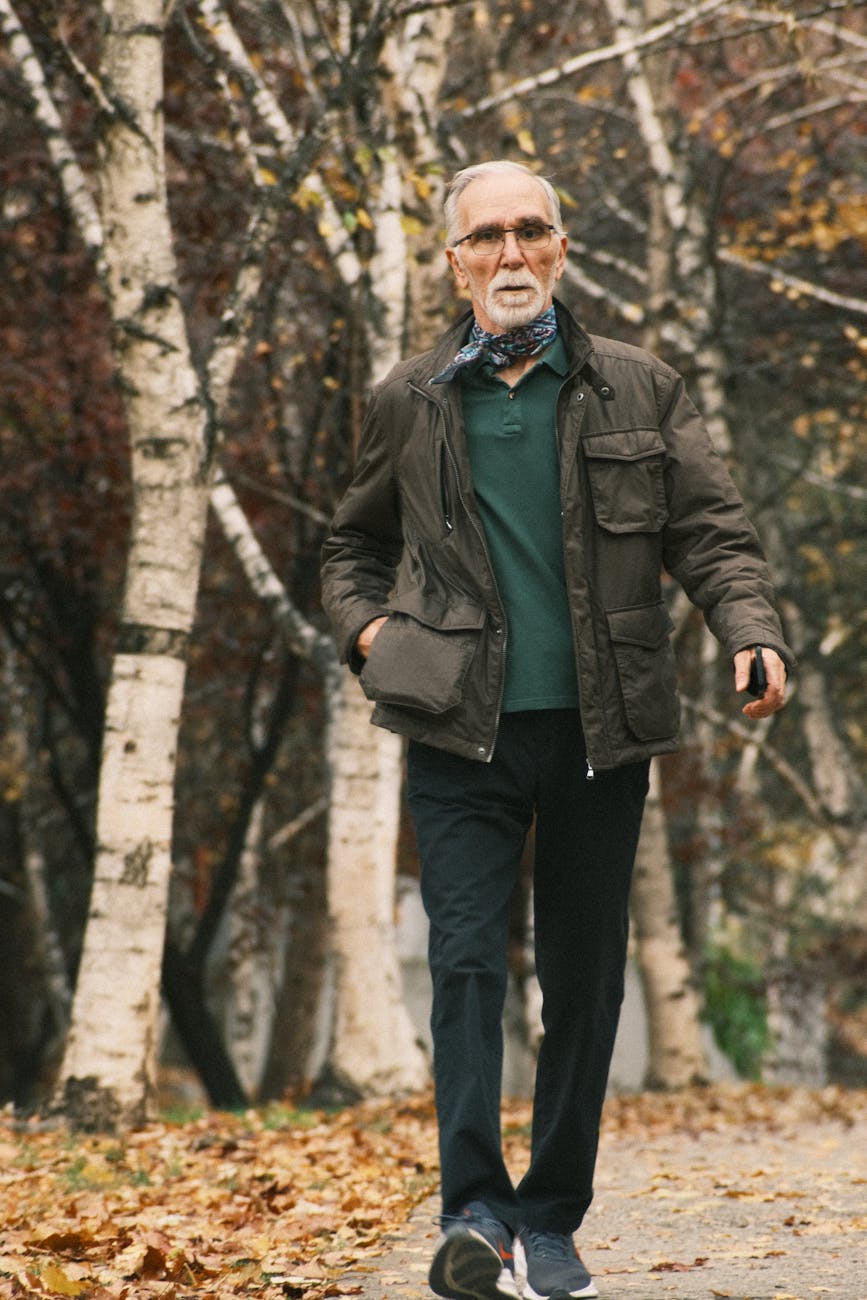
Hearing loss slows the walk before it dulls the mind
A 57,183-person Apple-Michigan cohort confirms hearing loss tracks with slower walking. Layered with the ACHIEVE trial and the Lancet Commission, hearing is now a leading indicator of how older adults age.
A 57,183-person cohort tracked through their iPhones has now confirmed something audiologists and gerontologists have been arguing for a while: the worse you hear, the slower you walk. The finding came out this week from the Apple Hearing Study, a continuing collaboration with the University of Michigan School of Public Health. It lands on top of two randomised trials and a Lancet Commission report that have already moved hearing from a quality-of-life concern into the front rank of modifiable health risks for older adults. Hearing is no longer a discretionary check-up. It is one of the earliest signals of how the rest of the body is ageing.
The Apple-Michigan analysis is, by some distance, the largest real-world correlation of audiometric thresholds with daily walking speed published to date. Participants ran a hearing test in iOS or via the AirPods Pro hearing-test feature Apple shipped in 2024. The phone then averaged each participant’s everyday walking speed over the year before and the year after the test. Across the cohort, every step down in hearing acuity tracked with a measurable slowing of pace. The correlation strengthened sharply at age 60 and above. The relationship held in every adult age band sampled.
What the cohort is and what it is not
This is an observational study, not a randomised trial. Participants opted in via the Research app, share their data with consent, and are blinded to nothing. The 57,183-person sample skews toward iPhone owners willing to spend several minutes in a quiet room running a tone-presentation test. So it is not a probability sample of the United States or any other country, and Apple and Michigan flag this directly in their write-ups. The study’s value is the scale and the realism: walking speed is captured in everyday use, not on a treadmill in a clinic, and the audiometric data sits next to it timestamped to within hours.
That design answers a particular question well. It cannot tell us whether treating hearing loss restores walking pace. It can tell us, with a precision earlier studies could not match, that the two are tightly correlated across a vast and varied population.
Dr. Frank Lin, a Johns Hopkins otolaryngologist who sits on Apple’s health team and helped analyse the findings, framed the mechanism plainly. “When you can’t hear as well, your brain is working harder to hear, at the possible expense of your speed and gait,” Lin told the Wall Street Journal. The cognitive-load hypothesis is not new. What is new is being able to test it at the population scale of an iPhone deployment.
The evidence stack underneath the news peg
Two RCTs and a standing Lancet Commission already do the heavy lifting on the hearing-and-aging story. Apple’s cohort sits on top of them, not in front of them.
The first is the ACHIEVE trial, led by Lin and published in The Lancet in July 2023. ACHIEVE randomised 977 adults aged 70 to 84 with untreated mild-to-moderate hearing loss to either a hearing intervention (audiologist fitting, hearing aids, ongoing counselling) or a health-education control. After three years, the at-risk subgroup of participants drawn from an ongoing cardiovascular cohort showed a 48 per cent slower rate of three-year cognitive decline in the hearing-aid arm compared with controls. The full-cohort effect was smaller and not statistically significant on its own. The at-risk-subgroup result was pre-specified in the trial protocol, which matters: this is the strongest randomised evidence to date that addressing hearing loss alters the cognitive trajectory.
The second pillar is the Lancet Commission on dementia prevention, intervention and care, which in its 2020 report identified hearing loss as the single largest modifiable midlife risk factor for dementia, with a population-attributable fraction of 8 per cent (Livingston et al. 2020). The 2024 update kept hearing loss at the top of the list (Livingston et al. 2024). The arithmetic is sobering. If every midlife adult with treatable hearing loss were treated, current modelling estimates roughly one in twelve dementia cases worldwide would not occur.
Hearing loss is also independently associated with falls. A US National Health and Nutrition Examination Survey analysis by Lin and Ferrucci, published in Archives of Internal Medicine in 2012, found that every 10-decibel increase in hearing loss was associated with a 1.4-fold increase in the odds of a self-reported fall in the past year. The same ACHIEVE cohort has subsequently shown that the hearing-intervention arm fell less often than controls.
Why walking speed matters
The detail that sometimes gets lost is that walking speed is itself a vital sign. A 2011 pooled analysis of nine cohort studies covering more than 34,000 community-dwelling adults aged 65 and over, published in JAMA, established usual gait speed as a predictor of survival across the next ten years (Studenski et al. 2011). A speed below 0.6 metres per second was associated with substantially elevated mortality risk; a speed above 1.0 metres per second was associated with longer-than-average survival.
Geriatricians routinely call gait speed the sixth vital sign, after pulse, blood pressure, respiratory rate, temperature and oxygen saturation. Lin used the same phrase to the Wall Street Journal. The reason it earns the label is mechanistic: walking at a healthy pace requires that the cardiovascular, musculoskeletal, vestibular and central nervous systems all coordinate. A persistent slow-down in everyday walking is one of the earliest objective signs that one of those systems is degrading.
Layer the findings together. Hearing loss correlates with walking-speed decline (Apple-Michigan, 2026, observational, n=57,183). Walking-speed decline predicts mortality and cognitive decline (Studenski et al. 2011, pooled analysis, n=34,485). Hearing intervention slows cognitive decline in at-risk older adults (ACHIEVE, Lin et al. 2023, RCT, n=977). The findings are telling the same story from three angles.
Why hearing loss might slow the walk
The cognitive-load mechanism Lin invoked is one explanation, and it is supported by independent neuroimaging work. Adults with hearing loss show greater activation of frontal cognitive regions during listening tasks (Peelle 2018, Ear and Hearing). The borrowed compute may come at the expense of attention to motor planning, environmental cues, and balance maintenance.
A second mechanism is vestibular. The inner ear houses both the cochlea, which processes sound, and the semicircular canals and otolith organs, which process balance. The same age-related microvascular and oxidative-stress processes that damage cochlear hair cells appear to damage vestibular hair cells. Adults with sensorineural hearing loss have measurably worse postural sway and slower reactive balance recovery on standard clinical tests (Agrawal et al. 2009, Archives of Internal Medicine).
A third is auditory feedback for self-motion. Walking generates rhythmic environmental sound: the slap of a shoe on pavement, the hum of a road, directional cues from passing traffic. Hearing-impaired adults receive less of this sensory input, and laboratory studies of dual-task walking show they slow down more than normal-hearing controls when asked to walk and listen at once (Lin et al. 2013, JAMA Internal Medicine).
A fourth is behavioural. People who know their hearing is poor walk more cautiously and report greater fear of falling. Social withdrawal driven by hearing loss reduces the volume of walking the person does in a week, which is itself a strong determinant of how briskly they can walk when measured.
These four are not mutually exclusive. The Apple-Michigan correlation is consistent with all of them, and disentangling their relative weights will need targeted experimental work.
What hearing aids can and cannot do
This is where commentators sometimes overreach. ACHIEVE showed a clear cognitive benefit of hearing aids in at-risk adults. It did not show a walking-speed benefit. Dr. Carrie Nieman, an associate professor of otolaryngology-head and neck surgery at Johns Hopkins who was not involved in ACHIEVE or in the Apple-Michigan analysis, was direct about this in her comments to the Wall Street Journal. “When it comes to other measures of physical activity, we haven’t seen changes or improvements in people wearing hearing aids,” Nieman said.
That is honest, and worth reporting. It does not negate the case for treating hearing loss. It clarifies the evidence: addressing hearing loss looks robustly protective for cognition, and almost certainly reduces fall risk, but the gait-speed claim is correlational and not yet shown to reverse with treatment. Anyone selling hearing aids on the promise that they will make you walk faster is running ahead of the data.
The Apple Hearing Study itself is well placed to test this question if it continues to recruit. Pre-and-post hearing-aid-fitting walking-speed comparisons within the same individuals would be a powerful next analysis.
What to do
The practical instructions are straightforward and consistent with longstanding audiology guidance.
Get a baseline hearing test now, before you think anything is wrong. The American Speech-Language-Hearing Association recommends adults establish a baseline before symptoms appear so future change is detectable. iPhone users with second- or third-generation AirPods Pro can run Apple’s hearing test from the Settings app. The Johns Hopkins free app gives a standardised hearing number for each ear. Lin recommends an annual test from age 50, sooner with any perceived change.
Track walking speed over months, not days. The Apple Health app on iPhone, Fitbit, Garmin Connect, and the Samsung and Google equivalents all surface a walking-speed metric. Day-to-day variation is large. The trend over six to twelve months is the signal worth watching.
Address hearing loss when the audiogram says so, not when family members start complaining. Over-the-counter hearing aids became available in the United States in 2022, lowering cost and access barriers. The ACHIEVE evidence is for fitted devices used consistently. Devices left in a drawer do nothing.
The Apple Hearing Study has not closed enrolment. The Michigan team continues to add participants and is publishing periodic updates rather than a single capstone paper. Anyone with a recent-vintage iPhone can join. The longer the cohort runs, the more questions it can answer about the inner ear’s role in keeping the rest of the body moving.
References
- Livingston G, Huntley J, Sommerlad A, et al. Dementia prevention, intervention, and care: 2020 report of the Lancet Commission. Lancet 396(10248):413-446. 2020. https://doi.org/10.1016/S0140-6736(20)30367-6
- Lin FR, Pike JR, Albert MS, et al. Hearing intervention versus health education control to reduce cognitive decline in older adults with hearing loss in the USA (ACHIEVE): a multicentre, randomised controlled trial. Lancet 402(10404):786-797. 2023. https://doi.org/10.1016/S0140-6736(23)01406-X
- Studenski S, Perera S, Patel K, et al. Gait speed and survival in older adults. JAMA 305(1):50-58. 2011. https://doi.org/10.1001/jama.2010.1923
- Lin FR, Ferrucci L. Hearing loss and falls among older adults in the United States. Archives of Internal Medicine 172(4):369-371. 2012. https://doi.org/10.1001/archinternmed.2011.728
- Agrawal Y, Carey JP, Della Santina CC, Schubert MC, Minor LB. Disorders of balance and vestibular function in US adults: data from the National Health and Nutrition Examination Survey, 2001-2004. Archives of Internal Medicine 169(10):938-944. 2009. https://doi.org/10.1001/archinternmed.2009.66
- Livingston G, Huntley J, Liu KY, et al. Dementia prevention, intervention, and care: 2024 report of the Lancet standing Commission. Lancet 404(10452):572-628. 2024. https://doi.org/10.1016/S0140-6736(24)01296-0
Tess Lindqvist
Cognitive science writer covering nootropics, focus protocols, and the evidence behind brain supplements. Reports from Stockholm.
More from Cognitive Health
Oral citicoline combination linked to cognitive gains in prodromal dementia patients
Brain health supplements: what the evidence says about what works

Limited evidence links creatine to better cognition in older adults

Raisins and tart cherry beat ginkgo for memory in a landmark meta-analysis