The case for screenless fitness trackers: what a 2019 sleep lab proved
A 2019 sleep study found an Oura ring could detect sleep with 96 percent sensitivity but struggled to tell sleep from wakefulness. Seven years later, that trade-off between convenience and clinical-grade accuracy defines the fastest-growing segment in wearables.
In 2019, a sleep researcher at SRI International in Menlo Park, California, strapped an Oura ring onto a study participant’s finger, hooked the same person up to a full clinical polysomnography rig (the gold-standard sleep test, with electrodes on the scalp, beside the eyes, and under the chin), and waited. The next morning, Massimiliano de Zambotti and his colleagues compared the two data sets. The ring had detected sleep with 96 percent sensitivity. It knew when the participant was asleep almost as well as the electrodes did.
What the ring could not do, the study found, was tell sleep from wakefulness with the same precision. Its specificity, or its ability to correctly identify moments the participant was awake, landed at just 48 percent. The ring was excellent at saying “this person is asleep” and mediocre at saying “this person is not.” That asymmetry, de Zambotti and colleagues wrote in Behavioral Sleep Medicine, meant the device was useful for tracking sleep duration trends but not yet reliable enough for clinical diagnosis. The finding read like a narrow academic caveat. It turned out to be a category blueprint.
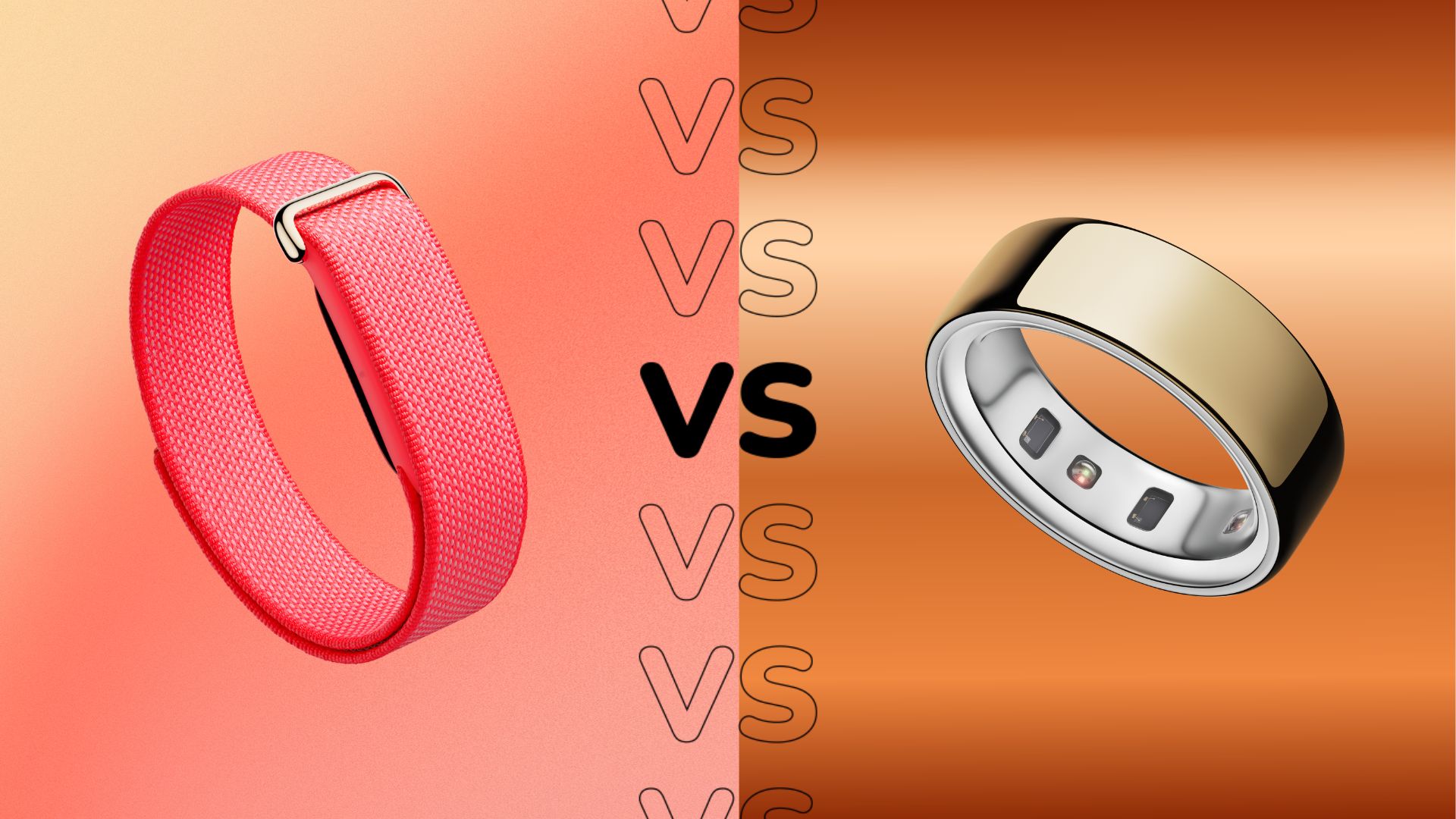
Seven years later, that same trade-off between consumer convenience and clinical-grade accuracy defines the fastest-growing segment in wearables. U.S. purchases of fitness trackers grew 88 percent between 2024 and 2025, according to market-research firm Circana, the Wall Street Journal reported. Smart-ring purchases alone grew 195 percent. Earlier this month, Google entered the category with the $99.99 Fitbit Air, a 12-gram band with no screen, a seven-day battery, and a heart-rate sensor that samples once every two seconds. The company described the device as “simple, affordable and comfortable enough to wear 24/7,” aimed at people who have found existing wearables “too bulky, complicated, or expensive.” It joins Whoop, the subscription-based band that raised $575 million at a $10.1 billion valuation in March 2026, and Oura, the smart ring that has raised over $900 million and released its fourth-generation hardware last year.
By now the category has a name: invisible tech, a term Digital Trends writer Omair Khaliq Sultan used to describe wearables designed to be forgotten. “For many of us,” Sultan wrote, “the friction of wearing a computer on our wrist is starting to outweigh the benefit of closing digital rings.” Ben Bowers, co-founder of Gear Patrol, described the Fitbit Air as “a total about-face” and “one of the first major reboots in years to seriously target the enormous middle ground” of consumers who want health data without another glowing rectangle demanding their attention. Google tapped NBA star Stephen Curry as the device’s brand ambassador, a signal that the company sees the Air not as a niche health gadget but as a mainstream consumer product.
What the validation studies actually show
The scientific foundation beneath the screenless tracker boom is thinner than the marketing suggests, but not by as much as skeptics might assume. The three major players in the category each sit at different points on the validation spectrum, and the distance between them matters for anyone wondering whether the data these devices produce is trustworthy.
Oura has built the deepest evidence base. After de Zambotti’s 2019 study established the ring’s basic sleep-tracking capability, the company invested in further validation. By 2024, a team led by Thomas Svensson at the University of Tokyo put the third-generation Oura ring, running the company’s updated OSSA 2.0 sleep-staging algorithm, through a multi-night comparison against ambulatory polysomnography in 96 participants. The results, published in Sleep Medicine, showed the ring correctly classified 91.7 to 91.8 percent of sleep epochs across more than 420,000 individual 30-second windows. Sensitivity for sleep detection reached 94.4 to 94.5 percent. Specificity, which measures wake detection and which de Zambotti had flagged as the ring’s weakness five years earlier, climbed from 48 percent into the mid-70s. That jump represents real engineering progress. A clinician would not diagnose a sleep disorder from an Oura ring’s output. A person tracking whether their sleep is deteriorating over a stressful month can learn something real.
Whoop’s validation story is more narrowly focused. In a 2021 study published in Sensors, Clint Bellenger and colleagues at the University of South Australia strapped WHOOP bands alongside electrocardiogram chest straps on athletes and compared the heart rate and heart rate variability readings across different exercise intensities. The heart rate numbers held up well: bias was trivial, below half a beat per minute across all conditions. The heart rate variability data told a more complicated story. The bias was small enough to be ignorable at the group level, but the limits of agreement were wide, meaning individual readings could swing meaningfully from the ECG gold standard. For a device that builds its entire coaching model atop daily HRV trends, telling users whether they are “recovered” or “strained,” that variability introduces noise into the signal. An athlete who sees a green recovery score on Tuesday and a red one on Wednesday might be seeing a real physiological shift, or might be seeing the limits of the sensor’s precision.
Fitbit Air, which began shipping to customers on May 26, 2026, has published no independent validation data at all. Google’s marketing materials describe the device’s PPG sensor and its sampling rate (once every two seconds, compared to Whoop’s 26 times per second), but the accuracy of the Air’s sleep staging, heart rate tracking, and activity classification against a clinical reference standard remains unknown as of this writing. For a category built on the promise that the data beneath the surface is good enough to act on, that is a meaningful gap. It is also, in the context of Google’s resources, a gap that can be closed quickly. The company has the engineering capacity to run validation studies at a scale that would make Oura’s 96-participant effort look small. Whether it chooses to do so will signal how seriously it takes the scientific credibility of the category.
The broader validation literature converges on a single uncomfortable point: none of these devices is ready to replace a sleep study or a cardiac workup. But for the use case most consumers actually have, tracking trends over weeks and months and flagging deviations from personal baselines, the evidence suggests they are adequate. The question that de Zambotti’s 2019 paper implicitly raised was not whether a ring could match a polysomnography lab, but whether matching one was necessary for the job most buyers were hiring the ring to do. Seven years and hundreds of millions in venture capital later, the answer, measured in accelerating consumer adoption, looks more like no.
The price of going screenless
The business models behind the three devices reveal as much about the category’s future as the validation data does about its present. Whoop charges a mandatory subscription of $199 to $359 per year and gives the hardware away. Oura sells the ring for $299 to $399 upfront and layers a $69.99 annual subscription on top. Fitbit Air costs $99.99 once, with an optional $9.99 monthly Google Health Premium subscription that unlocks additional analytics.
Circana’s data suggests consumers are not balking at the recurring fees. An 88 percent year-over-year growth rate in a category where the two incumbents both require subscriptions implies that what these devices offer, continuous passive health data without the cognitive load of a screen, is resonating with a cohort that previously sat out the wearable market entirely. They are not early adopters upgrading from an Apple Watch. They are people who rejected the smartwatch and found the screenless alternative compelling enough to pay for.
Among the three, Fitbit Air’s pricing strategy is the most aggressive, and the most revealing. At $99.99 with no mandatory subscription, Google is betting that volume will offset the lower per-user revenue. The device’s heart rate sensor samples at 0.5 hertz, or once every two seconds, compared to Whoop’s 26 hertz. That hardware gap is reflected in the price, and it raises a question the validation literature will eventually need to answer: at what sampling rate does a PPG sensor stop producing useful trend data? Whoop’s 26-hertz sampling is partially a marketing number. The company uses it to differentiate from competitors. But a sensor that samples 52 times less frequently is making a different set of engineering trade-offs. Whether those trade-offs matter for the average user is an empirical question, not a rhetorical one.
The Bellenger team’s 2021 paper closes with a detail that captures the tension at the center of the screenless tracker category. In the study, the researchers strapped WHOOP bands onto athletes who were simultaneously wired to clinical-grade ECG monitors. The athletes went about their training. The WHOOP data streamed to the cloud. The ECG data stayed local, recorded for later comparison. After the final analysis, the authors concluded the device was “acceptable” for heart rate but needed more work on heart rate variability. It was a measured, narrow judgment that the company’s marketing, with its promise of “24/7 physiological monitoring,” has far exceeded in scope. The paper thanks its funders and stops. The market, it turned out, was just getting started.
References
- de Zambotti M, Rosas L, Colrain IM, et al. The Sleep of the Ring: Comparison of the ŌURA Sleep Tracker Against Polysomnography. Behavioral Sleep Medicine 17(2):124-136. 2019. https://pubmed.ncbi.nlm.nih.gov/28323455/
- Svensson T, Madhawa K, Ta HN, et al. Validity and reliability of the Oura Ring Generation 3 (Gen3) with Oura sleep staging algorithm 2.0 (OSSA 2.0) when compared to multi-night ambulatory polysomnography. Sleep Medicine 113:105-112. 2024. https://www.sciencedirect.com/science/article/pii/S1389945724000200
Mira Chen
General assignment health reporter covering nutrition science, wellness trends, and clinical research. Reports from Toronto.