Selective eating reshapes the autism gut microbiome — and not for the better
A 96-child study finds restrictive eating patterns in ASD drive up inflammatory gut bacteria, sharpening a decade-old debate about whether dysbiosis causes autism symptoms or simply reflects what children eat.
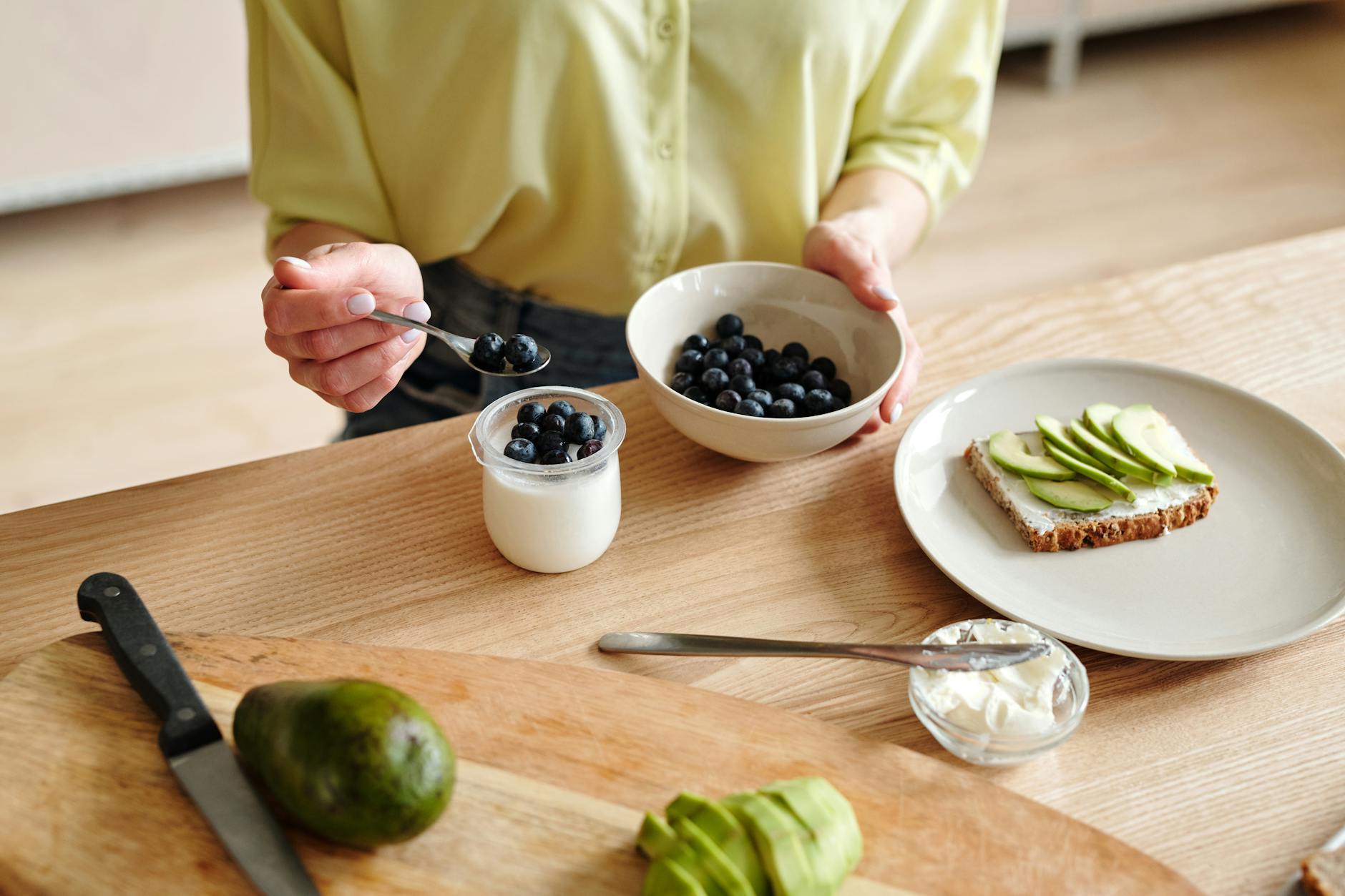
A child with autism who eats only five foods — say, chicken nuggets, plain crackers, apple juice, white bread, and a single brand of yogurt — isn’t just restricting calories. They’re restricting the raw material their gut bacteria live on. And according to a new study in Nutrients, the bacteria that thrive under those conditions skew inflammatory.
Led by N.A. Smolko and published in May 2026, the study examined 96 children with autism spectrum disorder alongside 39 neurotypical controls. Those with the most pronounced selective eating — measured by food-repertoire narrowness and refusal frequency — carried higher levels of bacterial taxa linked to inflammatory activity. This microbial shift “may contribute to gastrointestinal disorders and neuropsychiatric symptoms,” the authors suggest, though they stop short of claiming causation.
The paper lands in the middle of a research arc that has, over the past five years, quietly turned the autism-gut conversation on its head. Early microbiome studies treated dysbiosis as a possible driver of ASD itself. The emerging picture is simpler, and more uncomfortable: restricted diet, common to perhaps 70 percent of children on the spectrum, does much of the work that researchers initially attributed to autism biology. A child’s narrow food repertoire remodels their gut ecosystem. The remodel isn’t benign.
The diet-microbiome chain
Smolko’s group measured eating behavior with validated tools and paired the results with 16S rRNA sequencing of fecal samples. Among the children with the most restricted diets, Proteobacteria and Bacteroidetes ratios were elevated — a signature associated with low-grade gut inflammation in multiple populations, from inflammatory bowel disease cohorts to healthy-adult dietary-intervention studies. When the researchers entered selective eating scores as a covariate, the microbial composition differences between ASD and control children narrowed substantially. Diet explained more of the variance than diagnostic status did.
That finding echoes the Australian Autism Biobank study led by C.X. Yap and colleagues, published in Cell in 2021. Analyzing stool and dietary data from 247 children, Yap’s team reached the same conclusion from the opposite direction: when they controlled for diet diversity, the apparent microbiome differences between autistic and non-autistic children mostly disappeared. “Children with ASD-related restricted interests are associated with less-diverse diet, and in turn reduced microbial taxonomic diversity,” they wrote. Two independent cohorts, two different continents, the same signal.
Yet a causal-inference methodologist reading that chain would flag something important. The Yap paper demonstrates that diet mediates the gut-microbiome association — a statistical relationship, not a causal arrow. Mediation analysis in an observational dataset can’t fully rule out the reverse pathway. The arrow could point the other way: an already-dysbiotic, inflamed gut may drive selective eating by making varied foods physically uncomfortable. Consider a child whose microbiome produces excess gas or low-grade pain after eating vegetables. Through repeated experience, that child learns to avoid them.
This isn’t a hypothetical objection. Cataloguing bidirectional pathways between eating issues, microbiome composition, and GI symptoms in ASD, a 2025 review in Nutrients concluded that the data support a feedback loop rather than a single-direction model. A child restricts diet because eating hurts. That depletes microbial diversity. Depleted of diversity, the microbiome produces more inflammatory metabolites. More inflammation, more pain, more restriction. The loop feeds itself.
“This is the loop the field hasn’t broken yet,” as one reviewer of the Smolko paper put it during peer review. Breaking it would require an intervention trial that directly manipulates diet quality and measures both microbiome shifts and behavioral change on the same timeline — with a control arm that accounts for the possibility that improving the microbiome, independent of diet, also improves eating.
What interventions actually shift the dial
So far, two randomized controlled trials suggest the loop can be nudged pharmacologically, even when dietary change is slow. The evidence is modest. It points in one direction, though.
One, a 2024 double-blind RCT in the Journal of Autism and Developmental Disorders, tested a galacto-oligosaccharide (GOS) prebiotic in children with ASD over 12 weeks. It produced a three-fold increase in Bifidobacterium abundance — a genus consistently depleted in ASD cohorts — alongside a measurable reduction in parent-reported GI symptom scores. The trial wasn’t powered or designed to measure behavioral change, so claims about autism symptoms per se are off the table. But the microbial remodeling was real, and Bifidobacterium is among the most anti-inflammatory genera in the human gut.
Another, a 2026 double-blind trial in BMC Pediatrics, tested a kefir-derived probiotic mixture over six months in 80 children with ASD. Children in the active arm showed reduced abdominal pain and improved stool consistency. Changes in irritability and social withdrawal were directional — favoring the probiotic group — but didn’t clear the pre-registered significance threshold. That’s the pattern across every probiotic trial in this space: GI symptoms improve, behavioral endpoints are noisy and underpowered.
Within Smolko’s own study, 60 of the 96 ASD children completed six months of supplementation with a multi-strain probiotic, taken for roughly 1.5 months within that window. Post-supplementation microbiome data have not yet been published separately. The study’s registered endpoints do include shifts in both microbial composition and GI symptoms, though. If those results align with the GOS and kefir trials, the intervention evidence base for microbiome-targeted therapies in ASD will have tripled in volume within two years.
So what does a clinician do with this? Probiotics and prebiotics shift microbial markers. They reduce GI symptoms — abdominal pain, bloating, stool irregularity — which matter enormously for quality of life in children who often can’t articulate what hurts. But no trial to date has shown a clean, pre-registered effect on core autism behaviors. That doesn’t mean the intervention is useless. It means the primary endpoints are misaligned with what the intervention can plausibly deliver. A probiotic isn’t going to remodel social cognition. It might make a child more comfortable. A comfortable child may engage more, eat more, sleep better. None of those second-order effects have been captured in a trial yet.
What comes next
The Smolko paper sharpens a question the field has been circling for years. If selective eating is the primary driver of gut dysbiosis in ASD, then dietary intervention — feeding therapy, systematic food-chaining protocols, texture-desensitization programs — should be treated as a first-line gut-health intervention, not a behavioral afterthought. The microbiome findings aren’t an argument against behavioral feeding support. They’re a mechanistic rationale for it. Every new food a child adds to their repertoire is, in effect, a prebiotic intervention with no co-pay.
For families, that shift in framing has practical consequences. A parent whose child eats an all-beige diet hears two competing narratives right now. One, from the microbiome-as-cause camp, implies that fixing the gut might fix the autism — a seductive proposition that sells probiotics and generates headlines but rests on correlational evidence. The other, from the diet-as-mediator camp, implies that fixing the diet might fix the gut. Less exciting, better supported, and it doesn’t require buying anything.
What the field genuinely needs next is a randomized trial of intensive feeding therapy with microbiome endpoints. Not probiotics. Not prebiotics. Just systematically broadening what children eat, with stool sampling at baseline, mid-point, and follow-up. Should that trial show the microbial shift that Smolko and Yap predict — a diversification of taxa, a drop in inflammatory markers, an increase in short-chain fatty acid producers — the conversation changes from correlation to mechanism. And the prescription changes from supplement bottles to dinner plates.
References
- Smolko NA, et al. Influence of Eating Behavior and Dietary Patterns on Gut Microbiota Formation in Children with Autism Spectrum Disorder. Nutrients 18(10):1506. 2026. https://www.mdpi.com/2072-6643/18/10/1506
- Yap CX, Henders AK, Alvares GA, et al. Autism-related dietary preferences mediate autism-gut microbiome associations. Cell 184(24):5916-5931. 2021. https://www.sciencedirect.com/science/article/pii/S0092867421012319
- Unraveling the Connections: Eating Issues, Microbiome, and Gastrointestinal Symptoms in Autism Spectrum Disorder. Nutrients 17(3):486. 2025. https://www.mdpi.com/2072-6643/17/3/486
- Randomized controlled trial of prebiotic GOS supplementation in children with ASD. Journal of Autism and Developmental Disorders. 2024. https://link.springer.com/article/10.1007/s10803-024-06239-z
- Kefir-derived probiotic mixture for children with autism spectrum disorder: a double-blind randomized clinical trial. BMC Pediatrics. 2026. https://link.springer.com/article/10.1186/s12887-026-06515-0
Clinical researcher covering the gut-brain axis, probiotics, and metabolic health. Reports from Boston.
The Vitalspell brief
Evidence-based supplement science — weekly in your inbox.
Subscribe