
Could prebiotic fibre backfire in multiple sclerosis?
Prebiotic fibre in multiple sclerosis looked less protective in a 2026 microbiome paper, but the signal points to fermentation capacity, not fibre alone.
A 2026 eGastroenterology paper by Stephanie L. Tollenaar and colleagues asks an awkward question for the gut health world: what if a prebiotic only helps when the microbiome can actually process it? In children and teens with multiple sclerosis, the Alberta group found lower beta-fructan intake, fewer fibre-fermenting microbes and, in a mouse model built to test mechanism, more inflammation when unfermented beta-fructan was added to the system. None of that makes fibre the villain. Instead, the paper gets narrower and more interesting. Under that reading, some people with MS may respond differently to one class of prebiotic because the fermentation machinery is already impaired.
More than anything, the distinction matters because the study is really about biological context, not about scaring people away from plants. Beta-fructans are the naturally occurring fibres found in foods such as onions, garlic, chicory root and some supplement powders. Once the microbes that normally turn those fibres into short-chain fatty acids are depleted, the same ingredient can stop acting like fuel and start acting more like an irritant. For Vitalspell, the useful takeaway is not “eat less fibre.” It is that blanket microbiome advice keeps running into responder biology.
A skeptic would object right away, and fairly. Here, the cohort was small, dietary intake was estimated by questionnaire, and the strongest causal claim came from experimental autoimmune encephalomyelitis mice rather than from a blinded human intervention. Viewed soberly, the paper works better as a mechanistic warning than as a clinical instruction sheet. Still, it raises the possibility that “more prebiotic” is too blunt a rule in MS, but it does not show that a person with MS should cut fibre or stop a supplement tomorrow.
“Some people with multiple sclerosis display changes in their gut microbiota with separate evidence suggesting that symptoms may worsen following a high-fibre diet.”
Tollenaar et al., eGastroenterology (2026)
What the paper actually found
Human data came first. Tollenaar and colleagues compared diet data from 48 participants with paediatric-onset MS and 78 unaffected controls, then paired stool samples from a subset of 31 people with MS and 61 controls. The most eye-catching gap was not total fibre but beta-fructan intake: about 2.4 g per day in the MS group versus 3.6 g per day in controls. Taken alone, that could still be a diet story rather than a microbiome story. Maybe the simplest explanation is diet: children with MS may simply have been eating less of the foods that carry this specific fibre.
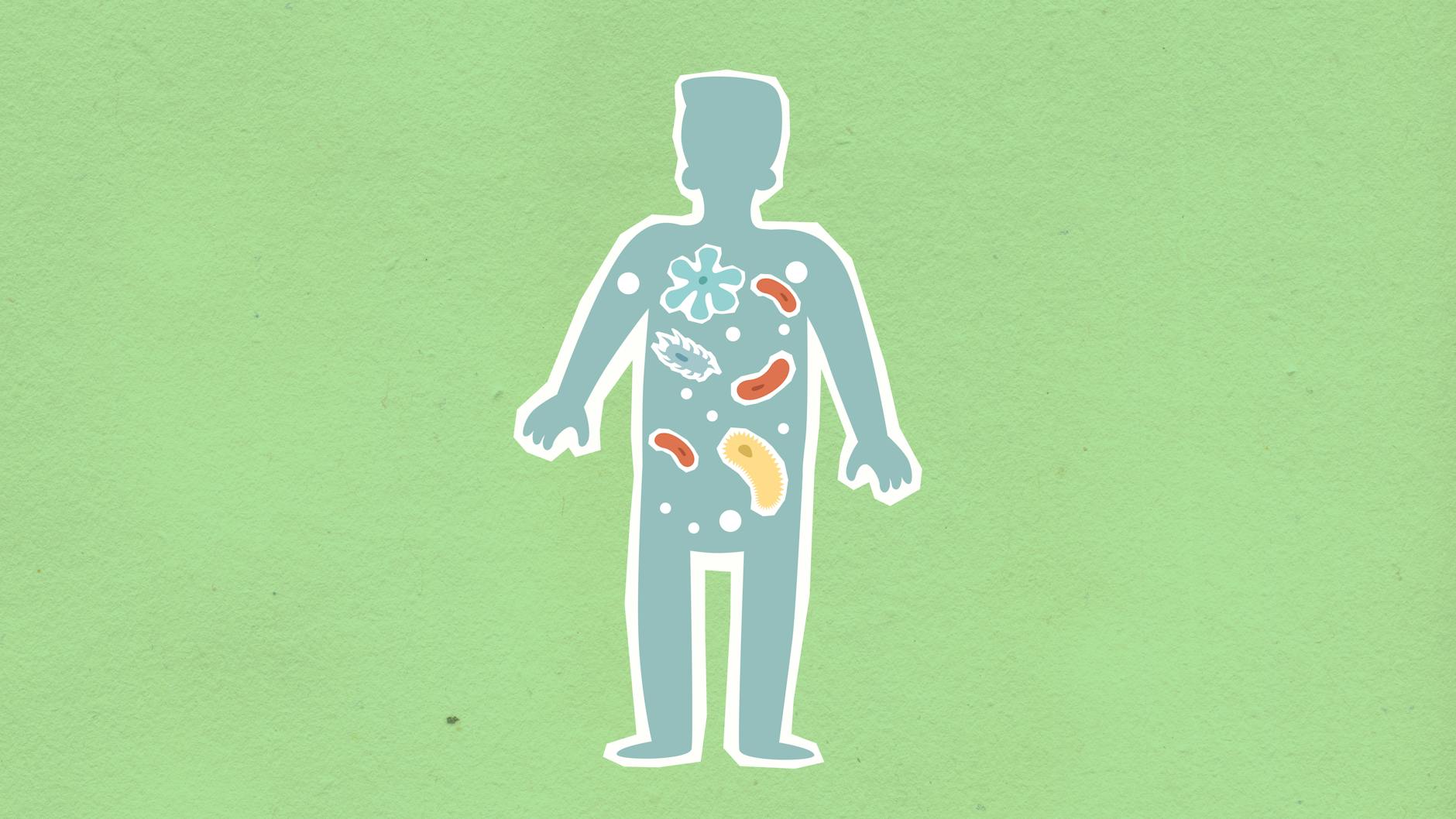
Stool work moved the paper beyond a food-frequency report. The MS samples carried fewer of the microbes and carbohydrate-active enzymes associated with fibre fermentation, which gave the authors a candidate mechanism for why one prebiotic might not behave as expected. Practically, beta-fructans are not automatically beneficial simply because they are classed as prebiotics. Their value depends on whether the gut community is equipped to turn them into metabolites that the host can tolerate and use.
Then came the mouse work. The team used beta-fructan to test what happens when the fibre arrives in a system without normal fermentation capacity. In that setting, inflammation and central nervous system damage worsened. Read narrowly, beta-fructans are not dangerous in general. Under those conditions, unfermented beta-fructan may behave differently from fermented beta-fructan, and that distinction matters in a disease already tied to immune misfiring.
Just as important, the paper points to one of its own insider questions: would a fermentation assay identify responders better than diagnosis alone? No, the study cannot answer that directly, but it points in that direction. Maybe the more relevant variable is not “Do you have MS?” but “Does your gut still have the taxa and enzymes needed to make useful fermentation products from this fibre subtype?”
Why the analyst sees a phenotype story, not a fibre scare
Against the broader MS microbiome literature, this paper feels like an extension, not a bolt from the blue. Back in 2021, Izhak Levi and colleagues in Cell Reports Medicine linked multiple sclerosis to changes in microbial metabolites including butyrate and indolelactate, both of which sit close to the conversation about immune tone and intestinal barrier function. If the new paper is right, lower fermentation capacity could be one route into that same low-metabolite pattern.
Elsewhere, the 2025 PNAS paper from Dirk Haller, Reinhard Hohlfeld, Sergio E. Baranzini and Hartmut Wekerle reported that Lachnospiraceae from the ileum of MS-discordant twins could trigger MS-like disease in germ-free transgenic mice. That paper did not make a prebiotic claim, but it strengthened a bigger one: specific microbial communities in MS are not just passive passengers. They can have functional consequences in experimental systems. The new Alberta paper slots into that logic by asking what happens when the community lacks the tools to process a substrate that wellness marketing treats as universally desirable.
The 2023 Frontiers in Immunology review on diet and the microbiome in MS matters here for a simpler reason: it shows how quickly public advice outruns the evidence. Fibre is usually discussed as a broad positive, and for population health that is still a defensible starting point. But population advice is not the same as phenotype-specific guidance for an autoimmune disease. The current paper argues that the gap between those two frames may be clinically important.
Here the phenotype case gets clearer. The shortlist is not mystical. It is reduced beta-fructan intake, fewer fibre-fermenting microbes, fewer enzymes that break those fibres down, and a background literature already pointing to lower short-chain-fatty-acid related activity in MS. That does not amount to a bedside test yet. It does suggest that “prebiotic” is not a complete description of how a product will act in a diseased gut.
What the skeptic gets right about the clinical leap
Several reasons argue against turning this paper into consumer advice. First, the study population was paediatric-onset MS, which is not interchangeable with adult-onset relapsing-remitting or progressive disease. Second, diet was measured by questionnaire, which is useful for pattern-finding but vulnerable to noise. Third, the mouse model was designed to isolate mechanism, not to recreate the full messiness of human diets, symptoms and treatments.
For that reason, the popular reading of the paper is easy to overstate. It is tempting to say that prebiotic fibre can “backfire” in multiple sclerosis. A stricter version would be that one fibre subtype, in one disease context, looked less protective when the microbial community seemed poorly equipped to ferment it. That is a smaller claim, and it is the one the data actually support.
Farber and colleagues offer a useful counterweight in their 2024 crossover trial in Multiple Sclerosis and Related Disorders. In adults with relapsing-remitting MS receiving B-cell depletion therapy, both prebiotics and probiotics were reasonably well tolerated over six weeks, and the clearest signal was improved bowel control in the probiotic arm rather than dramatic disease modification. That does not cancel the new paper. It does remind readers that human supplementation studies rarely produce the clean, binary answer that mechanistic mouse work seems to promise.
“Supplementation with either prebiotics or probiotics is reasonably well-tolerated and safe.”
Farber et al., Multiple Sclerosis and Related Disorders (2024)
Then there is the product language. A powder labelled “prebiotic” says almost nothing about whether it contains beta-fructans, resistant starches or another substrate entirely, what dose it delivers, or whether the person taking it has the microbial capacity to ferment it well. A person with MS who is considering a supplement change should consult their doctor before starting any supplement and talk to a neurologist or dietitian before stopping anything. One mechanistic paper is not a mandate to avoid fibre, and it is certainly not a reason for healthy readers to fear vegetables, legumes or whole grains.
What this means for personalised gut-health advice
Its deeper value is that the Alberta paper shifts the argument from moral language to systems language. Fibre is not “good” in the abstract and it is not “bad” in the abstract. A given fibre becomes useful, neutral or problematic inside a particular microbial ecosystem. That is a more mature way to talk about gut health, and it is one reason the paper fits the broader move away from one-size-fits-all microbiome advice.
Plenty of questions remain for people with multiple sclerosis. Does the finding hold in adults? Does it persist across disease stages and drug regimens? Can clinicians identify low-fermentation patients before recommending a prebiotic blend? The paper does not resolve any of that. What it does provide is a sharper hypothesis for future trials: test the microbiome first, then test the fibre, instead of assuming every prebiotic belongs in every gut.
So the skeptical read is fairly simple. The fibre story has not collapsed. The old wellness slogan was too simple. In multiple sclerosis, at least, the gut may care less about the label on the supplement tub than about whether the microbes are still capable of doing the metabolic work the label promises.
References
- Tollenaar SL, Khorasaniha R, Jovel J, Ba I, Voisin A, Armstrong H. Reduced fibre-fermenting capacity of gut microbes in multiple sclerosis may result in prebiotic dietary fibre β-fructan promoting inflammation and CNS damage. eGastroenterology. 2026. https://doi.org/10.1136/egastro-2025-100296
- Farber RS, Walker ELS, Diallo F, Andrade MP, et al. A randomized cross-over trial of prebiotics and probiotics in multiple sclerosis: trial feasibility, supplement tolerability and symptom abatement. Multiple Sclerosis and Related Disorders. 2024. https://doi.org/10.1016/j.msard.2024.105762
- Haller D, Hohlfeld R, Baranzini SE, Wekerle H. Multiple sclerosis and gut microbiota: Lachnospiraceae from the ileum of MS twins trigger MS-like disease in germfree transgenic mice. PNAS. 2025. https://doi.org/10.1073/pnas.2419689122
- Levi I, Gurevich M, Perlman G, Magalashvili D, Menascu S, Bar N, et al. Potential role of indolelactate and butyrate in multiple sclerosis revealed by integrated microbiome-metabolome analysis. Cell Reports Medicine. 2021. https://pubmed.ncbi.nlm.nih.gov/33948576/
- Cencioni MT, Mattoscio M, Magliozzi R, et al. Feeding the gut microbiome: impact on multiple sclerosis. Frontiers in Immunology. 2023. https://www.frontiersin.org/journals/immunology/articles/10.3389/fimmu.2023.1176016/full
Clinical researcher covering the gut-brain axis, probiotics, and metabolic health. Reports from Boston.
The Vitalspell brief
Evidence-based supplement science — weekly in your inbox.
Subscribe