Seaweed for thyroid health: what the iodine evidence says
Seaweed for thyroid health sounds simple, but studies show iodine content varies widely and excess intake can push thyroid markers the wrong way.
Seaweed’s thyroid halo starts with a real fact: it contains iodine. Because the thyroid needs iodine to make hormones, marketers often leap from there to a bigger promise. The evidence does not. Inger Aakre and colleagues’ 2026 European Journal of Nutrition study found that habitual seaweed consumers in Norway often exceeded the adult upper limit for iodine intake, and their thyroid markers shifted after six weeks without seaweed.
So the useful question is not whether seaweed contains iodine. It does. The harder question is whether a food with highly variable iodine levels is a dependable way to support thyroid health.
Seaweed may help when iodine intake is genuinely low. Once intake is adequate, more is not automatically better, and some products may push exposure too high. That is the through line in Aakre’s human data, Peter P.A. Smyth’s 2021 review in European Thyroid Journal, and the 2022 systematic review by Blikra, Henjum and Aakre. Across those papers, the practical problem is the same: the nutrient people want from seaweed is also what makes it hard to dose.
Why iodine matters, and why the thyroid cares
For the thyroid, iodine is the raw material used to make thyroxine, or T4, and triiodothyronine, or T3. Those hormones help regulate metabolic rate and many other body functions. Too little iodine can impair hormone production. Too much can disrupt thyroid physiology as well, especially in people who are sensitive to swings in iodine exposure, as Smyth’s 2021 review explains.
That is why “good for the thyroid” needs a narrower meaning than wellness marketing usually gives it. In evidence-based terms, it should mean helping someone move from inadequate iodine intake into an adequate range without overshooting into excess. That is a much smaller claim than saying kelp powder, sea moss gel, or a packet of seaweed snacks is a general thyroid tonic. Even consumer explainers such as Northwestern Medicine’s discussion of sea moss and Cleveland Clinic’s seaweed guide land on the same caution once the wellness gloss is stripped away: iodine content can vary sharply, and more is not always safer.
What the new human study actually found

Aakre and colleagues studied 49 habitual seaweed consumers in Norway in a non-randomized pre-post trial. Before the washout period, median estimated iodine intake was 658 µg per day, above the European Food Safety Authority adult upper limit of 600 µg per day. Median urinary iodine concentration was 270 µg/L.
After six weeks without seaweed, estimated intake fell to 189 µg per day and urinary iodine concentration dropped to 87 µg/L. TSH, short for thyroid-stimulating hormone, also fell. That matters because TSH is the pituitary signal that often rises when the thyroid has to work harder to maintain hormone output.
“Ingestion of seaweed with high iodine content could potentially pose a risk of exceeding the tolerable upper intake level for iodine.”
— Aakre et al., European Journal of Nutrition
Still, the study was not randomized, and it does not prove seaweed is harmful for everyone. Nor does it show that all seaweed products behave the same way. What it does show is more concrete than the usual nutrition shorthand: real habitual consumers can drift into iodine exposure levels high enough to move lab markers, then move back toward lower intake once seaweed is removed.
Why seaweed is such a hard food to dose
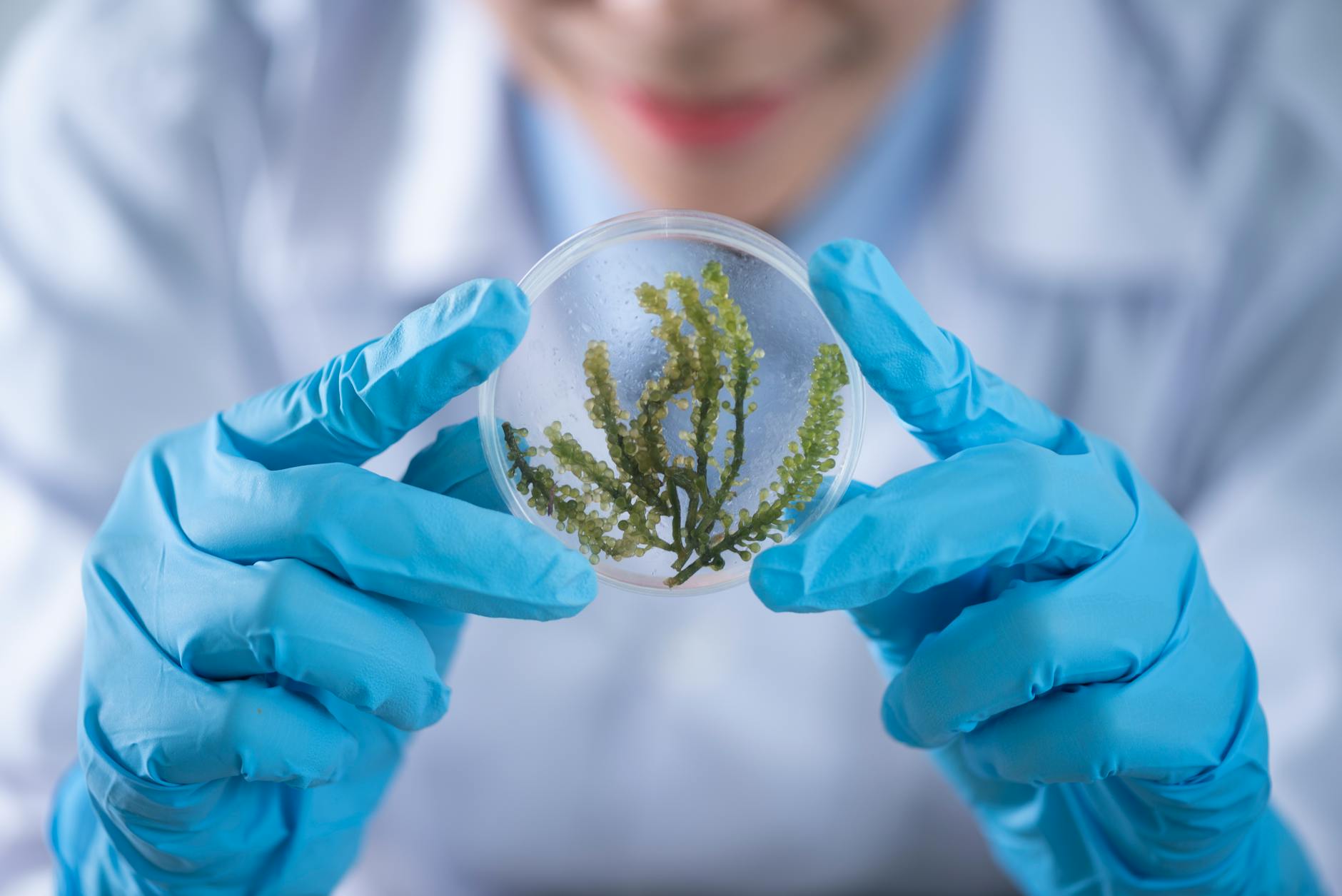
The difficulty is not simply that seaweed contains iodine. Different seaweeds can contain very different amounts, and processing does not erase that uncertainty. The 2022 systematic review on iodine from brown algae focused on bioaccessibility, meaning how much iodine can be released during digestion, and bioavailability, meaning how much can then be absorbed and used by the body.
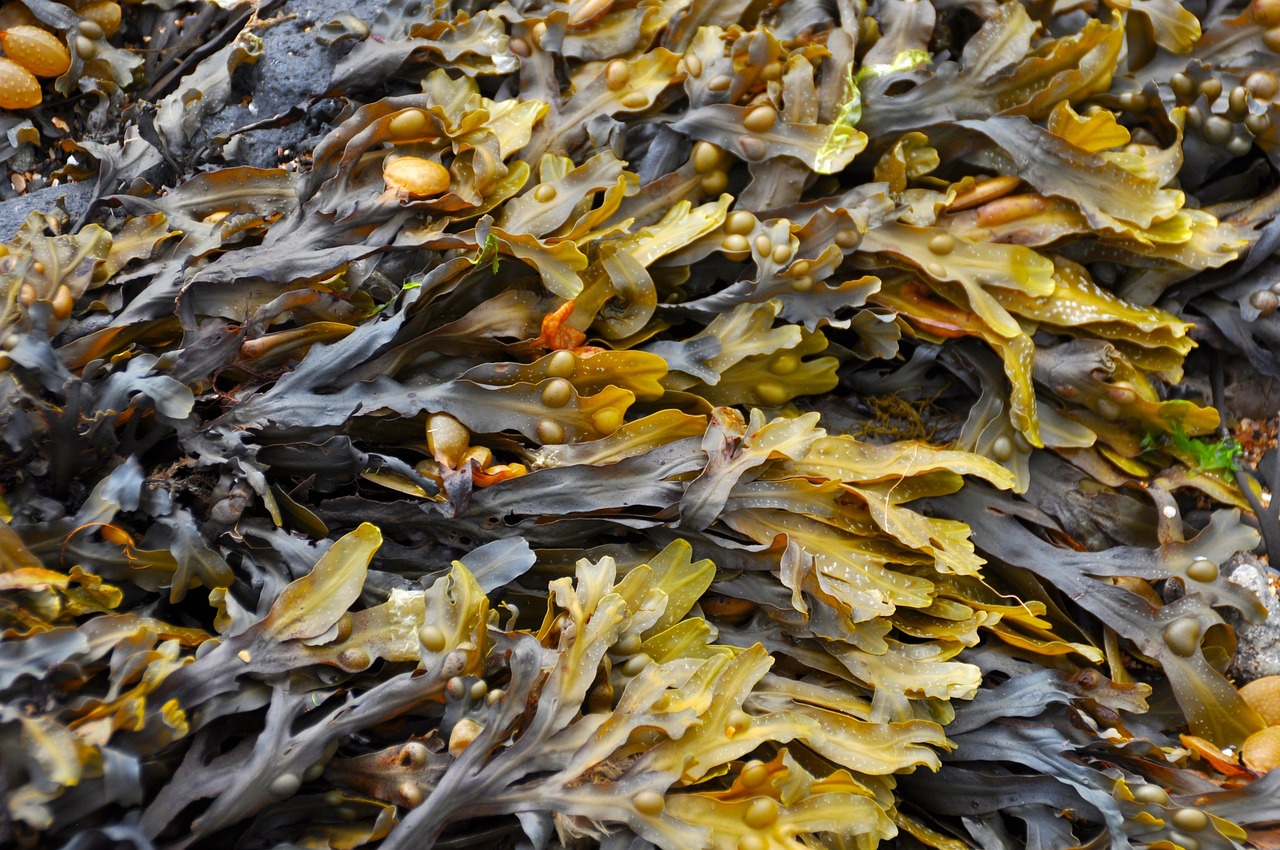
Brown algae stood out as especially iodine-rich in that review. Nutritionally, that is interesting. Practically, it means these foods are hard to treat as a casual food-first thyroid intervention, because a serving that looks modest on the plate may still deliver a great deal of iodine.
Smyth’s 2021 thyroid review states the risk even more plainly. Brown seaweeds, often sold as kelp, can deliver enough iodine that even small amounts may have antithyroid effects in some settings. Most consumers also do not know the species, harvest conditions, processing losses, or how those variables translated into the final jar of flakes or powder.
“Caution against consumption of brown seaweeds (kelps) is required as even small amounts may have antithyroid actions while product labelling may be insufficient.”
— Peter P.A. Smyth, European Thyroid Journal
That is why “natural source” is not the same as “easy to use.” A nutrient can be essential and still be awkward to dose when it comes packaged in a food with wide natural variation. In that respect, seaweed is closer to liver or Brazil nuts than to a standardized staple.
So who might benefit, and who should be skeptical?
Seaweed can make sense when the underlying problem is low iodine intake and the form being eaten has a known, modest iodine content. That is the narrow version of the pro-seaweed case. It is also a very different claim from telling everyone with low energy, a slower metabolism, or vague thyroid concerns to start adding kelp or sea moss to a daily routine.
For someone with no evidence of iodine deficiency, the stronger signal in this literature is caution, not enthusiasm. The 2026 human study suggests habitual use can push intake above the upper limit. The 2021 review explains why excess iodine can trigger thyroid dysfunction, not just correct it. The 2022 review shows why the food matrix itself makes prediction difficult.
Taken together, that is a case against using seaweed as a blanket self-treatment for fatigue, hair loss, weight change, or other vague thyroid worries. A food can be nutrient-dense and still be a poor fit for daily thyroid support if the active mineral swings too widely from serving to serving. Better first to establish whether iodine status is actually the issue, and whether a clinician has reason to think more iodine would help.
What to watch next
The next useful question is not whether seaweed contains iodine. That part is settled. The harder question is whether specific species, serving sizes, and processed products can be characterised tightly enough to give consumers something closer to a predictable dose.
Until that evidence improves, seaweed sits in an awkward middle ground. It can clearly raise iodine intake. It is not clearly reliable as a day-to-day thyroid tool. In some cases it may be risky precisely because it works too well.
For now, the most accurate answer is cautious. Seaweed may help the thyroid when iodine intake is too low, but the better established real-world risk is that habitual use, especially of iodine-rich brown seaweeds, can overshoot into excess.
References
- Aakre I, Vogt EC, Myrmel LS, et al. Impact of habitual seaweed consumption on iodine nutrition and thyroid function: a non-randomized pre-post clinical study. European Journal of Nutrition. 2026. https://link.springer.com/article/10.1007/s00394-025-03813-8
- Smyth PPA. Iodine, Seaweed, and the Thyroid. European Thyroid Journal. 10(2). 2021. https://etj.bioscientifica.com/view/journals/etj/10/2/ETJ512971.xml
- Blikra MJ, Henjum S, Aakre I. Iodine from brown algae in human nutrition, with an emphasis on bioaccessibility, bioavailability, chemistry, and effects of processing: a systematic review. Comprehensive Reviews in Food Science and Food Safety. 2022. https://ift.onlinelibrary.wiley.com/doi/abs/10.1111/1541-4337.12918
The Vitalspell brief
Evidence-based supplement science — weekly in your inbox.
Subscribe