Grapes and cholesterol: what the evidence really says
Grapes and cholesterol research shows a modest LDL drop, gut-microbiome shifts and weaker signals for blood pressure and cognition.
In Dr Zhaoping Li’s telling, grapes are not medicine. Her kitchen sounds more ordinary than that. During an interview about her UCLA work, she said she keeps two colours at home, a green bunch and a purple one. What mattered was the fruit itself, not a capsule or a purified extract.
“I usually have two different grapes at home, one green, one purple.”
Dr Zhaoping Li, SMH Good Food
Human evidence for grapes and cholesterol is still small, specific and easy to overread. In a 2023 human trial led by Jieping Yang and colleagues, a concentrated grape powder meant to approximate a daily grape serving was linked with roughly a 6% reduction in total cholesterol and LDL cholesterol after four weeks. In UCLA’s summary, the surprising part was that adding a sweet fruit did not produce weight gain in the study group, and Li argued that food quality mattered.
A useful result, yes, but a narrow one. A 6% LDL drop is not a statin-sized effect, nor is it a reason to ignore lipid medication. No one trial proves that any grape snack will change a person’s cardiovascular risk. Better question: is the signal coming from cholesterol metabolism, the gut, blood pressure, brain health, or the simpler act of replacing a less useful snack with whole fruit?
The cholesterol result is real, but not dramatic
For cholesterol, the lipid claim is the cleanest. Yang et al. published the analysis in Molecular Nutrition & Food Research in 2023, using a standardized grape intervention in healthy adults and measuring cholesterol metabolism, bile acids and related markers. Roughly a 6% fall in total and LDL cholesterol is large enough to notice and small enough to keep in proportion.
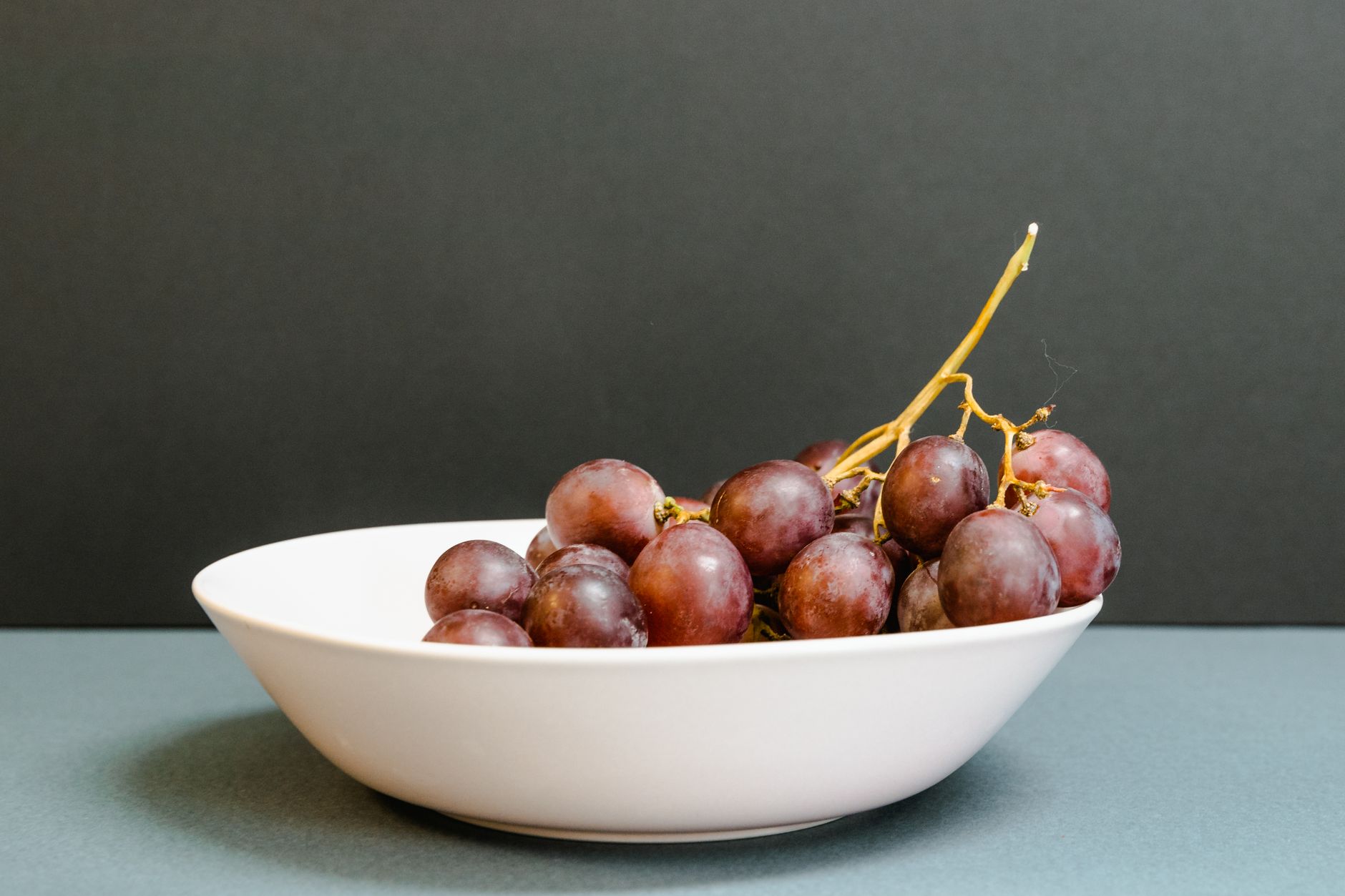
Short trials cannot answer every practical question. This one did not focus on people with severe hypercholesterolemia. Researchers used concentrated grape powder, which makes dosing tidy for a trial but is not quite the way people eat fruit over months or years. Even with those limits, the evidence is sturdier than the usual wellness chain: cell study, mouse study, label claim.
Li’s second quote explains why the finding drew attention.
“You would not expect giving people more calories, mostly from sugar, would improve their cholesterol profiles.”
Dr Zhaoping Li, SMH Good Food
No single molecule explains it neatly. Grapes contain fibre, organic acids and a family of polyphenols that includes resveratrol, catechins, proanthocyanidins and anthocyanins. Those compounds may affect cholesterol synthesis in the liver, cholesterol absorption in the intestine, oxidation of LDL particles and bile-acid recycling. Plausible, yes. A settled prescription, no.
In practice, the interpretation is narrower: grapes may be a sensible replacement for a less nutritious snack. They are not a cholesterol treatment. If a clinician has prescribed a statin, ezetimibe or another lipid-lowering drug, grapes belong in the food conversation, not the medication slot.
The gut microbiome may be part of the story
Gut data make the story less tidy, and more interesting. Before the cholesterol paper, Yang and colleagues published a 2021 pilot study in Nutrients testing standardized grape powder and the human gut microbiome. Reported shifts included changes in microbiome diversity and in taxa such as Akkermansia, a genus that often appears in metabolic-health research.

Polyphenols are not fully absorbed in the upper gut. Some continue down the intestine, where bacteria transform them into smaller metabolites. Those compounds may also shift which microbes thrive. That two-way exchange is one reason nutrition studies can look inconsistent: the same food may not have the same metabolic effect in two people with different baseline diets and gut communities.
Because the 2021 study was a pilot, it should be read as hypothesis-building. It does not prove that grapes rebuild the microbiome or that Akkermansia changes explain the LDL result. Instead, it suggests a route worth testing: whole-grape compounds may work through the intestine as much as through the bloodstream.
Whole fruit matters for a second reason. Isolated resveratrol gets attention because it is easy to name and easy to sell. Grapes are a messier package. The skin, pulp and seed-derived compounds arrive together, mixed with water, sugar and fibre. In nutrition science, that messiness can be useful. Turning it into a label claim is harder.
Blood pressure benefits look smaller and more uneven
Claims about blood pressure need the same scale check. Heart-health articles often fold cholesterol, blood pressure and vascular function into one promise, but the evidence does not line up so neatly. A 2023 systematic review and meta-analysis by Marziyeh Ashoori and colleagues looked at whole grape products and vascular outcomes. It found a small systolic blood-pressure reduction in subgroup analysis, about 2.69 mmHg, but not a broad effect across every trial and product.

For context, a two or three point change in systolic blood pressure can matter at a population level if it lasts and many people adopt it. For one reader, it is not the kind of effect that should displace salt reduction, exercise, sleep, weight management when relevant, or medication when indicated.
Form matters too. Whole grapes, grape powder, grape juice and extracts do not behave identically. Juice removes some of the food structure. Extracts concentrate some compounds while leaving others behind. Wine adds alcohol, which changes the health equation entirely. Stronger evidence here points to whole grape products, not alcohol or sugary grape drinks.
Seen this way, the vascular evidence supports a pattern rather than a promise. Grapes fit inside a diet rich in fruits, vegetables, legumes, nuts and minimally processed foods. They may add a polyphenol-rich snack to that pattern. They do not replace it.
Brain claims need the most restraint
Cognition is where the grape story is easiest to oversell. A systematic review by Bird, Hoggard and Aceves-Martins examined grape interventions and cognitive or mental performance in healthy participants and people with mild cognitive impairment. Encouraging signals appeared across eight studies, but the evidence base was small, mixed and hard to compare.

One skeptical question is still fair: are the cognitive changes clinically meaningful, or are they test-specific flickers? A short-term improvement on one memory or attention task is not the same as preventing dementia. Different studies used different grape products, different populations and different cognitive measures. Interesting direction, low certainty.
Mechanistically, the idea is plausible. Grape polyphenols may influence vascular function, oxidative stress and inflammation, all of which touch brain health. Plausible is not proven. A reader buying grapes for lunch can treat the brain data as a possible bonus, not the reason to build a whole diet around one fruit.
A calmer mental model helps: grapes are one polyphenol-rich food among many. Blueberries, cocoa, tea and apples all carry their own evidence trails. No one needs to turn fruit into a contest. If grapes are the fruit a person will actually eat instead of a pastry or candy bar, that substitution may matter more than the exact rank order of flavonoid content.
What to do with the evidence
Taken together, the evidence supports a restrained conclusion. Grapes can be part of a heart-healthy eating pattern, and a daily serving may nudge LDL cholesterol in some people. Gut signals are plausible and worth following. Blood-pressure effects look small. Cognition evidence is intriguing but not ready for strong claims.
“Food quality really matters.”
Dr Zhaoping Li, UCLA Health
Li’s line, from UCLA Health’s discussion of Li’s grape research, is the safest bottom line. Grapes bring sugar, but they also bring water, fibre and polyphenols in a whole-food matrix. For most healthy adults, a serving of grapes is a reasonable snack. For people with diabetes, severe insulin resistance, kidney disease, food allergies or a medically prescribed diet, the right serving size is a clinician or dietitian question.
A sharper question than “good or bad” is “compared with what?” Compared with a refined snack, grapes look useful. Beside a lipid-lowering medication for someone at high cardiovascular risk, they are not in the same category. Within a varied, plant-rich diet, they are one more food, not the whole plan.
Grapes deserve a place in the cholesterol conversation, but only with the right scale. This is not folklore or cure territory. It is a modest, evidence-backed food that may help at the margins, especially when the alternative snack is doing the heart no favours.
References
- Yang J, Tsugawa Y, Cai H, et al. Concentrated grape powder consumption modulates cholesterol metabolism and homeostasis in healthy subjects. Mol Nutr Food Res. 2023. https://doi.org/10.1002/mnfr.202300224
- Yang J, Tsugawa Y, Cai H, et al. Effect of standardized grape powder consumption on the gut microbiome of healthy subjects: a pilot study. Nutrients. 2021;13(11):3965. https://doi.org/10.3390/nu13113965
- Bird RJ, Hoggard N, Aceves-Martins M, et al. The effect of grape interventions on cognitive and mental performance in healthy participants and those with mild cognitive impairment. Nutr Rev. 2022. https://doi.org/10.1093/nutrit/nuab012
- Ashoori M, et al. The effect of whole grape products on blood pressure and vascular function. Nutr Metab Cardiovasc Dis. 2023. https://doi.org/10.1016/j.numecd.2023.05.001
The Vitalspell brief
Evidence-based supplement science — weekly in your inbox.
Subscribe