Does watermelon improve diet quality or heart health?
Watermelon and heart health claims start with better diet quality, but the direct cardiovascular evidence still comes from small, short-term studies.
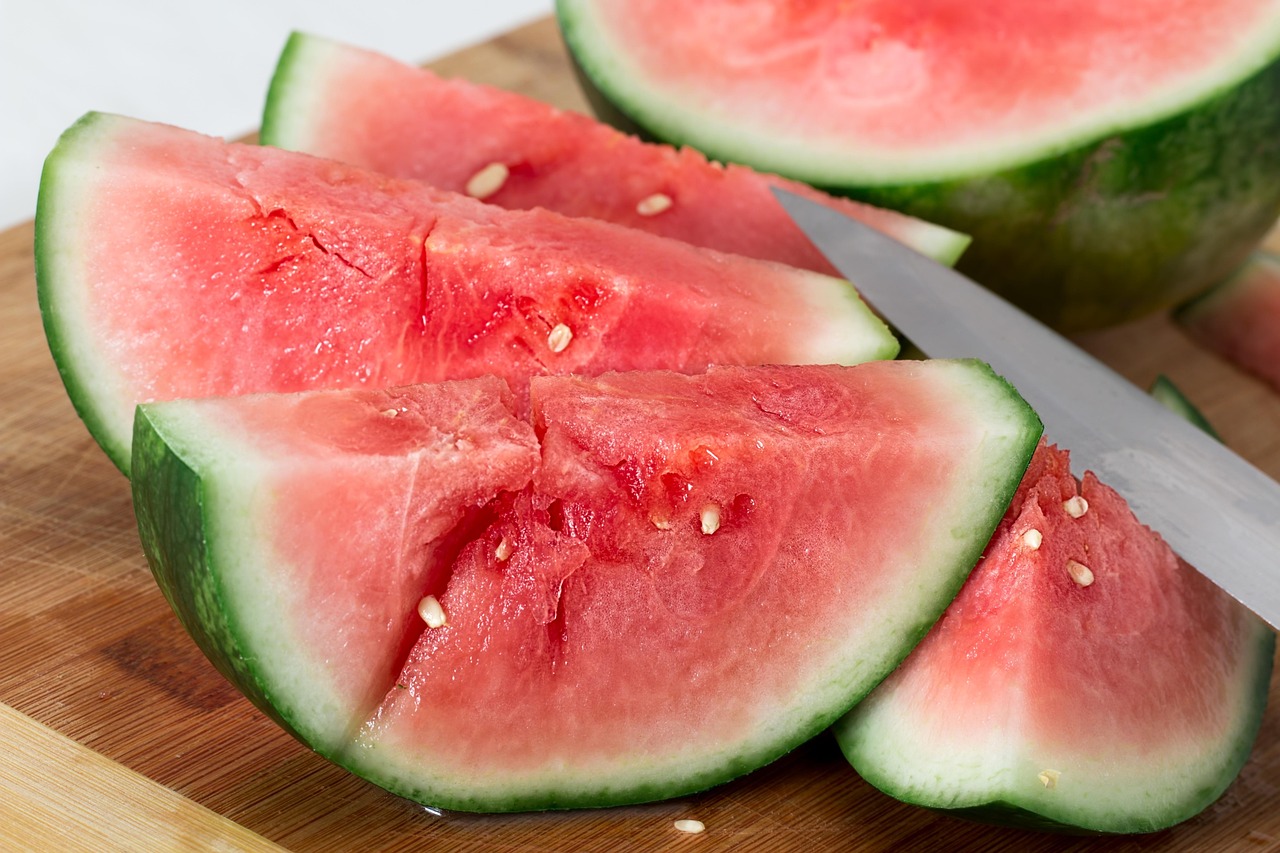
Watermelon is easy to cast as a heart-healthy food. The evidence is less tidy. The strongest support behind recent headlines is not that watermelon directly protects the heart, but that people who eat it tend to have better overall diet quality.
That difference matters. The best paper in this group is an observational analysis linking watermelon intake with healthier eating patterns. The more direct heart-health papers are smaller randomized trials, and most of them measured surrogate markers rather than heart attacks, strokes or other long-term cardiovascular outcomes.
So the evidence breaks into two questions. Does watermelon show up alongside a healthier diet? And do short human trials hint at useful effects on blood vessels or glucose handling? Both answers are cautiously positive, but the first is much more secure than the second.
What “diet quality” means in this research
In nutrition research, diet quality is a summary score for how closely an eating pattern lines up with broad goals such as more fruit, fiber, potassium and carotenoid-rich foods, and less added sugar or saturated fat. It is not a badge for one ingredient. It is a pattern measure.
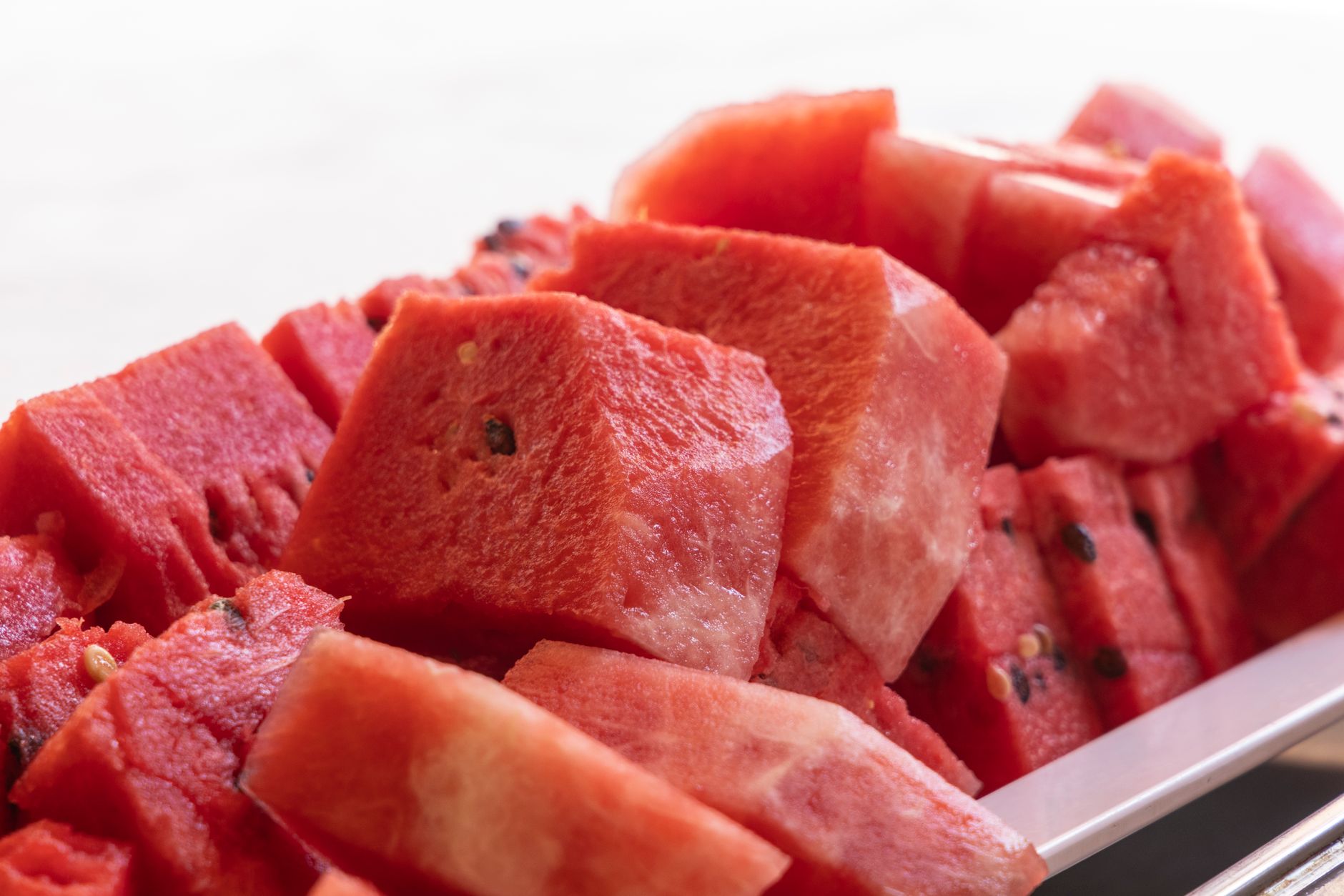
For that question, Fulgoni and Fulgoni’s 2022 NHANES analysis in Nutrients does most of the work. Using US dietary survey data from 2003 through 2018, the authors found that children and adults who reported eating watermelon also tended to consume more fiber, magnesium, potassium, vitamin C, vitamin A, lycopene and other carotenoids, while taking in less added sugar and saturated fat. Usual intake among watermelon consumers was about 125 g a day for children and 161 g a day for adults.
Even there, the limit is causation. People who eat watermelon may differ from nonconsumers in other ways that improve diet quality. They may eat more fruit overall, shop differently or replace dessert and salty snacks with fresh produce more often. Observational nutrition data can show an association. It cannot prove that watermelon caused the healthier pattern.
That helps explain why the story travels. Watermelon is sweet, mostly water and relatively low in energy density. As Cleveland Clinic dietitian Lara Whitson wrote, it can fit comfortably into a broader healthy diet:
It’s low in calories, keeps you hydrated and provides many other nutrients that can help you maintain good health.
— Lara Whitson, Cleveland Clinic
That is a reasonable nutrition claim. It is a narrower one than saying watermelon protects the heart.
What the heart studies actually measured
The heart-health case comes from small intervention trials that tested watermelon juice over short periods. Those studies matter because they move beyond food questionnaires. They still fall far short of showing disease prevention.

The study cited most often is Vincellette et al.'s 2021 randomized crossover trial in The Journal of Nutrition. Healthy adults drank 500 mL of watermelon juice a day for two weeks. Researchers then tested how their blood vessels responded during an acute hyperglycaemia challenge. The authors reported better flow-mediated dilation, a common measure of endothelial function. That term refers to how well the thin inner lining of blood vessels helps an artery widen and respond to changes in blood flow. Better readings are interesting. They are not the same as fewer heart events.
The rest of the trial literature points in the same direction. Ellis et al.'s 2021 randomized trial in Nutrition, Metabolism & Cardiovascular Diseases studied postmenopausal women and again focused on vascular markers rather than hard outcomes. Matthews et al.'s 2023 crossover trial in Nutrients looked at heart-rate variability and metabolic responses during an oral glucose challenge in healthy young adults. Taken together, the studies suggest that watermelon juice may nudge some short-term physiological markers in a favorable direction. They do not show how durable the changes are, how clinically meaningful they are, or how closely whole watermelon matches a controlled juice intervention.
One coauthor, Jack Losso, framed the findings optimistically in a public-facing summary:
this study adds to the current body of evidence supporting regular intake of watermelon for cardio-metabolic health
— Jack Losso, quoted in ScienceDaily
That is fair as far as it goes. The literature is moving in an encouraging direction. Still, short crossover trials are mainly useful for hypothesis testing, not for proving cardioprotection.
Why L-citrulline keeps coming up
Much of the enthusiasm around watermelon comes back to L-citrulline, an amino acid found in watermelon that the body can convert into L-arginine and then nitric oxide. Nitric oxide helps blood vessels relax and widen, which gives researchers a plausible vascular mechanism to test.
The review literature supports that plausibility. Volino-Souza et al.'s 2022 review in Nutrients argued that watermelon ingestion has a biologically credible link to vascular health through citrulline, arginine, antioxidant compounds and hydration. Baião et al.'s 2025 narrative review in Nutrients made a similar case while also stressing how limited the clinical evidence still is. That is the right balance. A plausible mechanism can justify more testing. It cannot settle the claim on its own.
The same caution applies to lycopene, the carotenoid that gives watermelon its red color. Here, it is best understood as one potentially useful part of a whole-food package, not a reason to treat watermelon as stand-alone therapy.
So should readers think of watermelon as heart healthy?
In the modest sense that it can fit into a healthier dietary pattern, probably yes. In the stronger sense that eating watermelon directly improves cardiovascular health, the evidence is not there yet. Right now, the best support is that watermelon consumers seem to eat better diets on average and that small short-term juice trials have produced encouraging shifts in surrogate markers.
What would make the case more convincing? Larger trials, longer follow-up, clear comparisons between whole fruit and juice, and outcomes that matter to patients rather than only lab or vascular readouts. Until then, watermelon belongs in the large category of promising nutrition stories that are reasonable to include, interesting to study and easy to overstate.
References
- Fulgoni K, Fulgoni VL. Watermelon intake is associated with increased nutrient intake and higher diet quality in adults and children, NHANES 2003-2018. Nutrients. 2022. https://pubmed.ncbi.nlm.nih.gov/36432573/
- Vincellette CM, Losso J, Early K, Spielmann G, Irving BA, Allerton TD. Supplemental watermelon juice attenuates acute hyperglycemia-induced macro-and microvascular dysfunction in healthy adults. The Journal of Nutrition. 2021. https://pubmed.ncbi.nlm.nih.gov/34510203/
- Ellis AC, Mehta T, Crowe-White KM, Nagabooshanam VA, Dudenbostel T, Locher JL. Daily 100% watermelon juice consumption and vascular function among postmenopausal women: a randomized controlled trial. Nutrition, Metabolism & Cardiovascular Diseases. 2021. https://pubmed.ncbi.nlm.nih.gov/34344546/
- Matthews R, Early KS, Vincellette CM, Losso J, Spielmann G, Irving BA, et al. The effect of watermelon juice supplementation on heart rate variability and metabolic response during an oral glucose challenge: a randomized, double-blind, placebo-controlled crossover trial. Nutrients. 2023. https://pubmed.ncbi.nlm.nih.gov/36839167/
- Volino-Souza M, Oliveira GV, Conte-Junior CA, Figueroa A, Alvares TS. Current evidence of watermelon ingestion on vascular health: a food science and technology perspective. Nutrients. 2022. https://pubmed.ncbi.nlm.nih.gov/35889869/
- Baião DS, da Silva DVT, Paschoalin VMF. Watermelon nutritional composition with a focus on L-citrulline and its cardioprotective health effects: a narrative review. Nutrients. 2025. https://pubmed.ncbi.nlm.nih.gov/41156475/
The Vitalspell brief
Evidence-based supplement science — weekly in your inbox.
Subscribe