Carbon-plated shoes alter running biomechanics tied to bone stress injury risk
A new study of 23 elite distance runners found that carbon-plated shoes increased rearfoot eversion and lowered cadence compared to neutral trainers. The biomechanical shifts are small but cumulative, and recreational runners face more exposure than elites.
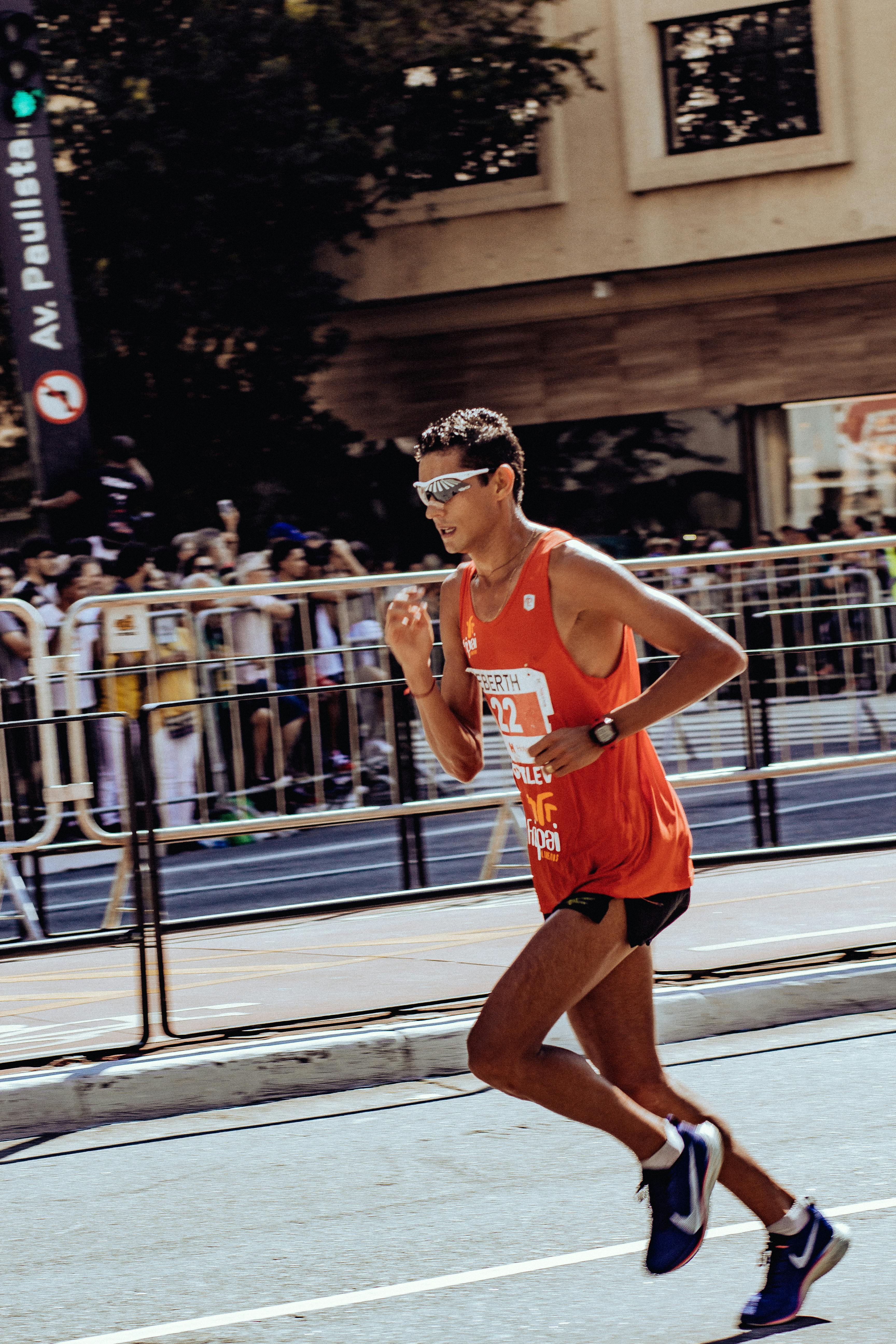
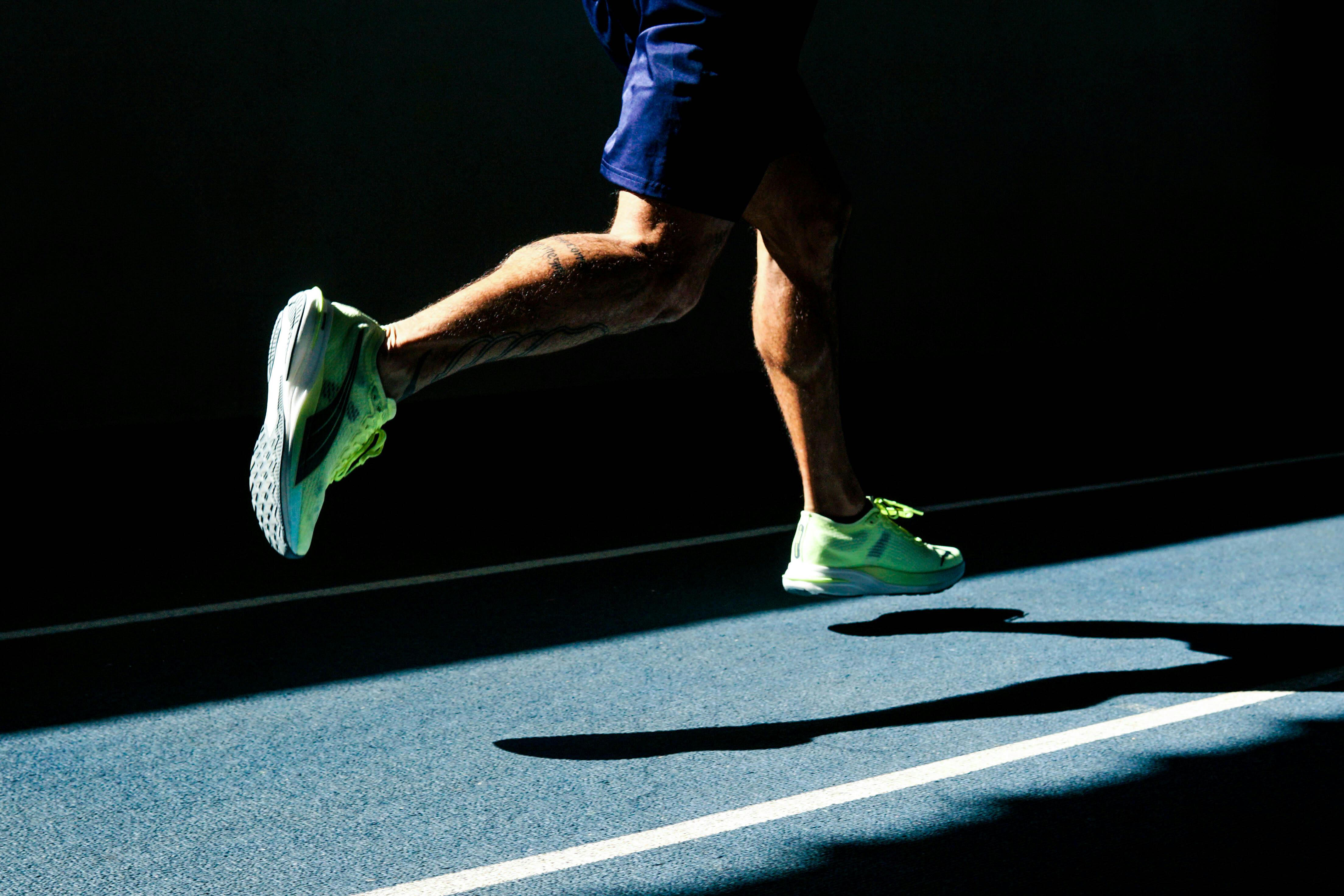
Carbon-plated running shoes are everywhere now. Not just on race day. Walk through any marathon starting corral and you see the same thick-soled, rocker-shaped silhouette on every other foot, from the 2:05 guys up front to the 4:30 crowd in the back. The promise is real: these shoes make you faster, somewhere in the ballpark of 3 to 4 percent.
But a new study out this spring suggests there is a catch, and it is one most runners have not heard about.
The researchers, publishing in April 2026, put 23 elite distance runners through their paces in three different shoe types: a standard neutral trainer, a lightweight shoe with responsive foam but no plate, and a full carbon-fiber-plated super shoe. They tracked seven variables linked to bone stress injury risk (rearfoot eversion excursion, cadence, ankle plantarflexion moment) at speeds from an easy jog all the way up to 5K race effort.
Two things stood out. Runners in the carbon-plated shoes showed more rearfoot eversion excursion than they did in neutral trainers. Translation: their heels rolled further inward on every stride. They also took fewer steps per minute. Lower cadence means more time on the ground, which means more load going through the bones with each foot strike.
The differences were not huge. “The changes in biomechanics were small; however, cumulative effects to bone and the lower extremity could contribute to injury,” the authors wrote. Fair enough. But every measured variable moved in the same direction. Not one thing got better, biomechanically speaking, when runners switched into the carbon-plated shoe. Not heel motion, not cadence, not ankle moment. That pattern is hard to ignore.
The navicular bone is the canary
This is not the first time someone has raised the question.
Back in 2023, a case series in Sports Medicine reported five navicular bone stress injuries in competitive runners, all of whom were training in carbon-fiber plate shoes. Five cases is not an epidemic. But a navicular stress fracture is not a minor thing either. It is a small bone buried in the midfoot, right at the apex of the arch, and when it goes, you are out for months.
The lead author, Dr. Adam Tenforde at Mass General Brigham’s Spaulding National Running Center, was careful in the write-up. Clinicians “should consider injuries possibly related to altered biomechanical demands affecting athletes who use carbon fiber plate footwear,” the team wrote. They also recommended easing into these shoes gradually instead of jumping straight into 40-mile weeks in them.
Tenforde, off the record of the journal article, was less guarded: “While I understand the excitement, we need to consider how to prevent injuries when athletes adopt this new footwear.”
The mechanics make intuitive sense once you picture them. A carbon plate stiffens the midsole so the shoe resists bending the way a traditional trainer does not. The heel and forefoot still want to move through their natural range. The middle of the shoe resists. The navicular, perched right at that pivot point, picks up more of the load. Do that across 400 miles and the math starts to look different.
The exposure gap
One thing about the 2026 study that is easy to miss: it tested elite runners at high speeds for short stretches. That is a lab protocol, not a training log.
Recreational runners tend to use carbon-plated shoes very differently. An elite marathoner races in super shoes maybe three or four times a year and logs the rest of their mileage in regular trainers. A recreational runner who just dropped $250 on a pair of racing shoes often wears them for everything. Long runs, tempo work, easy days, the race itself. Stack up 400 or 500 miles that way and you have spent a lot of time in a loading pattern the shoe was never really designed to support day after day.
Nobody is saying the shoes are dangerous. The point is narrower. They are a specialized tool being used as a daily driver, and the gap between those two things may matter more than we thought.
Two other pieces of research fill in the picture. A 2025 finite element analysis from Beijing Sport University and Anta Sports modeled what happens when you vary carbon-fiber plate thickness, weave pattern, and ply angle. Thicker plates did reduce peak stress on the metatarsals, but they also redistributed load unevenly across the forefoot. The sweet spot, at least in the model, was a woven plate with a moderate ply angle. Enough stiffness for efficiency, but without concentrating stress in a single bone.
A second meta-analysis, this one from 2026 pooling 15 studies, found no reliable differences between carbon-plated and traditional shoes on leg stiffness, knee power, hip power, or MTP joint power. Ankle power dipped slightly. Step frequency dropped a bit, but not enough to reach statistical significance.
The two studies do not really conflict. They just look at different things. Global joint power and leg stiffness are big-picture, whole-limb metrics. Rearfoot eversion and cadence are granular variables that prior research has tied to bone stress injury specifically. Taken together, the evidence does not suggest that carbon plates overhaul your stride. It suggests they nudge a few specific things in a direction that might add up over time.
Using them without getting hurt
So what do you actually do with this?
The most honest read of the research is not that carbon-plated shoes are bad. It is that they belong on your feet for the sessions where the performance gain actually matters: races, tempo runs, long runs at goal pace. Easy days and recovery miles call for a neutral trainer. You get the speed benefit when you want it, and you limit the cumulative exposure the rest of the time.
If you are new to carbon-plated shoes, do not go from zero to 40 miles in the first week. Start with something small. A 5K worth of strides. Maybe one workout. Let your feet and shins adapt over a few weeks. Bone remodels on the scale of weeks to months, not days. A sudden change in loading pattern gives it no time to respond.
Pay attention to what your feet are telling you. A bone stress injury rarely announces itself with a dramatic pop. It starts as a vague ache that you can run through, then gets a little sharper, then starts hanging around after the run is over. Midfoot pain, ankle soreness, shin discomfort that does not fade. If you just switched to carbon-plated shoes and something feels off, talk to a physical therapist or sports medicine clinician who knows what they are looking at.
Runners who have already had a stress fracture, or who know they have low bone density, should be the most careful. If your skeletal remodeling capacity is already near its limit, a small change in loading pattern might be the thing that tips it over.
The performance benefit is real. Carbon plates improve running economy by somewhere between 2.8 and 4.2 percent. At the elite level, that is the gap between making the Olympic team and watching from home. For the rest of us, it is the difference between hitting a PR and coming up 90 seconds short. But the way you use a performance tool matters. Sprint spikes are for sprinting. Carbon-plated shoes are for going fast. Neither one makes much sense as an everyday shoe.
References
- Tenforde A, Hoenig T, Saxena A, et al. Bone stress injuries in runners using carbon fiber plate footwear. Sports Medicine. 2023. https://pubmed.ncbi.nlm.nih.gov/36780101/
- Biomechanics associated with bone stress injuries while using advanced footwear technology in elite distance runners. PubMed. 2026. https://pubmed.ncbi.nlm.nih.gov/42026723/
- Giachetti Martin S, Kobayashi E, Amaral Coelho de Azevedo L, et al. Carbon plates in running shoes biomechanics: a systematic review and meta-analysis. Frontiers in Sports and Active Living. 2026. https://doi.org/10.3389/fspor.2026.1764338
- Effects of carbon-fiber plate design on foot stress injury risk: a finite element analysis. Frontiers in Bioengineering and Biotechnology 13. 2025. https://doi.org/10.3389/fbioe.2025.1723984
Rafael Costa
Strength coach and nutritionist covering protein science, creatine, recovery protocols, and body composition. Reports from Miami.