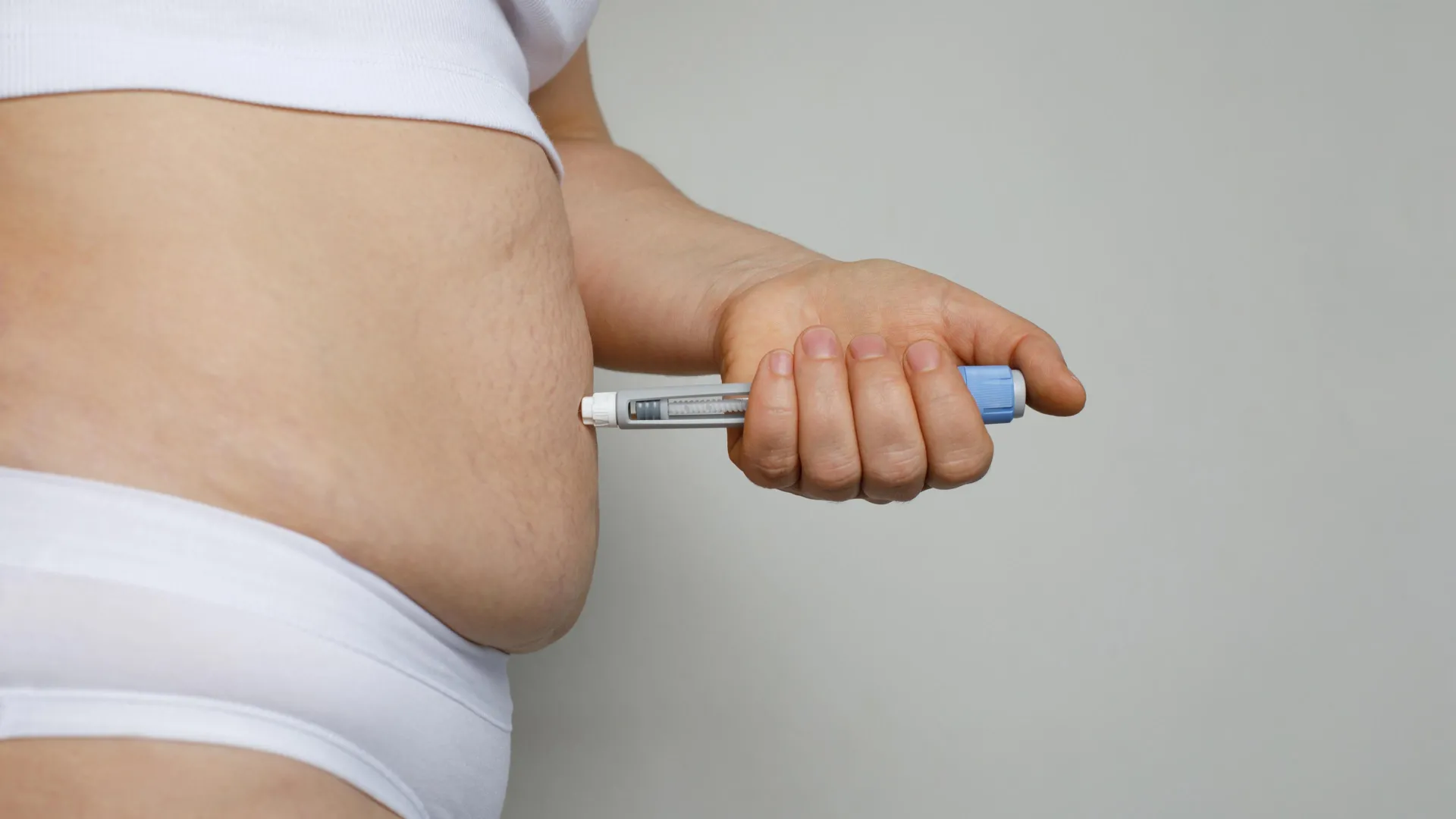
GLP-1 drugs and blood pressure: what 43,000 patients show
GLP-1 drugs and blood pressure are linked in a 32-trial meta-analysis, but most of the drop appears to come from weight loss rather than a direct drug effect.
A 2026 systematic review and meta-analysis of incretin-based therapies pooled 32 phase 3 obesity-drug trials and 43,618 adults, finding an average 5.2 mm Hg fall in systolic blood pressure alongside 10.9 percent weight loss. Clinically meaningful. But less straightforward than the headlines suggest, because Marcel Muskiet and colleagues found that roughly 77 percent of the pressure effect tracked with how much weight participants lost, not simply by being on a GLP-1-based drug.
That distinction matters. A 5.2 mm Hg average drop is not trivial in a population already carrying excess cardiometabolic risk. It still does not turn semaglutide, tirzepatide or newer incretin drugs into stand-alone hypertension treatments. The pooled trials were designed around obesity therapy, not around blood-pressure control as a primary endpoint. The cleanest reading is narrower: these medicines appear to improve pressure readings mainly because they help people lose substantial weight.
In an accessible summary of the findings, the study team put the point plainly in EurekAlert!'s coverage of the analysis:
Across phase 3 trials of GLP-1 receptor agonist and multi-hormone receptor modulator obesity drugs, the magnitude of blood pressure-lowering was closely associated with the degree of weight loss.
— Study authors, EurekAlert!
That is the real news peg. The benefit looks real. The mechanism story remains incomplete. And the clinical takeaway is about the overlap between obesity treatment and cardiovascular risk, not about repurposing GLP-1 drugs as first-line pressure medicines.
Put differently, this is a cardiometabolic spillover story. Obesity, insulin resistance and hypertension often travel together, so an intervention that moves one risk marker can nudge the others. The new meta-analysis gives that intuition scale. It also puts limits around it. Readers should come away with a more precise claim than the social-media version: GLP-1-based obesity drugs may lower blood pressure, but most of that effect seems to arrive through weight loss.
The glamour version of this story is that a weight-loss injection moonlights as a heart-risk drug. The data are duller. More trustworthy. Less magic, more knock-on effect.
What the 32-trial analysis actually measured
Muskiet’s group did not look at one brand or one short study. They aggregated phase 3 obesity-drug trials across the modern incretin class and asked a basic question: when patients lose weight on these drugs, how far do their systolic readings move with them? The answer was directionally consistent enough to matter. On average, systolic pressure fell by 5.2 mm Hg, and each 1 percent of weight loss mapped to an additional 0.34 mm Hg reduction.

Earlier evidence pointed in the same direction, just with less statistical heft. A 2024 meta-analysis of randomized trials in overweight or obese adults reported a smaller average systolic benefit for GLP-1 receptor agonists alone. The SURMOUNT-1 blood-pressure analysis published in Heart found that tirzepatide produced larger reductions, including a 6.8 mm Hg fall in systolic pressure and a 4.2 mm Hg fall in diastolic pressure in post hoc analysis. Different drugs, different populations, different follow-up windows. The direction keeps pointing the same way.
Semaglutide and tirzepatide are the obvious anchors because they dominate the current class conversation. Yet the pooled estimate is useful precisely because it smooths out brand-specific excitement. It suggests the cardiovascular signal is not confined to a single molecule. It also hints that the strongest improvements may still cluster around the therapies that drive the largest weight loss — exactly what the 77 percent mediation figure would predict.
Another reason the meta-analysis matters: it was built from phase 3 trials rather than a loose pile of observational reports. That does not erase confounding, but it does mean the estimate is grounded in the same obesity-drug studies that shaped current prescribing and investor enthusiasm. For a reader trying to separate durable evidence from marketing copy, that is a better starting point than anecdote.
Less cinematic than the Ozempic discourse online, yes. Much sturdier.
Why the mechanism question is still open
The most useful context comes from the 2025 review in the American Journal of Hypertension, where Filion and Eisenberg argued that GLP-1 receptor agonists probably affect vascular outcomes through several overlapping routes: weight loss, reduced inflammation, better endothelial function and changes in renal sodium handling. That wider frame matters, because a 77 percent weight-mediated effect still leaves room for other biology.

The review was cautious, though, and that caution should carry over here. Filion and Eisenberg wrote that their review of the literature found the reductions “appear to be driven primarily by weight loss.”
These reductions appear to be driven primarily by weight loss.
— Filion and Eisenberg review, American Journal of Hypertension
Primarily is not the same as exclusively. The field is still disentangling a bundle of effects that arrive together in practice: lower body mass, better glycaemic control, altered appetite signalling and sometimes changes in kidney physiology. The mechanistic story may eventually turn out to be more interesting than the headline number, but the pooled trials were not built to isolate each pathway cleanly.
A similar note runs through the trial-level evidence. Krumholz and colleagues’ SURMOUNT-1 analysis suggested tirzepatide lowered blood pressure across baseline hypertension strata, but even there the authors traced a large share of the effect back to weight loss and changes in 24-hour heart rate. Useful signal. Not a licence to overstate the drug class.
Still, researchers keep returning to this question for a practical reason. If the pressure effect were partly independent, it would strengthen the argument that obesity drugs are doing more than shrinking waistlines. If it is mostly downstream of weight loss, that is still valuable. It just changes the narrative from direct antihypertensive action to broad metabolic improvement.
What readers should not infer from this
The temptation is obvious. If a drug class already lowers weight, blood sugar and perhaps cardiovascular risk, it is easy to slide into thinking of blood pressure as one more direct indication. The evidence here does not support that leap. These were obesity trials. Many participants had elevated cardiometabolic risk, but they were not randomised into a hypertension-treatment strategy, and the new meta-analysis does not show that GLP-1 drugs outperform established antihypertensive drugs in people whose main problem is high blood pressure.
Nor does it tell us that every patient will see a pressure dividend large enough to change management. Trial averages hide wide individual variation. Some patients lose substantial weight with modest changes in systolic readings. Others see the opposite. A pooled estimate describes the centre of gravity — it does not promise a uniform clinical response.
That matters even more as the commercial story expands. Guardian Science reported on early orforglipron data suggesting cardiovascular improvements may persist when patients switch from injections to pills. Interesting. Still preliminary in this specific context. Pills, queues and brand wars sit outside the paper. The pooled physiology does not.
The safest interpretation for readers: blood pressure has become part of the broader cardiometabolic spillover story around obesity drugs, not a reason to self-diagnose or to chase these medicines as a substitute for standard hypertension care.
Clinically, the sober reading is almost conservative. Successful obesity treatment can improve several risk markers at once. Pressure is one of them. But the order of inference matters. Weight loss first, then cardiometabolic spillover. Not the other way around.
For Vitalspell readers, that is probably the most useful frame to keep. The new meta-analysis sharpens an association that clinicians already suspected and gives it much firmer numbers: 32 trials, 43,618 adults, a 5.2 mm Hg average systolic drop, and a strong statistical link between kilos lost and pressure lowered. Useful evidence. Not a clinical shortcut.
References
- Muskiet M, Cherney D, et al. Effect of incretin-based therapies on blood pressure: a systematic review and meta-analysis. PubMed. 2026. PubMed
- Krumholz HM, et al. Tirzepatide and blood pressure reduction: stratified analyses of the SURMOUNT-1 randomised controlled trial. Heart 110(19):1165. 2024. Heart
- Filion KB, Eisenberg MJ. GLP-1 receptor agonists and blood pressure: a state-of-the-art review of mechanisms, evidence, and clinical implications. American Journal of Hypertension. 2025. Full text
General assignment health reporter covering nutrition science, wellness trends, and clinical research. Reports from Toronto.
The Vitalspell brief
Evidence-based supplement science — weekly in your inbox.
Subscribe