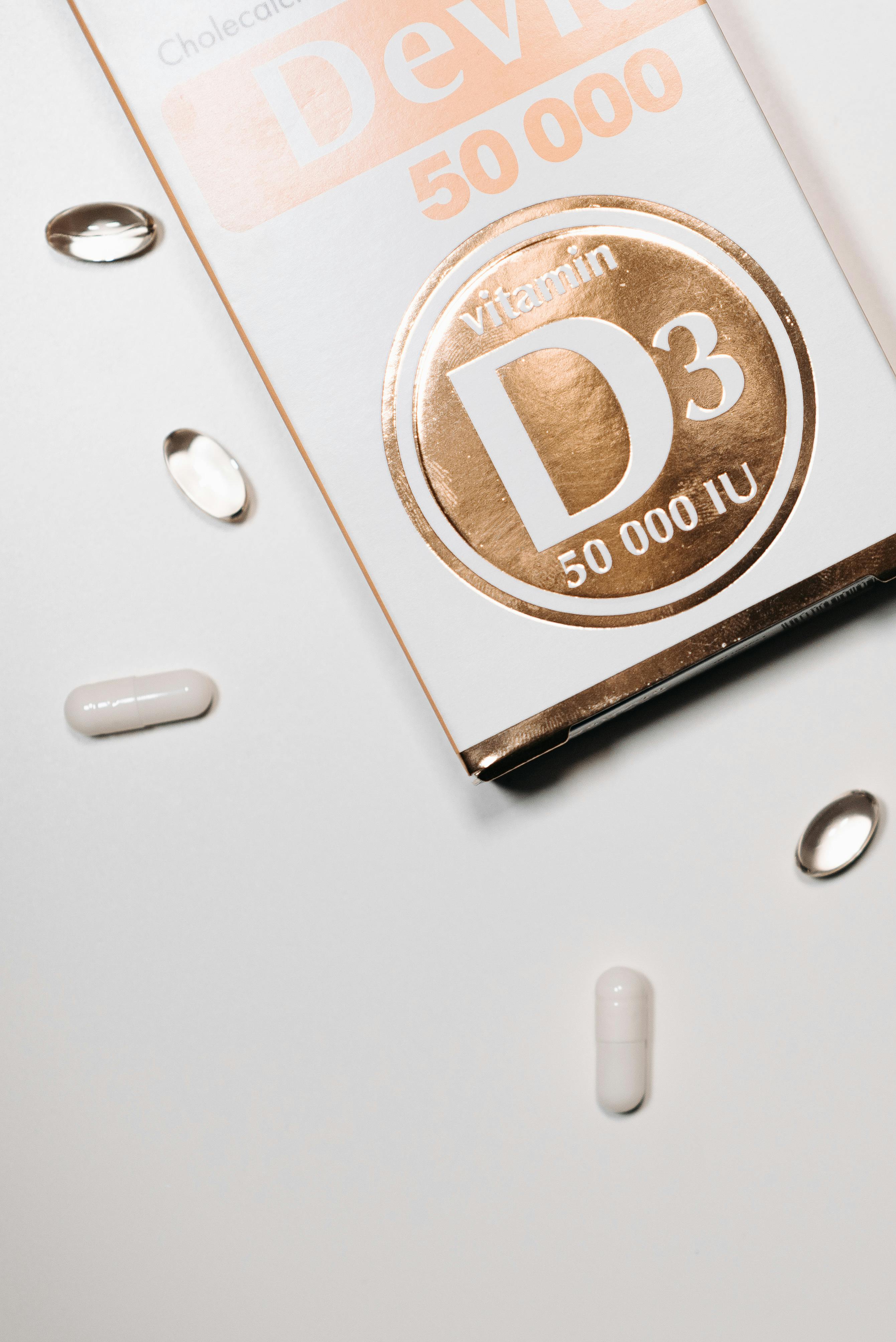
Vitamin D, calcium do not prevent fractures in most older adults
153,902 participants across 69 trials show vitamin D and calcium supplements offer little to no clinically meaningful protection against fractures or falls in older adults.
Vitamin D and calcium have been the default bone-health advice for decades. Take your pills, protect your hips. A sweeping new review published in The BMJ suggests that, for most older adults, that advice was built on thinner evidence than anyone wanted to admit.
A 2026 systematic review and meta-analysis led by Olivier Masse and colleagues in Quebec analysed 69 randomised controlled trials encompassing 153,902 adults — and found that calcium supplements, vitamin D supplements, or the two combined offer little to no clinically meaningful protection against fractures or falls (Masse et al., The BMJ, 2026). The authors applied predefined absolute risk-reduction thresholds rather than relying on statistical significance alone: a 2% reduction for total fractures, 0.7% for hip fractures. Against those bars, every supplementation strategy came up short.
do not support routine supplementation with calcium or vitamin D, or combined supplementation to prevent fractures and falls
— Masse et al., The BMJ, 2026
The certainty of this null finding, crucially, was rated moderate to high. For vitamin D alone — 36 trials, 92,045 participants — the evidence that it does not meaningfully reduce fracture or fall risk was graded high certainty. The combined calcium-plus-vitamin-D analysis, spanning 15 trials and 51,126 participants, found a 1% absolute risk reduction for total fractures (95% CI 0.1–1.8%), a margin the authors deemed too small to be clinically meaningful at the population level.

None of this should feel like a surprise to anyone who has tracked the mega-trial era in vitamin D research. Three landmark randomised trials — VITAL (25,871 participants, published in the New England Journal of Medicine in 2022), DO-HEALTH (2,157 participants), and D-Health (21,315 participants) — collectively enrolled more than 50,000 people and each returned a null result for vitamin D on fracture and fall outcomes. The populations were largely vitamin-D-replete at baseline, and even in subgroup analyses that stratified by serum 25(OH)D levels, supplementation did not separate from placebo.
“This systematic review and meta-analysis is consistent with previous similar studies,” said Professor Emma L Duncan, professor of clinical endocrinology at King’s College London. “The authors showed no significant effect of calcium or vitamin D, individually, on fracture risk or on falls risk.”
But the null-at-population-scale finding does not quite close the book. A health economist reading the same data sees an even starker picture: not merely no benefit, but a case for active harm — or at least active waste. Calcium supplementation carries known risks, including nephrolithiasis and a cardiovascular safety signal that has never been fully resolved. When a 69-trial review concludes the fracture benefit hovers around 1% in absolute terms, the risk-benefit calculus tilts toward “why are we still doing this.” The billions spent annually on vitamin D prescriptions and over-the-counter supplements, the argument goes, deliver population-level returns that do not clear even a modest clinical-effectiveness hurdle.
At the same time, clinicians who work with institutionalised older adults — nursing home residents, those with diagnosed osteoporosis, people with serum 25(OH)D levels below 30 nmol/L — point out that these populations were underrepresented in the mega-trials. A 2024 analysis in Endocrinology and Metabolism noted that while the large null trials settled the question for community-dwelling replete adults, the evidence for benefit in severely deficient or frail populations remains thinner and more suggestive. The 2024 Endocrine Society guideline now recommends against empiric vitamin D supplementation in healthy adults under 75, and the US Preventive Services Task Force draft guidance assigns the practice a grade D — recommending against it. These are not subtle shifts.
Efforts and funding should be redirected from supplementation to ensuring access to proven interventions such as balance and resistance exercise.
— The BMJ linked editorial, 2026
The linked editorial in The BMJ draws the policy conclusion explicitly: the money and clinical energy currently spent on routine calcium and vitamin D supplementation should flow instead toward multicomponent fall-prevention programmes. Balance training, resistance exercise, home hazard assessment, and medication review — interventions with a stronger and more consistent evidence base for reducing falls and fractures in older adults — remain underfunded and under-deployed relative to the simplicity of a pill.

Where guidelines land next will depend partly on geography. Countries with high background rates of vitamin D deficiency — South Korea, much of the Middle East, India — were not well represented in the mega-trials, and their guideline bodies have historically been slower to step away from universal supplementation recommendations. A 2024 review in Endocrinology and Metabolism noted that South Korean guidelines still diverged from the Endocrine Society’s 2024 position, reflecting a different baseline risk profile. Whether the Masse review, with its 69-trial scope and its deliberate shift toward absolute rather than relative risk thresholds, will nudge those guidelines closer to alignment remains an open question.
For the individual older adult reading this and wondering whether to stop their daily vitamin D pill, the bottom line from the evidence is clearer than the supplement-aisle marketing would suggest. If you are community-dwelling, not osteoporotic, and not frankly deficient — the review says the expected fracture and fall benefit is close to zero. The stronger intervention is probably not in the capsule but in the gym, on the mat, and in the balance work that asks more of the body than swallowing ever could.
References
- Masse O, et al. Calcium, vitamin D, or combined supplementation to prevent fractures and falls: systematic review and meta-analysis. The BMJ. 2026. https://pmc.ncbi.nlm.nih.gov/articles/PMC13172633/
- LeBoff MS, et al. Supplemental Vitamin D and Incident Fractures in Midlife and Older Adults. N Engl J Med. 2022;387:299-309. https://www.nejm.org/doi/full/10.1056/NEJMoa2202106
- Revisiting the Role of Vitamin D in Fracture Prevention in the Era of Mega-Trials. Endocrinol Metab. 2024. https://www.e-enm.org/journal/view.php?number=2691
- Calcium, vitamin D, or combined supplementation to prevent fractures and falls (Editorial). The BMJ. 2026. https://www.bmj.com/content/393/bmj.s913
Formulation analyst covering the supplement industry's supply chain, purity testing, and ingredient sourcing. Reports from Los Angeles.
The Vitalspell brief
Evidence-based supplement science — weekly in your inbox.
Subscribe