How accurate are sleep trackers? What the 2026 evidence says
The latest reviews suggest sleep trackers are reasonably good at estimating total sleep time, but much weaker on sleep stages and perceived sleep quality.
How accurate are sleep trackers? The best answer from the recent evidence is narrow: they can pick up broad shifts in sleep duration, but they are not reliable enough to treat a stage chart as a clinical readout. That conclusion appears in a 2025 meta-analysis in the Journal of Clinical Sleep Medicine led by Young Jeong Lee, a 2026 rapid review in CHEST led by Joshua Landvatter, and a 2026 Sleep Medicine review by Narat Srivali and Wisit Cheungpasitporn. Together, those papers show the same hierarchy. Consumer devices do better with total sleep time than with the finer claims that make their dashboards look exact.
Researchers keep testing trackers against polysomnography because it remains the reference exam. It is the overnight lab study that records brain waves, breathing, heart rhythm, oxygen levels, muscle activity, and eye movements. That is how clinicians tell whether someone was awake, in rapid eye movement sleep, or in deeper non-REM stages. Wrist devices infer sleep from motion, pulse, and sometimes skin temperature.
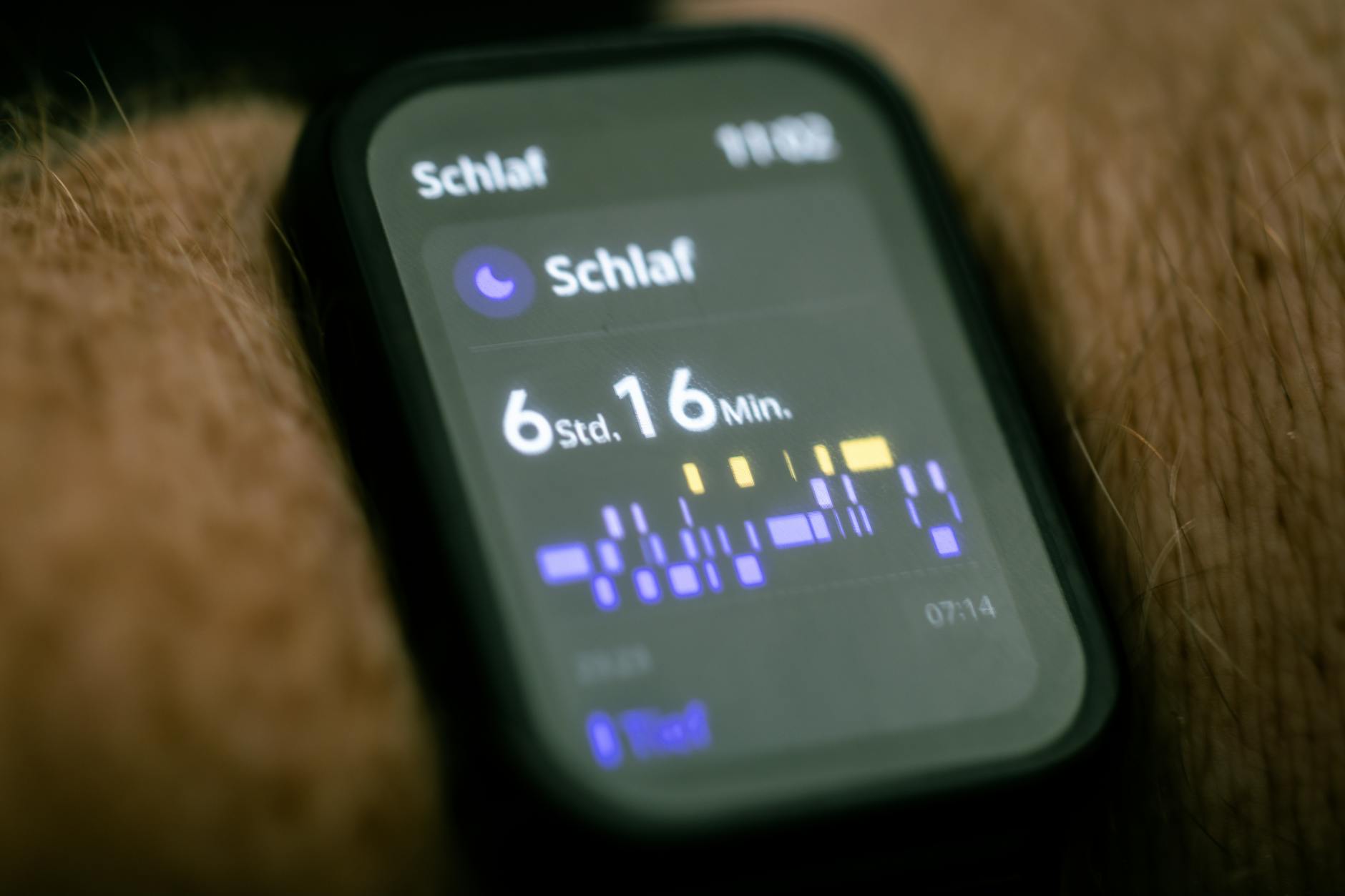
That split matters. Apps package a lot of confidence into a tidy morning score even when the signal underneath is partial. The recent reviews converge on a simple use case: trackers are better for trends than for diagnosis or for judging how restorative a night felt.
What trackers measure reasonably well
The strongest claim consumer sleep trackers can make is about total sleep time. Lee’s 2025 meta-analysis pooled 24 studies and 798 participants and found that wrist-worn devices, on average, differed from polysomnography by about 16.9 minutes on total sleep time. That is not diagnostic precision, but it is useful for spotting whether a person’s sleep window is shifting across days or weeks.

Landvatter’s 2026 rapid review in CHEST, which covered 29 studies of ambulatory consumer sleep devices, found the same pattern. Devices were moderately accurate for total sleep time and time in bed. Precision dropped once the metric became more granular. Sleep efficiency, or the share of time in bed actually spent asleep, was less dependable. So was wake after sleep onset, the time spent awake after first falling asleep.
“CSTs showed moderate accuracy in estimating total sleep time and time in bed but lower precision for sleep efficiency, wake after sleep onset, and stage classification.”
Landvatter et al., CHEST (2026)
That is where people start to overread the app. A watch can do a fair job telling whether someone spent seven hours in bed and a worse job telling how much of that night counted as efficient sleep. The more specific the claim, the wider the error bar tends to become.
Why sleep staging is still the weak point
Sleep staging means sorting the night into wake, rapid eye movement sleep, light non-REM sleep, and deep non-REM sleep. In a lab, that sorting comes from brain-wave and eye-movement data collected during polysomnography. On a wrist, the device is estimating those stages from indirect signals. That is why stage breakdowns remain the weakest part of consumer sleep tech.
Lee’s meta-analysis put the problem plainly, noting in the paper’s abstract that wrist trackers “are not as reliable as polysomnography in measuring key sleep parameters.” A 2023 multicenter validation study in JMIR mHealth and uHealth, which compared 11 consumer trackers across 349,114 scored epochs, likewise found wide performance differences across device types. One app’s glossy stage chart is not interchangeable with another’s.
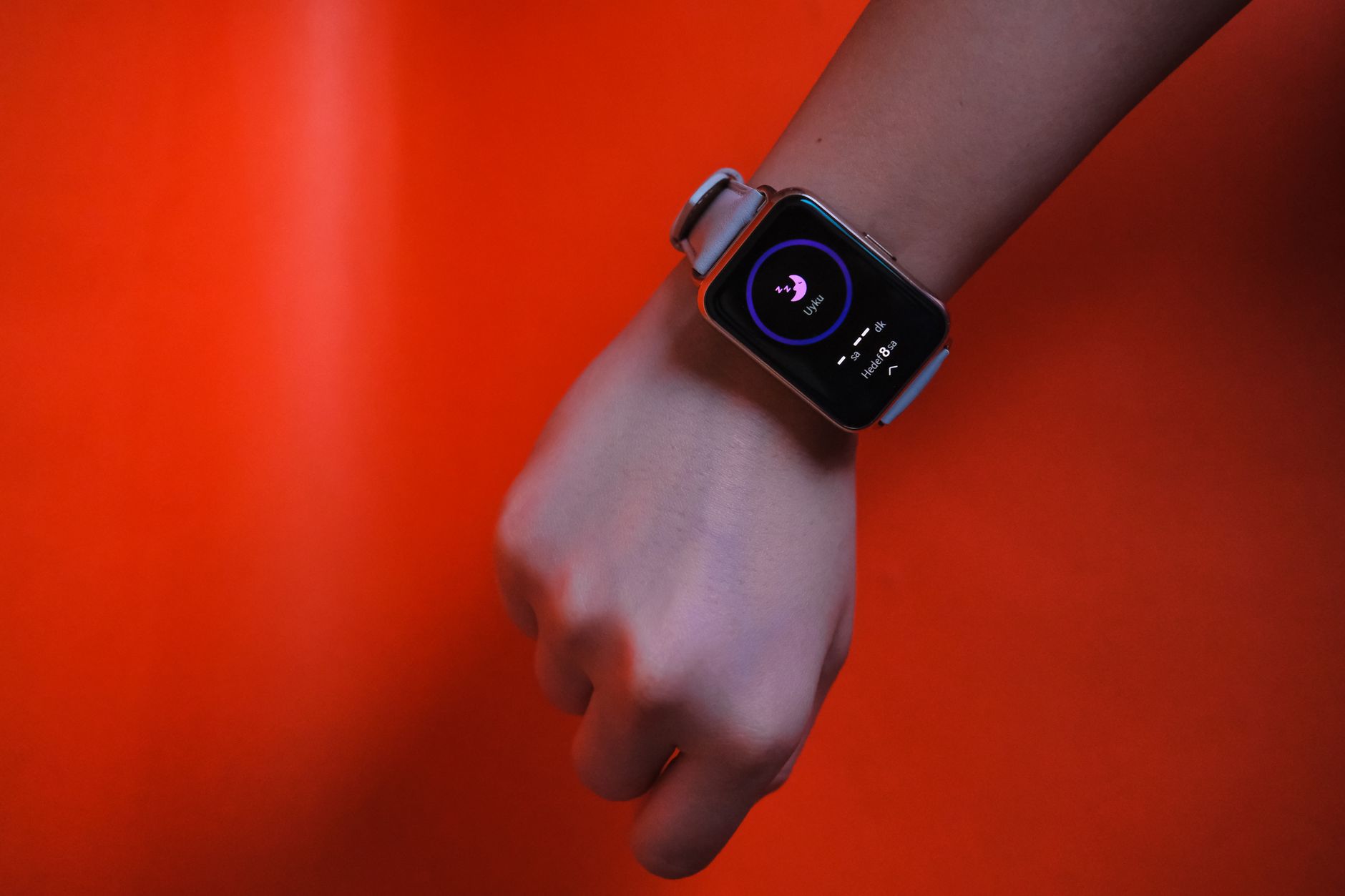
Population matters here too. Devices are often validated under cleaner conditions than real life, and many studies still lean toward healthier adults. Once age, insomnia symptoms, sleep apnea, irregular schedules, or other medical factors enter the picture, the inference problem gets harder. That is why Landvatter’s review argues against treating consumer devices as diagnostic tools.
Why the app can disagree with how you feel
The 2026 evidence also draws a clear line between tracker output and subjective sleep quality. Srivali and Cheungpasitporn’s 2026 systematic review in Sleep Medicine examined whether wearable metrics matched what people reported about their own sleep. The answer was weak concordance: across five studies and 2,006 participants, wearables explained only 2.5 to 16.2 percent of the variance in subjective sleep quality.
“Wearable devices explained only 2.5–16.2% of variance in subjective sleep quality.”
Srivali and Cheungpasitporn, Sleep Medicine (2026)
That matters because many people treat quantified-self data as the whole story. Sleep quality also reflects pain, stress, anxiety, awakenings a device may miss, and the ordinary human question of whether the night felt restorative. A tracker can show long still periods. It cannot fully capture how restored someone feels.
Morning scores can create friction instead of clarity. If the app reports a strong night but the user wakes up groggy, the mismatch does not automatically mean the person is wrong. It may simply mean objective and subjective sleep are related, but not interchangeable.
How to use sleep-tracker data without overreading it
The practical takeaway from Lee 2025, Landvatter 2026, and Srivali 2026 is narrower than the marketing pitch. Sleep trackers are most useful for broad trends: bedtime drift, large changes in total sleep time, and the effect of obvious routine changes such as travel or later caffeine use. They are much less useful as a precise referee for sleep stages, for single-night judgments about sleep quality, or for deciding whether a medical sleep disorder is present.
That does not make the devices useless. It sets a more realistic expectation. For someone trying to build a steadier routine, a decent estimate repeated over many nights can still be informative. For someone worried about chronic insomnia, sleep apnea, or unexplained daytime sleepiness, clinical evaluation is a better next step than another week of app screenshots.
Researchers still need more head-to-head studies in older adults, in people with sleep disorders, and in real-world settings where watches are worn imperfectly and nights are messy. Until that evidence fills in, the clearest answer is the plain one: sleep trackers are reasonably good at telling whether a person slept, but still not especially good at telling exactly how that sleep unfolded.
References
- Lee YJ, et al. Performance of consumer wrist-worn sleep tracking devices compared to polysomnography: a meta-analysis. Journal of Clinical Sleep Medicine. 2025. https://doi.org/10.5664/jcsm.11460
- Landvatter J, et al. Real-World Use of Consumer Sleep Devices: A Rapid Review. CHEST. 2026. https://doi.org/10.1016/j.chest.2025.10.039
- Srivali N, Cheungpasitporn W, et al. Concordance of wearable device sleep metrics with patient-reported sleep quality: A systematic review. Sleep Medicine. 2026. https://doi.org/10.1016/j.sleep.2026.108941
- Accuracy of 11 Wearable, Nearable, and Airable Consumer Sleep Trackers: Prospective Multicenter Validation Study. JMIR mHealth and uHealth. 2023. https://doi.org/10.2196/50983
The Vitalspell brief
Evidence-based supplement science — weekly in your inbox.
Subscribe