Could infant gut microbes shape later ADHD risk?
A new birth-cohort paper linked one-week Bifidobacterium patterns and a microbial metabolite to ADHD diagnoses at age 10. Here is what the data does, and does not, say.
During the first week after birth, an infant gut is busy with arrivals. Oxygen levels shift, milk starts selecting for certain microbes, and the bacterial cast that turns up on day seven can look nothing like the one that settles in by the end of the first year. A new 2026 Molecular Psychiatry paper suggests this fleeting opening act may leave a detectable trace much later: in the Danish COPSAC2010 birth cohort, neonatal Bifidobacterium levels and a microbial metabolite called indole-3-lactic acid were associated with the odds of an ADHD diagnosis at age 10.
That finding sits miles away from a prevention strategy, and farther still from the probiotic marketing that swarms around anything labelled gut-brain. The study does not show that probiotics prevent ADHD. It does not show that autism or ADHD can be rewritten through a supplement bottle. What the work actually delivers is narrower: a carefully timed look at whether the microbiome in the first days of life carries signals that still register a decade later.
Some of the headlines around the paper galloped past the actual result. A general-audience summary from SciTechDaily widened the frame to autism and ADHD together. The study itself stays more disciplined. Its clearest clinical association was with later ADHD risk, and the point of genuine interest is timing. The authors were not asking whether a vaguely healthy microbiome is good for children. They were asking whether one very early snapshot might line up with a later neurodevelopmental outcome.
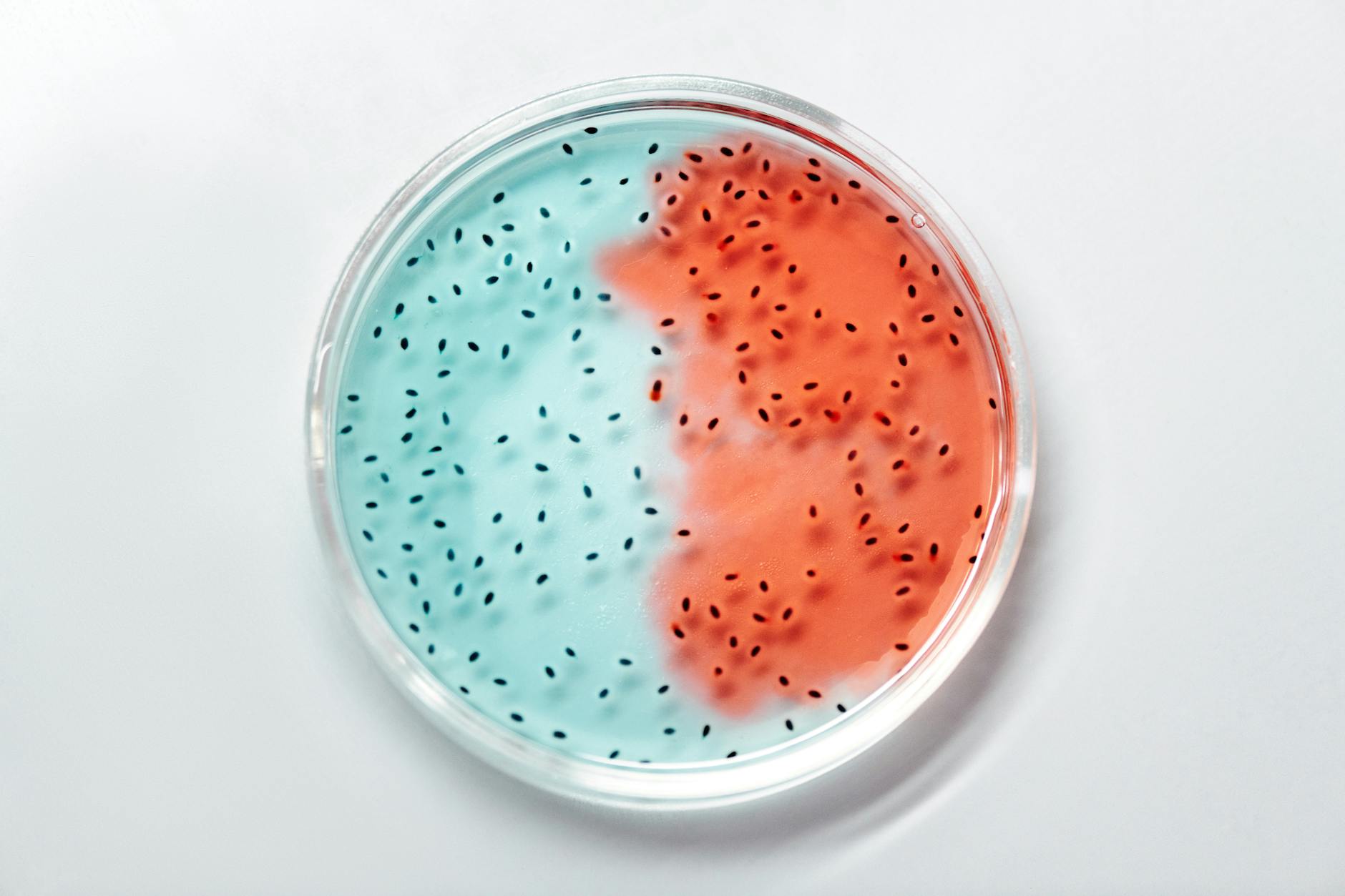
The numbers are worth laying out directly. The COPSAC2010 cohort enrolled 700 children; 593 completed a psychopathology assessment at age 10, and 65 received a research diagnosis of ADHD. Investigators compared stool samples collected at one week, one month and one year, then linked those microbial patterns to metabolites measured in blood. It was the one-week sample that stood apart. Each 10-fold higher level of Bifidobacterium at that point was associated with an adjusted odds ratio of 1.54 for later ADHD, and about 21% of that association was statistically mediated by indole-3-lactic acid, or ILA.
This is also where the finding resists the usual good-bacteria shorthand. Bifidobacterium often gets treated as a hero organism in wellness copy, especially in products aimed at parents. Real biology is harder to slot into those boxes. A genus carries no moral charge. In a newborn gut, timing matters, abundance matters, and the surrounding microbial community matters. A one-week signal involving Bifidobacterium does not automatically translate into an instruction to add more of it.
What a seven-day snapshot can and cannot do
The study earns attention partly because it looks in before behaviour, schooling and diagnosis have had time to scramble the picture. Most gut-brain papers work with older children. By then, diet, sleep, medication, family stress and symptom-related routines may already have diverged in ways that reshape the microbiome. A sample collected at one week does not settle the causality question, but it does step around one of the field’s knottiest problems: the possibility that later microbial differences simply reflect life after symptoms begin.
A second reason the early window matters, one that is ecological rather than chronological: the first week is not just a miniature version of month one or year one. The gut community is still assembling itself — unstable, reactive, changing fast in response to birth and feeding. In this dataset, the later samples were not the headline result. If there is a story here, it is probably about early succession, not a fixed microbial signature that holds constant across childhood.
ILA tightens the argument by giving the authors something biochemical to point at, rather than a flat list of bacterial names. The paper linked neonatal Bifidobacterium to later ADHD risk partly through this blood metabolite. That still stops short of mechanism — mediation analysis inside an observational cohort is an informed statistical story, not a direct demonstration of cause. But it is a more useful clue than a study that can only note one bacterial group was present and leave it there.
The wider literature is suggestive, not settled
The new result did not land in an empty field. An earlier 2022 Pediatric Research cohort study also linked early-life gut microbiota patterns to later ADHD-related outcomes in preadolescents. A separate 2022 systematic review in Pediatric Research concluded that the signal is intriguing but the evidence base remains heterogeneous — different cohorts sample at different ages, use different sequencing methods, and define ADHD in different ways. A 2020 critique in Frontiers in Psychiatry pushed the caution further, arguing that microbiome research in ADHD is still constrained by confounding, methodological inconsistency and an understandable temptation to make biomarkers sound more decisive than they actually are.
This wider picture explains why the COPSAC analysis deserves attention without hardening into advice overnight. It is prospective. Fairly large for a birth cohort with deep follow-up. It also pairs microbial data with metabolomics instead of treating the gut as a black box — genuine strengths. None of that, however, changes the study’s fundamental category. This is still an association paper. The authors can show that an early microbial pattern and a later diagnosis travelled together. They cannot demonstrate, from this design alone, that altering the pattern would alter the developmental outcome.
The neonatal timing does weaken one alternative explanation. If a microbiome signal shows up before the child has had years of symptom-shaped behaviour, the familiar reverse-causation loop becomes harder to maintain. But earlier is not the same as causal. Family genetics, delivery exposures, infant feeding, infection history, antibiotics and other early-life factors can influence both microbial development and neurodevelopmental trajectories. Even careful adjustment cannot guarantee that every relevant difference has been accounted for.
The probiotic leap runs ahead of the evidence
For families, the gap between association and action is the whole point. Read a headline about a supposedly beneficial microbe and a later disorder risk, and the obvious question is whether the answer lives in a supplement aisle. This study cannot settle that. It did not test a probiotic product, a dose, a feeding intervention or a prevention protocol. It measured a microbial community at a specific moment, then linked one feature of that community to later outcomes through statistical modelling.
The metabolite result does not transform the finding into a treatment roadmap. ILA may make the association more biologically plausible. But plausibility is not clinical utility. A probiotic capsule given to a newborn is not equivalent to the ecology of the first week of life, and it is certainly not equivalent to recreating an entire microbial trajectory. The pattern by now is familiar: the science tightens as the details accumulate, while the marketing grows louder.
Beneath a lot of the probiotic excitement sits a category error worth naming. ADHD is not a one-switch condition waiting for a microbial toggle. It is a complex neurodevelopmental outcome shaped by genetics, environment and development unfolding across years. If the neonatal microbiome plays a role, it is far more likely one contributor among many than a master lever. Precisely why early association studies matter — and precisely why they need to be read with restraint.
A sharper hypothesis, not a parenting script
The paper does not hand anyone a new reason to buy a probiotic. It hands researchers a more precise question. Rather than gesturing at the gut-brain axis in a vague way, the authors tie the story to a specific time point, a specific bacterial genus and a specific blood metabolite. That counts as progress. Future researchers now have something concrete to test: whether this seven-day signal replicates in other cohorts, whether ILA behaves the same way elsewhere, and whether any intervention can shift the biology without overselling what the biology means.
Nobody should come away thinking a stool test in infancy can forecast a child’s future, or that adding a probiotic can head off ADHD. Claims like that do not just outrun the evidence — they make microbiome science sound unserious even when the underlying work is careful. The paper offers no screening tool, no treatment algorithm, no parenting script.
From the outside, the first week of life can look repetitive and domestic: feeding, swaddling, interrupted sleep, not much else. Under a microscope it is crowded, chemical and fast-changing. This study suggests that some of that early churn may echo much later. But echo is not destiny, and a statistically interesting signal is not yet a clinical instruction. In microbiome research, that distinction is not some minor footnote. It is the line between a useful clue and a marketable myth.
References
- Widdowson M, Stokholm J, et al. Neonatal gut Bifidobacterium associates with indole-3-lactic acid levels in blood and risk of ADHD at age 10. Molecular Psychiatry. 2026. https://www.nature.com/articles/s41380-026-03480-z
- Early-life gut microbiota and attention deficit hyperactivity disorder in preadolescents. Pediatric Research. 2022. https://www.nature.com/articles/s41390-022-02051-6
- Gut microbiome and attention deficit/hyperactivity disorder: a systematic review. Pediatric Research. 2022. https://www.nature.com/articles/s41390-022-02027-6
- Current limitations for the assessment of the role of the gut microbiome for attention deficit hyperactivity disorder (ADHD). Frontiers in Psychiatry. 2020. https://www.frontiersin.org/articles/10.3389/fpsyt.2020.00623/full
The Vitalspell brief
Evidence-based supplement science — weekly in your inbox.
Subscribe