Does creatine cause hair loss? What the evidence actually shows
A 2025 randomized trial found no sign that standard-dose creatine raised DHT or worsened hair-follicle measures over 12 weeks.
The creatine-hair-loss claim has lasted much longer than the evidence behind it. Current human data suggests standard-dose creatine probably does not cause measurable hair loss. In a 2025 randomized controlled trial in the Journal of the International Society of Sports Nutrition, Lak et al. 2025 gave resistance-trained men 5 g of creatine monohydrate a day for 12 weeks and saw no meaningful shift in blood dihydrotestosterone, or DHT, and no worsening on direct hair-follicle measures.
Still, one older hormone result gave the myth staying power. A 2009 crossover study in college-aged rugby players reported a rise in serum DHT after a short loading phase. DHT is an androgen made from testosterone, and it matters in androgenic alopecia, the genetic form of pattern hair loss. Yet a higher blood DHT reading is not the same as a person losing hair. A 2021 evidence review argued that the scare outpaced the evidence. The underlying question is simple: were researchers seeing a mechanistic clue, or actual damage to hair?
What the new trial actually measured
That is why the newer trial matters. Lak et al. 2025 randomized 45 resistance-trained men, with 38 completing the full 12 weeks, to take either 5 g a day of creatine monohydrate or placebo. Alongside serum testosterone and DHT, the researchers used trichogram and FotoFinder assessments to track hair density and follicle-level change over time.

A trichogram counts hairs in different growth phases. With FotoFinder imaging, clinicians can return to the same scalp area and compare it over time. That is a better test than wondering whether a pillow or shower drain looked different in a given week. Over 12 weeks, the creatine group showed no group-by-time effect for DHT, total testosterone, free testosterone, or the tracked hair-follicle measures. No hormonal surge. No measured follicle decline.
In the trial abstract, the authors put it bluntly.
“providing strong evidence against the claim that creatine contributes to hair loss”
— Lak et al., Journal of the International Society of Sports Nutrition (2025)
Twelve weeks is still a short window. The sample was modest, and it only included resistance-trained men, not women or people already dealing with active pattern hair loss. Even so, this is a stronger short-term test than the older literature offered. If standard-dose creatine were clearly pushing hair follicles in the wrong direction, this was the sort of study that should have picked up an early signal.
Why the DHT finding became a myth
Part of the reason the scare spread is that the 2009 result sounded cleaner than it was. Van der Merwe et al. 2009 studied 20 rugby players during a one-week loading phase followed by two weeks of lower-dose creatine. The paper reported a 56 percent rise in serum DHT after the loading week and a higher DHT to testosterone ratio after 21 days. Because DHT is involved in androgenic alopecia, the finding quickly turned into a consumer warning: creatine raises DHT, DHT is linked to hair loss, so creatine must cause hair loss.
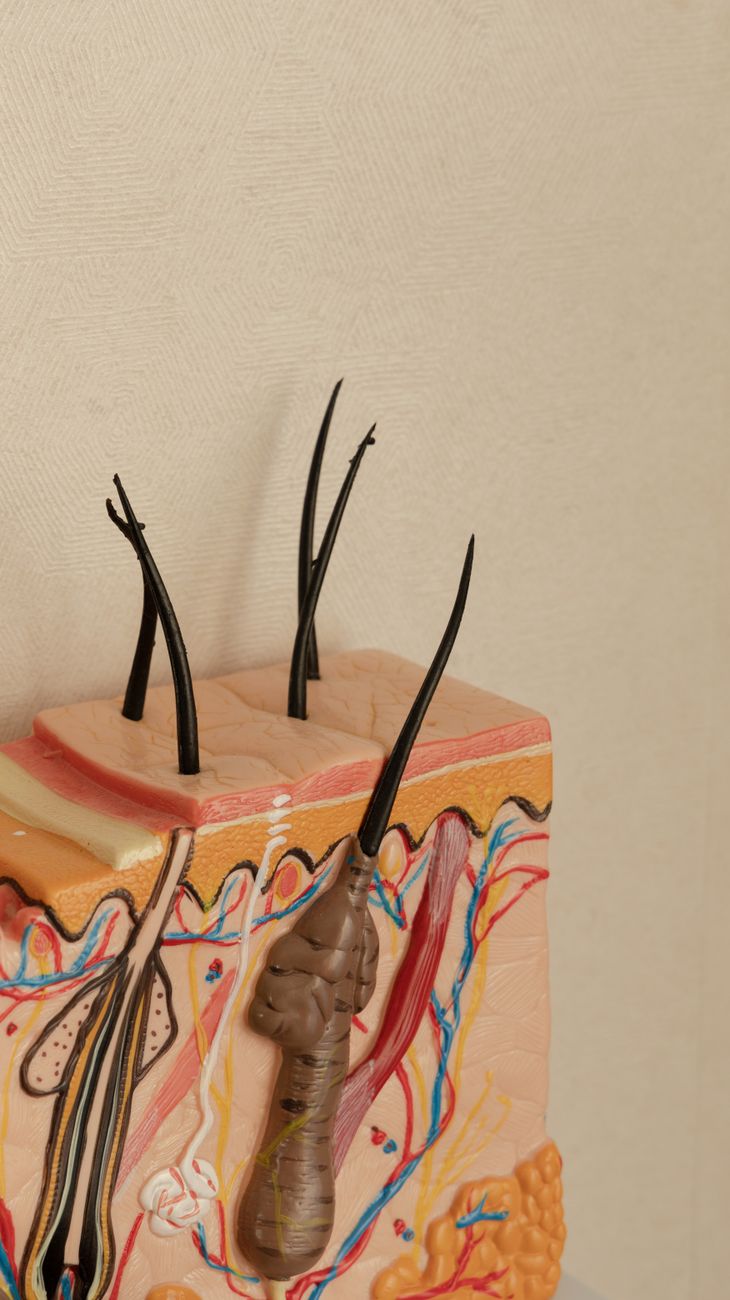
Those are not equivalent outcomes. Hair loss plays out in tissue and over time. Genetics, follicle sensitivity to androgens, baseline risk, and other factors all matter. A transient rise in blood DHT is not direct proof that scalp follicles are miniaturising, the process in which thick terminal hairs gradually become finer hairs.
For context, Antonio et al. 2021 treated the hair-loss question as a myth audit rather than a marketing claim. The authors noted that the rugby study did not actually measure hair loss and that later studies had not reproduced a real-world baldness signal. In the 2021 review, the summary line is direct.
“the majority of available evidence does not support a link between creatine supplementation and hair loss / baldness”
— Antonio et al., Journal of the International Society of Sports Nutrition (2021)
That distinction is why the 2025 trial matters. It asked the question people actually care about: whether a standard daily dose changed hair.
What the evidence can and cannot answer yet
Taken together, the evidence supports a narrow conclusion. In healthy, resistance-trained men taking 5 g of creatine monohydrate a day for 12 weeks, Lak et al. 2025 did not find a DHT spike or measured hair-follicle harm. That is the best direct answer available right now.
Gaps remain. The evidence does not tell us whether people with diagnosed androgenic alopecia would respond differently. It does not tell us what happens with longer use, repeated loading phases, or use alongside other supplements or medications. Nor does it mean every report of shedding after starting creatine is imaginary. Hair loss has many causes, including genetics, illness, rapid weight change, low iron, thyroid disease, stress, and simple timing. When a supplement enters the picture just as a hairline changes, people naturally connect the two.
So the story should not harden into a blanket safety slogan. A fairer reading is more modest: the long-running warning that creatine has been shown to cause hair loss is not supported by the human evidence we have. The older DHT finding still belongs in the history of the debate, but it looks more like a clue that needed follow-up than a verdict.
What someone worried about hair loss should do next
Most people taking standard-dose creatine do not have strong evidence-based reason to expect hair loss. Anyone with a personal or family history of androgenic alopecia, though, is reasonable to watch closely. The direct hair-data literature is still small, and the key trial so far was narrow by design.
Better than internet certainty is monitoring. If hair shedding is active or accelerating, a dermatologist can help separate pattern loss from other triggers and place supplement use in context. Creatine may still be worth using for performance or training goals, but it should not be treated as either a proven culprit or a proven impossibility. The next useful evidence would be longer trials, more diverse participants, and studies that include people already at high risk for androgenic hair loss.
References
- Lak M, Forbes SC, Ashtary-Larky D, et al. Does creatine cause hair loss? A 12-week randomized controlled trial. Journal of the International Society of Sports Nutrition. 2025. https://pubmed.ncbi.nlm.nih.gov/40265319/
- van der Merwe J, Brooks N, Myburgh KH. Three weeks of creatine monohydrate supplementation affects dihydrotestosterone to testosterone ratio in college-aged rugby players. Clinical Journal of Sport Medicine. 2009. https://storre.stir.ac.uk/handle/1893/22610
- Antonio J, Candow DG, Forbes SC, et al. Common questions and misconceptions about creatine supplementation: what does the scientific evidence really show? Journal of the International Society of Sports Nutrition. 2021. https://link.springer.com/article/10.1186/s12970-021-00412-w
The Vitalspell brief
Evidence-based supplement science — weekly in your inbox.
Subscribe